Top 20 Sights in Nesebar: The Complete 2026 List
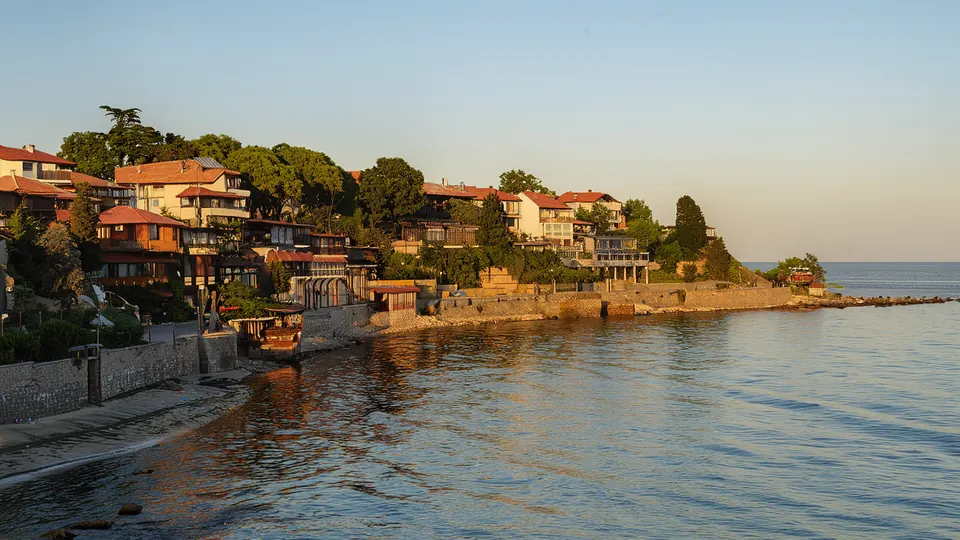
Nesebar Old Town is an open-air museum in the most literal sense: 3,000 years of continuous history packed onto a rocky peninsula just 850 metres long. Thracian Melsambria, Greek Mesembria, a Roman city, a Byzantine bishopric and a Revival-era fishing town lie stacked on top of one another — and since 1983 the whole peninsula has been a UNESCO World Heritage Site. The town once held around 40 churches; today about a dozen deserve your time, along with two museums, fortress walls, Byzantine baths and the most photographed windmill on the Black Sea coast.
How much time do you need? Half a day covers the highlights; a full day adds the museums, a taverna lunch and the sunset. Entering the peninsula itself is free — you only pay for individual museum sites, and the combined ticket sold at the Archaeological Museum roughly halves the cost. Since 1 January 2026 prices are quoted in euro. Before you set out, open our interactive map of Nesebar and the complete Old Town guide.
Prices and Opening Hours at a Glance (2026)
| Sight | Price (adult) | Summer hours | Time needed |
|---|---|---|---|
| Archaeological Museum | approx. 3 € | 09:00-19:00 | 45-60 min |
| St Stephen Church | approx. 3 € | 09:00-19:00 | 30 min |
| Christ Pantocrator | approx. 3 € | 09:00-19:00 | 20 min |
| Ethnographic Museum | approx. 2-3 € | 09:00-18:00 | 30 min |
| St Spas Church | approx. 2 € | 09:00-18:00 | 15 min |
| St Paraskeva | approx. 2 € | 09:00-18:00 | 15 min |
| St John the Baptist | approx. 2-3 € | 09:00-18:00 | 15-20 min |
| Combined ticket (all museum sites) | approx. 10 € | — | half a day |
| St Sophia, Eleusa, Aliturgetos, walls, windmill, harbour, beach | free | always open | as you wish |
Prices are approximate — children and students usually pay half, and off-season hours are shorter. Check at the ticket desk by the town gate.
1. The Church of Christ Pantocrator
The postcard of Nesebar. Built in the 13th-14th century, it is the best-preserved medieval church in town and stands right on the main street — you cannot miss it. The eastern facade is a masterpiece of decorative masonry: alternating bands of red brick and white stone, blind arches, green ceramic rosettes and a meander frieze — an ancient sun symbol. You will not find this style anywhere in Western Europe; it is the signature of Bulgaria's medieval Black Sea towns. The interior now houses an art gallery, so going inside is mostly a chance to study the structure from within. Tip: the light on the eastern facade is best in the afternoon. Entry around 3 €, summer hours 09:00-19:00, 20 minutes is enough — more on Pantocrator.
2. The Church of St Stephen (The New Metropolis)
The interior nobody expects — and the one place in Nesebar where paying the entrance fee is a no-brainer. From the outside the church on Ribarska Street looks modest, but inside nearly every surface is covered with 16th-18th-century frescoes: more than 250 scenes and over 1,000 figures, plus a carved bishop's throne and an 18th-century pulpit. It is the best-preserved painted ensemble on the entire coast, and many visitors compare it to a miniature Sistine Chapel. Go early — the space is small and a single tour group fills it completely. Photography is usually allowed without flash. Entry around 3 €, summer 09:00-19:00, allow at least 30 minutes — the full story of the frescoes.
3. St Sophia (The Old Metropolis)
The cathedral of early Byzantine Mesembria, raised in the 5th-6th century — the oldest major church in town and one of the most imposing ruins on the coast. The three-nave basilica lost its roof long ago: you walk the nave and look at the sky through arcades that once carried a timber structure. The sheer scale is the message — this was no village chapel but the seat of a bishop, the beating heart of the medieval city. The square around it is the natural centre of the Old Town and a favourite spot for wedding photos. Entry is free at any time, and the late-afternoon light on the eastern wall is pure magic. Pair it with a coffee on the adjacent square — the history of the Old Metropolis.
4. St John the Baptist
The oldest surviving domed church on the peninsula, built in the 10th-11th century from rough local stone. It makes no attempt to impress: heavy proportions, almost no decoration, dim light inside. That is precisely its value — this is what a medieval church looked like before the decorative brickwork of later centuries. A fragment of a 14th-century fresco of St Marina survives on one of the columns. The building now hosts art exhibitions, so you often enter free or for a token fee and get medieval architecture and contemporary art in one stop. It stands a step from the central square, yet tour groups usually walk straight past — perfect for 15-20 minutes of quiet. More about the oldest church.
5. St Spas (The Holy Saviour)
A small church from 1609, sunk below street level — under Ottoman rule Christian churches could not stand taller than a man on horseback, so the builders of Nesebar dug down instead. You descend a few steps into a surprisingly complete ensemble of 17th-century frescoes by local painters. The church also keeps the tombstone of a Byzantine princess — one of the most curious finds in town. It is tiny and 15 minutes suffice, but the value-for-money ratio is among the best in Nesebar: entry is around 2 €. It is included in the combined ticket, so do not skip it if you hold one. The hidden fresco treasure of St Spas.
6. St Paraskeva
The elegant one. A 13th-14th-century church with some of the finest ceramic decoration in town — arches, niches and green glazed discs set along the facade like jewellery. The dome and belfry have not survived, which is exactly why its silhouette is so recognisable: an elongated body with a richly decorated apse that looks different from every angle. Inside there is usually a gallery or exhibition space. It stands right on the main street between the gate and the square, making it an easy second stop after Pantocrator — compare the two facades and you can watch the Nesebar decorative school evolve. Entry around 2 €, a quarter of an hour is plenty. More on elegant St Paraskeva.
7. St Todor (St Theodore)
The quietest church in town. A small single-nave 13th-century church tucked into a side lane, with the typical alternating stone-and-brick masonry and modest blind niches on the facade. No tour guide lingers here — and that is the charm: one minute off the main flow and you are alone with seven centuries of history. The building now works as a gallery, so you can often peek inside for free. If you photograph, come in the morning when the lane is empty and the light rakes across the stonework. The perfect bonus stop between St Stephen and the Revival houses of the southern quarter — the quiet elegance of St Theodore.
8. The Church of the Holy Archangels Michael and Gabriel
If Pantocrator is the most photographed church, this one is the painters' favourite. Built in the 13th-14th century, it shows the Nesebar decorative school at its purest: courses of stone and brick, two tiers of blind arches, ceramic rosettes. The roof and dome are gone, which makes the silhouette all the more picturesque — a ruin, but a composed one that seems to pose for you. It stands on Mitropolitska Street, on the way between the gate and the Old Metropolis, and is among the most painted motifs of the artists selling their work in the surrounding lanes. Viewed mostly from outside, it takes 10-15 minutes and is an obligatory frame on any walk. The story of the celestial guardians.
9. St John Aliturgetos
The "unconsecrated" church — legend says its master builder died during construction and the church was never consecrated for services, hence the name Aliturgetos. Built in the 14th century above the old harbour on the southern shore, it is considered the summit of Nesebar architecture: the richest exterior decoration in town, with seashells embedded in the masonry alongside the ceramics. The 1913 earthquake destroyed it in part, yet even as a ruin it dominates the southern skyline of the peninsula. It can be viewed from outside at any time, free of charge, and the spot doubles as a fine viewpoint over the harbour and the bay. Come towards evening when the stonework turns golden. The legend of the unconsecrated church.
10. The Basilica of the Holy Mother of God Eleusa
The romantic ruin on the seashore. An early Byzantine basilica from the 6th century on the very edge of the northern shore, its foundations resting on the rocks above the water — over the centuries part of the building was literally swallowed by the sea as the coast eroded. What remains is a skeleton of stone arches against open water: the best place on the peninsula for sunset and sunrise photographs. Entry is free at any hour — it is also the locals' favourite spot for an evening stroll, long after the crowds on the main street have thinned. Combine it with a walk along the whole northern shore to the harbour. The sunken elegance of Eleusa.
11. The Archaeological Museum
The first building after the gate — and the right way to begin. The collection walks you through every layer of the town: Thracian finds, the silver coins Greek Mesembria minted from the 5th century BC, gold jewellery, stone anchors, Roman sculpture and a superb collection of icons of the Nesebar school. The museum is compact — 45-60 minutes is enough — but it organises in your head everything you will later see in the streets. Practical point: this is where the combined ticket is sold (around 10 € for all museum sites), and it pays for itself by the third stop. Summer hours 09:00-19:00 on weekdays, entry around 3 €, children half price. A full guide to the collection.
12. The Ethnographic Museum (The Moskoyani House)
If the churches tell medieval Nesebar, the Moskoyani House tells the Revival era. Built in the 1840s for a wealthy merchant family, it is a textbook example of Black Sea Revival architecture: a stone ground floor for stores and workshops, and a spacious timber upper floor with bay windows overhanging the street. Inside are folk costumes, textiles, fishing gear and household objects of 19th-century Nesebar — including traces of the vine-growing and winemaking that fed the town before tourism. A small, authentic and almost always peaceful museum; 30 minutes will do. Entry around 2-3 €, included in the combined ticket. Life in the old Moskoyani House.
13. The Windmill on the Isthmus
The symbol of Nesebar. The 19th-century wooden windmill stands halfway along the narrow 400-metre isthmus that ties the Old Town to the mainland, set on a stone base containing remains of a medieval structure. Everyone entering or leaving the peninsula passes it — and almost everyone stops for a photo. Field-tested tips: morning light favours the landward side, afternoon light the seaward side, and in the evening the mill is floodlit with the lights of Sunny Beach glittering behind it. The only caution is traffic — the isthmus is narrow and the footpath runs close to the road. Free, at any time. The story of the iconic windmill.
14. The Fortress Walls and the Gate
The first thing that greets you after the windmill — and the quickest way to feel the age of the town. The western wall with its gate and towers is early Byzantine, 5th century, standing on even older Thracian and Roman foundations: three eras of fortification visible in one spot. This has been the only land entrance to the peninsula for three millennia. Look closely at the masonry — the alternating courses of stone and brick are the same technique you will recognise later on the churches. In the evening the walls are dramatically floodlit and worth a second pass. Free, no time limit; 15 minutes on your way in is enough. How Mesembria was defended.
15. The Ancient Theatre
An open-air stage on the southern shore with stone seating, the sea behind the scene and an ancient mood — the place where Nesebar's summer happens after dark. Where exactly the theatre of ancient Mesembria stood is still debated by archaeologists; today's amphitheatre is a modern stage built in the antique spirit, but the concerts, festivals and theatre nights held here are entirely real. In July and August the programme is packed — check the posters by the town gate or ask at the tourist information centre. Access is free during the day; tickets are only for events. The view across the bay towards Sveti Vlas is a bonus. Searching for the lost ancient theatre.
16. The Byzantine Baths
The most underrated sight in town. The baths were built in the 6th century, in the age of Justinian I, and worked until the 8th century — a public bathhouse with a hypocaust (underfloor heating), as any self-respecting Byzantine city had. Chronicles say even a Byzantine emperor came here for treatment. Today you can see the massive stone arches and parts of the heating system — enough to picture the engineering ambition of 1,400 years ago. The ruins sit in a side lane near the northern shore and most tourists walk past without realising what they are. Viewing is usually free; allow 15 minutes. Echoes of steam and stone: the baths of Mesembria.
17. The Old Harbour and the Fishing Boats
Nesebar is not a stage set — it is a living fishing town, and the harbour is where you see it best. Come early in the morning, when the boats return with the catch and fishermen mend nets on the quay; in the afternoon the same quay makes a fine promenade with views along the whole northern shore. At the entrance to town you are met by the bronze statue of St Nicholas, patron of sailors, whose feast day Nikulden (6 December) is also the town's holiday. The fish tavernas cluster around the harbour: the rule is simple — ask for the catch of the day, not the laminated menu. Free, at any time. The fishing heritage of Nesebar.
18. The Revival-Era Wooden Houses
The second reason for the UNESCO listing, alongside the churches. The 18th-19th-century houses all follow the same logic: a stone ground floor for the cellar and stores, and above it a timber storey with bay windows cantilevered over the lane to steal space from the cramped medieval plot. The result is streets where salt-blackened wood almost touches above your head. The best routes are Mena Street and Neptun Street in the southern, residential half of the peninsula — five minutes from the tourist flow, yet seemingly a century away. Wander without a plan: vine-shaded courtyards, cats in doorways and the sea at the end of every lane. The architecture of Revival-era Nesebar.
19. The South Beach
Yes, the beach counts as a sight — because few old towns in Europe have a kilometre and a half of fine sand five minutes on foot from their medieval churches. South Beach starts at the isthmus and curves towards Ravda: a gentle gradient, water that stays shallow 30-40 metres out (ideal for children), lifeguards from June to September. The western end is a free zone for your own towel; an umbrella-and-sunbed set in the managed section costs around 8-10 € per day. The formula for a perfect day: churches and museums in the morning, beach in the afternoon, sunset on the northern shore in the evening. Our full guide to every beach in the area is here: the best beaches near Nesebar.
20. Sunset from the Northern Shore
The finale of every visit. The northern shore of the peninsula faces the bay, Sunny Beach and the silhouette of the Balkan range sliding down to Cape Emine — and when the sun sinks behind the mainland, this whole amphitheatre lights up. The best spots: the rocks by the Eleusa basilica, the northern quay by the harbour and the cafes along the shore path. Do not rush off after sunset — the Old Town at night is a different town: the crowds disperse, street lamps light the cobbles and the smell of grilled fish drifts from the tavernas. The photos you take here will be the best advertisement for your holiday — our photography guide to Nesebar.
How to Plan Your Route
Half a Day (3-4 hours)
Walk in past the windmill (13) and the gate with the fortress walls (14). Along the main street: St Paraskeva (6) and Christ Pantocrator (1), then left to St Stephen (2) for the frescoes. Continue to the square with St Sophia (3) and St John the Baptist (4), drop down to the northern shore for Eleusa (10) and finish at the harbour (17) with lunch or coffee. This is the classic loop — it covers everything iconic and walks easily even in the heat if you start before 10:00.
A Full Day
Start with the Archaeological Museum (11) and buy the combined ticket there. Follow the half-day route but add St Spas (5), St Todor (7), the Archangels (8) and the Ethnographic Museum (12). Lunch at a taverna near the harbour; in the afternoon take the southern half with the Revival houses (18), Aliturgetos (9) and the baths (16), then two hours on South Beach (19). In the evening: check the programme at the ancient theatre (15) and catch the sunset from the northern shore (20). Detailed walking routes are in our Old Town walking guide, and every sight is pinned on the interactive map.
Practical Tips for the Day
Shoes decide everything — the cobbles are uneven and slippery after rain, so flat closed shoes, not thin-soled sandals. Water and a hat are essential in July and August: the stone radiates heat and shade is scarce on the main street. Most museum sites take cards, but small cash saves time at the desks of the smaller churches. And do not over-plan — half the pleasure of Nesebar is the unplanned turns into the side lanes.
FAQ
How much time do I need for the sights of Nesebar?
Half a day covers the ten highlights — the churches along the main street, St Sophia and the northern shore. You need a full day for the museums, a proper look at St Stephen's frescoes and the sunset. With a family it works better split into two mornings, leaving the afternoons for the beach.
How much is the combined ticket and where do I buy it?
At the Archaeological Museum desk by the town gate. Roughly 10 € per adult for all museum sites (the museums plus the paid churches) and about half for students; a smaller 5-site version also exists. If you plan to enter three or more sites, the combined ticket always beats paying separately.
Which sights are free?
More than you would expect: St Sophia, the Eleusa basilica, St John Aliturgetos from outside, the fortress walls, the windmill, the harbour, the Revival-era streets, the baths from outside and the whole beach. You can genuinely have a great day in Nesebar without a single ticket — we collected the ideas in free things to do in Nesebar.
When is the best time to visit?
Within the day — before 10:00 or after 17:00, when the cruise and Sunny Beach groups are absent. Within the year — June and September: warm sea, soft light and half the crowds. In July and August plan the churches for early morning and the afternoon for the beach.
Is the Old Town suitable for children and pushchairs?
For children — yes, especially as a treasure hunt (find a ceramic rosette, a cat in a doorway, a blue fishing boat). A pushchair, however, does not work on the cobbles — bring a carrier instead. Cars cannot enter the Old Town: park at the isthmus and continue on foot.
The best part of Nesebar is that all of this sits within walking distance of your accommodation — if you pick the right one. Browse the apartments and guest houses in Nesebar, listed directly by their owners, and continue planning with the complete Old Town guide.
Get local stories & deals
One email a month with the best Black Sea stories and seasonal deals. No spam.