The Painted Chronicle: A Deep Dive into Nessebar's Church of St. Stephen
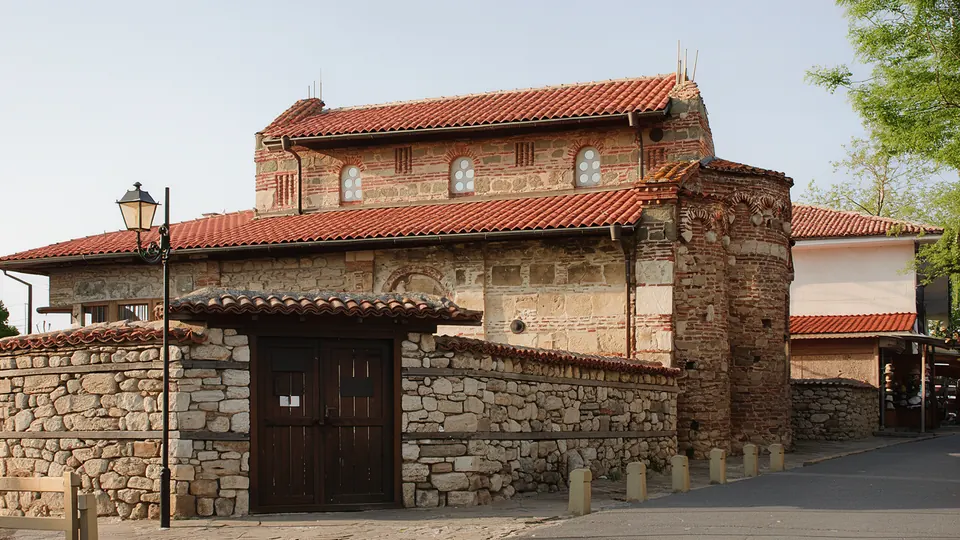
While wandering the labyrinthine cobbled streets of Old Nessebar, a visitor is greeted by the silhouettes of over forty churches, each a testament to the town's millennia-spanning spiritual and cultural significance. Among these stone and brick jewels, the Church of St. Stephen, known locally as "Sveti Stefan," holds a unique and revered place. While its exterior architecture is a handsome example of the Nessebar style, it's the treasure trove within that truly distinguishes it. This is not merely a ruin or an architectural monument; it is a vibrant, breathtaking gallery of post-Byzantine art, a painted bible whose walls have been telling stories for over four centuries.
Unlike many of the older, more famous churches on the peninsula that date back to the early Byzantine era, the story of St. Stephen as we know it today is one of resilience and artistic renaissance during a challenging period. The structure itself originated as a three-naved basilica in the 11th century. However, it underwent a significant reconstruction and expansion between the 16th and 18th centuries, during the Ottoman period. It was during this time that it was elevated in status, becoming the new cathedral for the Bishop of Mesembria, which is why it is also known as the "New Bishop's Church" (Новата митрополия). This period, often perceived as one of cultural suppression, saw a remarkable flourishing of Christian art in certain enclaves, and St. Stephen stands as one of its most brilliant achievements. The patrons and artists who commissioned and created the interior decoration in 1599 made a bold statement about the enduring power of their faith and culture.
The Whispering Walls: Deciphering the Frescoes
Entering the Church of St. Stephen is like stepping into another world. Nearly every square inch of the interior is covered in vivid frescoes, creating an immersive spiritual and artistic experience. Over 1000 individual figures are depicted across 258 distinct compositions, a staggering visual narrative that brought the scriptures to life for a largely illiterate congregation. The paintings, dated precisely to the year 1599 by an inscription, follow a canonical program, covering the walls, arches, and columns with scenes from the life of Christ, the miracles, the Passion Cycle, and the life of the Virgin Mary, to whom the church was originally dedicated. One of the most powerful and detailed compositions is the Last Judgment, a fearsome and intricate depiction designed to inspire awe and piety. The unknown artists, while adhering to the established iconographic traditions of the Orthodox Church, also imbued their work with a remarkable degree of realism and psychological depth, a hallmark of the Tarnovo Artistic School's influence. Faces are expressive, figures have weight, and the storytelling is dynamic and emotionally charged.
A Masterpiece of Post-Byzantine Art and Craftsmanship
The artistic significance of St. Stephen's murals cannot be overstated. They represent a pinnacle of post-Byzantine painting in the Bulgarian lands. While the Byzantine Empire had fallen over a century earlier, its artistic legacy was preserved and reinterpreted by local schools of painters. The artists of St. Stephen managed to blend the stern, spiritual canon of Byzantium with a more humanistic approach. Look closely at the faces of the saints and donors; they are not mere symbols but portraits with individual character. Beyond the frescoes, the church preserves other artistic treasures. The magnificent, intricately carved wooden iconostasis dates to the 16th century and is a masterpiece in its own right, a delicate lace-like screen separating the nave from the altar. Similarly, the carved and painted bishop's throne, dating from the 18th century, adds to the richness of the interior, showcasing the enduring skill of local woodcarvers, a tradition for which Nessebar is famed.
From Sacred Space to World Heritage Museum
The church functioned as an active place of worship for centuries before being deconsecrated and turned into a museum in the 20th century. This transition ensured the preservation of its fragile and irreplaceable frescoes for future generations. Today, it is one of the most important and best-preserved sites within the Nessebar UNESCO World Heritage designation. Its architecture is a composite story: the lower parts built of dressed stone blocks interspersed with bricks, typical of the mixed masonry style (opus mixtum) of medieval Bulgarian and Byzantine construction, while the upper additions reflect later building techniques. Its status as a museum allows for careful climate control and conservation efforts, protecting the delicate pigments from the humid sea air. It serves as a vital educational resource, offering a direct window into the religious life, artistic standards, and cultural identity of Nessebar during a pivotal period of its history.
Visiting St. Stephen in September 2026: A Practical Guide
As the peak summer crowds begin to thin in September, it's an ideal time to visit the Church of St. Stephen and truly appreciate its serene beauty. The church is located in the southern part of the Old Town peninsula and is clearly signposted as part of the "Ancient Nessebar" museum complex. It is typically open daily, from approximately 9:00 AM to 7:00 PM, though hours can vary slightly, so it's always wise to check locally. To enter, you will need a ticket. It's highly recommended to purchase a combination ticket, which provides access to several other key sites in the Old Town, including the Archaeological Museum and other historic churches like St. Spas and Christ Pantocrator. This offers much better value for money. For 2026, expect a single entry ticket to be around €5–6, while a combo ticket might be in the range of €10–13. Photography without flash is usually permitted, but tripods are not. Take your time inside. Let your eyes adjust to the low light and wander slowly, allowing the stories on the walls to reveal themselves. This isn't just another stop on a tour; it's a profound journey into the artistic soul of Bulgaria.
Get local stories & deals
One email a month with the best Black Sea stories and seasonal deals. No spam.