The Silent Sentinels: A Journey Along Nessebar's Ancient Fortification Walls
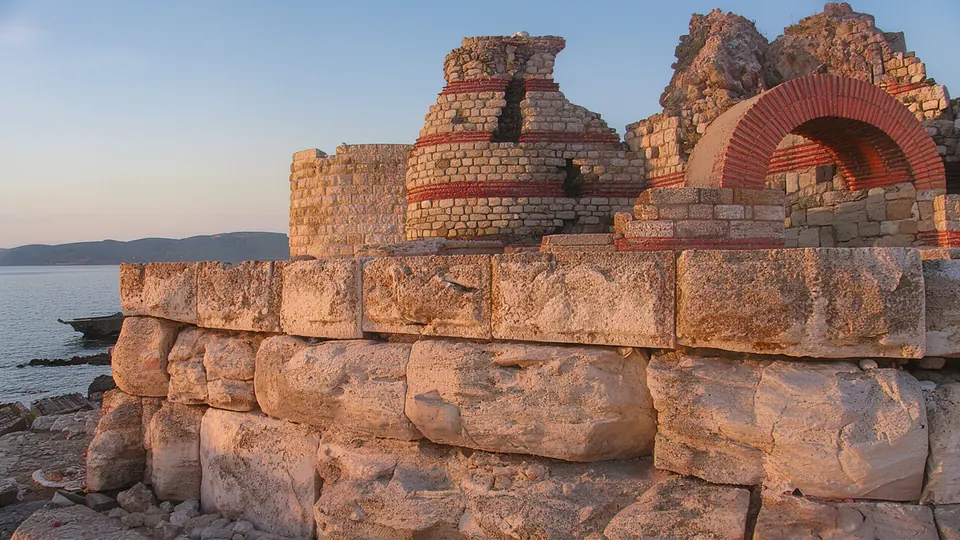
As you approach the ancient peninsula of Nessebar, connected to the mainland by a narrow, man-made isthmus, the first thing that commands your attention is not a church or a charming wooden house, but the formidable stone fortifications that guard its entrance. These are not mere ruins; they are the silent sentinels of a city that has weathered empires, sieges, and the relentless passage of time. The fortification walls of Nessebar are a layered chronicle of history, a stone-and-mortar testament to its strategic importance and enduring spirit. Walking along their ramparts is a journey through more than two millennia, from the powerful Thracians and colonizing Greeks to the master engineers of Rome and Byzantium, and the proud tsars of the Bulgarian Empires. This article invites you to explore the story etched into these ancient stones, discovering the secrets of their construction, the epic events they witnessed, and how to best experience them today.
The First Line of Defence: From Thracian Melsas to Greek Mesembria
The story of Nessebar's defences begins long before the arrival of the Greeks. The peninsula was first inhabited by a Thracian tribe, who founded a settlement known as Melsas. While little remains of their earliest structures, archaeological evidence suggests they understood the peninsula's natural defensive advantages. The true beginning of the monumental fortifications, however, came with the arrival of Dorian Greek colonists at the end of the 6th century BC. They renamed the settlement Mesembria and, recognizing its potential as a major trading post, began constructing the first significant defensive walls. The oldest surviving fragments, often found at the base of later constructions, date back to the 5th-4th centuries BC. These sections are characterized by a technique known as cyclopean masonry, using massive, hewn polygonal stone blocks fitted together with minimal gaps and without the use of mortar. This Hellenistic-era wall enclosed the northeastern part of the peninsula, and its primary purpose was to protect the burgeoning polis from both land-based attacks via the isthmus and seaborne threats. Walking near the port area, a keen eye can sometimes spot these immense, foundational stones, a tangible link to the city’s classical origins.
The Roman and Byzantine Apex: Engineering an Impenetrable Fortress
When Mesembria fell under Roman influence in 71 BC, it entered a new phase of prosperity and architectural development. While the Romans maintained and likely reinforced the existing walls, the most impressive and visually dominant sections we see today are a product of the Late Roman and Early Byzantine periods, particularly the 5th and 6th centuries AD. During this era, Mesembria became a vital outpost of the Eastern Roman (Byzantine) Empire, a key naval base, and an episcopal see. To protect such a valuable asset, Byzantine engineers undertook a massive reconstruction project. They employed a distinctive construction technique known as opus mixtum, which involved alternating horizontal bands of cut stone with several layers of red brick, all bound with strong mortar. This method provided both structural flexibility—crucial in an earthquake-prone region—and a striking aesthetic. The most magnificent example of this work is the western wall and the main city gate complex, which controlled access from the isthmus. Flanked by imposing pentagonal and rounded towers, the gate was not just an entrance but a sophisticated defensive system designed to trap and repel attackers. The walls once encircled the entire peninsula, a formidable barrier against Goths, Slavs, and Avars who threatened the empire's borders during this turbulent period.
A Bulgarian Stronghold: Sieges, Tsars, and Medieval Glory
The history of Nessebar's walls is inextricably linked with the dramatic relationship between the Byzantine and Bulgarian Empires. The city was a coveted prize, changing hands multiple times. In 812, the formidable Khan Krum of the First Bulgarian Empire captured Mesembria, a significant victory that demonstrated the growing power of the Bulgarians. For centuries, the city remained a point of contention. However, it was during the Second Bulgarian Empire (12th-14th centuries) that Nessebar truly flourished as a Bulgarian cultural and commercial hub. Under the reign of enlightened rulers like Tsar Ivan Alexander (1331-1371), the city experienced a golden age. While a devastating raid by the Savoyard Crusade in 1366, led by Amadeus VI, Count of Savoy, resulted in the city's temporary capture and plunder, the Bulgarians soon reclaimed it. Throughout this medieval period, the fortifications were consistently maintained and reinforced. The walls that protected the city's dozens of newly built churches and thriving merchant quarters were a symbol of Bulgarian sovereignty and prosperity on the Black Sea. They witnessed countless naval skirmishes and strategic manoeuvres, standing as the primary defence for a city that was a jewel in the Bulgarian crown.
Decline and Rediscovery: The Ottoman Era to Modern Preservation
The fall of Nessebar to the Ottoman Turks in 1453 marked a turning point in the city's history and the fate of its fortifications. As the Ottoman Empire consolidated its control over the Black Sea, the strategic military importance of coastal fortresses like Nessebar diminished. The advent of powerful cannon artillery also rendered traditional medieval walls increasingly obsolete. Consequently, the magnificent fortifications were largely abandoned and fell into a state of gradual decline. For centuries, they were neglected, with local residents often quarrying stones from the disused walls to build their own homes. A significant earthquake in the 19th century caused further damage, collapsing large sections of the western wall into the sea. It was not until the 20th century, with the rise of modern archaeology and a renewed appreciation for Bulgaria's national heritage, that systematic efforts began to study and preserve these historic structures. The declaration of Old Nessebar as an architectural-historical reserve, and its subsequent inscription on the UNESCO World Heritage list in 1983, cemented the walls' status as a monument of global significance. The preservation work, which continues to this day, ensures that these silent sentinels can continue to tell their story to future generations.
Walking the Walls Today: A Visitor's Guide
Experiencing Nessebar's fortification walls is a highlight of any visit to the old town. A self-guided tour is both easy and deeply rewarding. The best place to start is at the main gate on the western side of the peninsula, right by the isthmus. Here, the walls are at their most impressive, reaching heights of over 8 metres. You can explore the ruins of the gate complex, admire the pentagonal towers, and visit the Archaeological Museum, which is conveniently located just inside the gate and provides essential context for what you are seeing. From the gate, you can follow the path northwards along the port, where sections of the wall run parallel to the waterfront, offering beautiful views of the harbour and Sunny Beach in the distance. Alternatively, head south from the gate, where the path follows the coastline. Although less of the wall remains standing on the southern and eastern sides of the peninsula, you can still trace its original path and discover hidden remnants and scenic viewpoints overlooking the sea. The western section remains the most photogenic, especially at sunrise or sunset when the light casts a golden glow on the ancient stone and brickwork. As you walk, take a moment to touch the stones and imagine the centuries of history they have witnessed—a story of resilience, conflict, and civilization on the edge of the Black Sea.
Get local stories & deals
One email a month with the best Black Sea stories and seasonal deals. No spam.