Echoes of Steam and Stone: Uncovering Nessebar's Early Byzantine Baths
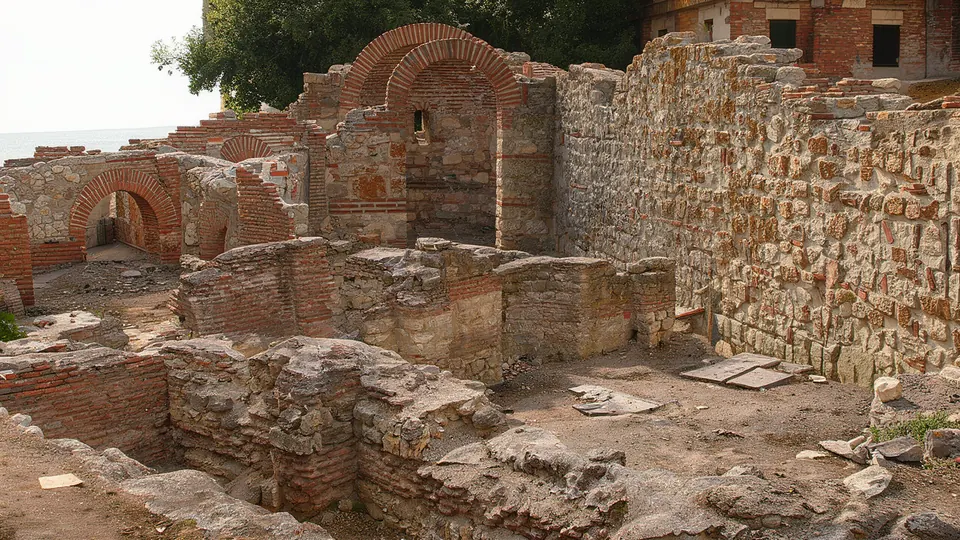
While Nessebar's skyline is famously punctuated by the domes and crosses of its medieval churches, a quieter story of daily life unfolds among its lesser-known ruins. Tucked away near the grand Basilica of St. Sophia lie the remains of the Early Byzantine Baths, a testament to the sophisticated urban culture of ancient Mesembria. These stones whisper tales not of prayer and piety, but of public life, relaxation, and the intricate social rituals that defined the Byzantine world. They remind us that the inhabitants of this holy city were also ordinary people who valued comfort, conversation, and the simple pleasure of warm water.
A Cornerstone of Mesembrian Society
Constructed during the 6th century, most likely under the reign of Emperor Justinian I — the great builder whose monuments rose across the empire — these thermae were a cornerstone of Mesembrian society. They were far more than simple bathing facilities. In the Roman tradition that Byzantium inherited and continued, the public baths were the social heart of a city, a place where citizens of every standing gathered to meet, to relax, and to do business. Here merchants struck deals, officials discussed politics, and neighbours traded the local gossip. The bath emphasised the maintenance of both physical and social well-being, and attendance was woven into the daily routine of the city's elite, making the thermae as much a civic institution as a place to wash.
How the Baths Worked
The archaeological remains today reveal the classic layout of a Roman-style bathhouse, a genuine marvel of ancient engineering that delivered a graduated experience of heat and cold. A bather moved in sequence through a series of rooms, each maintained at a different temperature, before reversing the journey.
The Sequence of Rooms
Visitors can trace the foundations of the main halls that structured this ritual. The frigidarium was the cold room, often with a plunge pool of unheated water that braced and refreshed the body. The tepidarium was the warm, transitional room where bathers acclimatised, neither hot nor cold. The caldarium was the hot, steam-filled chamber, the climax of the experience, where the heat opened the pores and induced a cleansing sweat. Moving between these rooms was the essence of the bathing ritual, a carefully sequenced regimen of temperatures inherited from centuries of Roman practice.
The Hypocaust
The genius of the system lay beneath the floors. Below the marble paving, remnants of the sophisticated hypocaust system are still visible — a network of short brick pillars, called pilae, that raised the floor above an empty space. Hot air and smoke from a furnace, stoked by attendants, were drawn through this underfloor void and up through flues built into the walls, heating the rooms and the water from beneath without filling them with smoke. It was an elegant solution to the problem of central heating, devised long before the modern age, and its surviving pillars are among the most evocative features of the site.
Decline and Rediscovery
More Than a Place to Bathe
To understand the importance of the thermae, it helps to picture the rhythm of a day in early Byzantine Mesembria. For the citizen of standing, a visit to the baths was not a hurried matter of hygiene but an extended social occasion that might fill the better part of an afternoon. One arrived, undressed, and moved through the warm and hot rooms, perhaps pausing to be massaged or anointed with oil; one exercised, sweated, scraped the skin clean, and plunged into the cold pool; and throughout, one talked. The baths dissolved, for a few hours, the ordinary boundaries of daily life, bringing together people who might otherwise rarely meet and lubricating the constant business of conversation, negotiation, and friendship on which a city's life depends.
This institution was, moreover, a direct inheritance from the Roman world, and its survival into the sixth century at Mesembria is itself significant. It shows a provincial Black Sea city participating fully in the shared civic culture of the eastern Roman, now Byzantine, empire — building and maintaining the same kind of monumental public amenity that graced great cities across the Mediterranean. The thermae are, in this sense, evidence not just of comfort but of belonging: of a city that saw itself as part of a wider civilised order and invested in the architecture that order demanded.
Decline and Rediscovery
The decline of these magnificent baths likely coincided with the turbulent centuries that followed their heyday, as Mesembria faced numerous sieges, economic disruption, and repeated shifts in power between Byzantine, Bulgarian, and other rulers. Maintaining a large bath complex, with its constant need for fuel, water, and skilled attendants, was a luxury that a city under stress could no longer afford. As the baths fell out of use, their purpose was forgotten and their walls were gradually buried beneath layers of earth and the accumulated debris of later centuries. There they lay, hidden, until their rediscovery by archaeologists in the 20th century brought this chapter of everyday Byzantine life back into the light.
What Visitors Can See Today
Visiting the baths today offers a unique opportunity to connect with the everyday citizens of Mesembria, rather than only its saints and rulers. Standing among the excavated foundations near the Basilica of St. Sophia, you can read the plan of the cold, warm, and hot rooms in the surviving walls, and peer beneath the floor level to see the brick pillars of the hypocaust that once carried heat through the building. It is a tangible link to a past where community and comfort were built quite literally in stone and steam, and a welcome counterpoint to the city's many churches — a reminder that ancient Mesembria was a living town as well as a holy one.
Frequently Asked Questions
When were the Early Byzantine Baths built?
During the 6th century, most likely under the reign of Emperor Justinian I.
Where are the baths located?
Near the grand Basilica of St. Sophia in the Old Town of Nessebar.
What rooms did a Roman-style bathhouse have?
A frigidarium (cold bath), a tepidarium (warm room), and a caldarium (hot steam room), through which bathers moved in sequence.
What is a hypocaust?
An ancient underfloor heating system — a network of pillars beneath the floor that allowed hot air from a furnace to circulate and heat the rooms and water from below.
Why did the baths fall into ruin?
Their decline coincided with the turbulent centuries of sieges and shifts in power that followed; they were forgotten and buried until archaeologists rediscovered them in the 20th century.
Step back into the daily life of the ancient city and plan your visit through our guide to Nessebar.
Get local stories & deals
One email a month with the best Black Sea stories and seasonal deals. No spam.