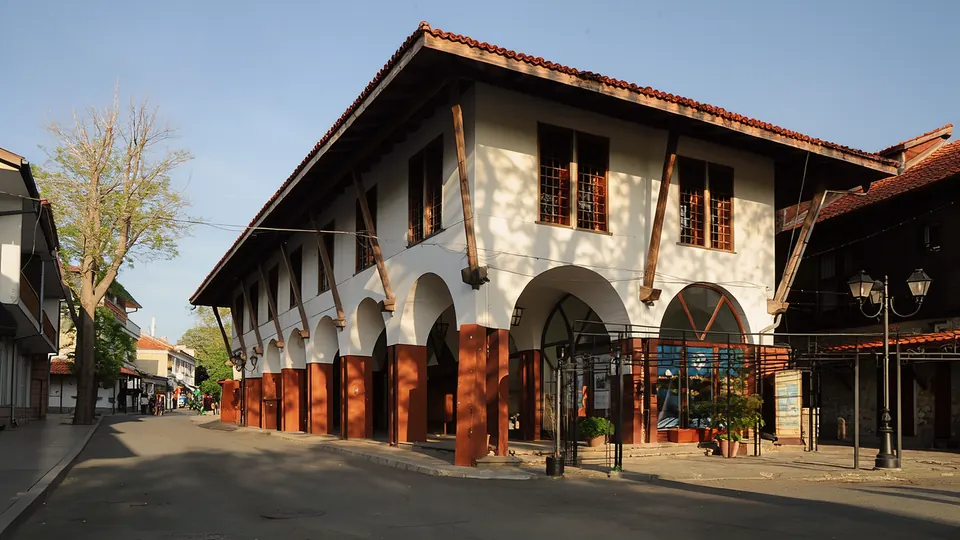
Nesebar should not really be possible. On a rock 850 metres long, tied to the mainland by a thread of sand, more than three millennia of continuous history sit stacked on top of each other — Thracian settlement, Greek colony, Roman city, Byzantine bishopric, Ottoman fishing town, Bulgarian seaside icon. UNESCO put the Old Town on the World Heritage List in 1983, and it remains the single most atmospheric place on the Bulgarian Black Sea coast. Yet Nesebar is not only a museum: it has long sandy beaches, a lively modern town, and it sits at the exact centre of the southern coast, minutes from Sunny Beach, Sveti Vlas, Ravda and Pomorie.
This is the complete guide for a 2026 visit: how the Old Town works, which sights actually matter, where the beaches are, where to stay (and how to rent directly from an owner without fees), what to eat, how to get here, when to come, and what to see nearby. Where a topic deserves a deep dive, we link to our detailed guides throughout.
The Old Town: A Museum You Can Sleep In
The heart of Nesebar is the peninsula — the Old Town. It is tiny: about 850 metres long and 300 metres wide, joined to the mainland by a narrow isthmus around 400 metres long. You enter on foot past two icons: the wooden windmill standing mid-isthmus, probably the most photographed object on the Bulgarian coast, and the bronze statue of St Nicholas, patron of sailors, greeting you at the gate. Cars cannot enter — only residents with permits — so you park at the lots by the entrance and walk in.
What you are walking on is at least five cities in layers. Thracians founded Melsambria here around 510 BC; Dorian Greek settlers renamed it Mesembria and minted silver coins you can still see in the town museum. Rome absorbed it in 72 BC, Byzantium made it a fortified bishopric and gave it a golden age between the 5th and 14th centuries — when most of its famous churches rose — and the Ottomans took it in 1453, the same year Constantinople fell. The dark timber houses hanging over the lanes date from the 18th-19th century Revival period. The full story is in our history of Nesebar and its UNESCO listing.
Crucially, this is not a roped-off heritage park but a living town: people reside on the peninsula year round, laundry dries between centuries-old houses, and church bells still ring. The main artery is ulitsa Mesambria, running from the gate down the length of the rock; nearly everything else branches off it. Walk it — then deliberately get lost. The real charm lives in the side lanes where timber bay windows nearly touch overhead and the sea flashes suddenly between two houses. End to end takes fifteen minutes without stopping; nobody has ever done it without stopping. And know this: the best Nesebar is the evening one, after the tour groups drain away, the lanterns come on and the cobbles start to shine — which is the single best argument for sleeping on the peninsula at least one night.
Practical notes:
- Time needed: a focused half-day covers the headline churches and a seafood lunch; a full day adds the museums and sunset. Ideally, stay a night — the peninsula after the day-trippers leave is a different, far more magical town.
- When to walk it: before 10:00 or after 17:00 in July-August. Midday lanes are packed and the stone radiates heat.
- Footwear: the cobbles are polished and uneven — flat shoes, not heels.
- Deep dive: our complete Old Town guide walks the peninsula street by street, and the walking-routes guide maps three tested loops.
Top 10 Sights
Nesebar once had around 80 churches; roughly 40 survive in some form. You do not need all 40 — you need these, roughly in walking order from the gate. For the full annotated list see the landmarks guide, and to see everything positioned on one map, open the interactive map of Nesebar.
- The Windmill — the wooden sentinel on the isthmus, symbol of the town. Free, always open, best photographed at dawn before the crowds.
- The Fortress Walls and Gate — Roman and early Byzantine fortifications right at the entrance; the easiest way to grasp how old this town is.
- Archaeological Museum — at the gate. Thracian finds, Mesembria silver coins, gold jewellery, anchors. A compact, well-labelled hour; see our museum visitor guide.
- Christ Pantocrator — the postcard church: 13th-14th century, red brick and white stone, ceramic rosettes, now an art gallery. Full story in our Pantocrator article.
- St Stephen (the New Metropolis) — plain outside, breathtaking inside: over 250 fresco scenes and more than 1,000 figures painted between the 16th and 18th centuries. The must-see interior; details in the St Stephen guide.
- St Sophia (the Old Metropolis) — the 5th-6th-century cathedral basilica, open to the sky, free to walk through, magical in late light.
- The Basilica of the Holy Mother of God Eleusa — a 6th-century ruin right on the north shore rocks; the best sunset spot on the peninsula.
- St John the Baptist — one of the oldest standing churches (10th-11th century), austere cruciform stone.
- The Ethnographic Museum (Moskoyani House) — the finest of the Revival-era timber houses, showing how a wealthy 19th-century family lived.
- St Spas and the small lane churches — half-sunken 17th-century St Spas with its frescoes, plus St Paraskeva, St Theodore and the roofless St John Aliturgetos, scattered free through the lanes.
Tickets and hours: entering the Old Town itself is free; you pay per site. Individual churches and museums cost roughly 3-4 euro each, and combined tickets (sold at the Archaeological Museum) scale up to around 13 euro for all eight managed sites — worthwhile if you plan three or more interiors; children pay about half. In summer most paid sites open roughly 09:00-18:00/19:00, shorter off season, while the roofless ruins — St Sophia, the Eleusa basilica, the exterior of St John Aliturgetos — are free and open at all hours, perfect for the evening walk.
The Beaches
Nesebar is a proper beach destination, not just a heritage stop.
- South Beach — the main event: a 1.5 km arc of fine pale sand along the New Town, with a gentle gradient that stays shallow for the first many metres — excellent for children. Lifeguards in season, sunbed-and-umbrella sets around 5-8 euro per day, and free zones where you can plant your own umbrella.
- North Beach — smaller and closer to the Old Town, facing the Sunny Beach bay; handy for a quick swim between churches.
- Around the peninsula — small coves and rocky platforms where locals swim; pick your spot with our guide to North Beach, South Beach and the hidden coves.
- Nearby: Ravda's quieter family beaches start 2-3 km south, and the enormous 8 km strip of Sunny Beach begins just north. We ranked them all in the best beaches around Nesebar.
How the beach works in practice: the organised zones have sunbeds, umbrellas and lifeguards (roughly June to mid-September), while marked free zones let you plant your own kit — a supermarket umbrella and mat cost about 20 euro once and pay for themselves in two days. A red flag means no swimming; take it seriously, as the undertow in strong wind is no joke. For jet skis, parasailing and SUP, the epicentre is next-door Sunny Beach.
Water is warmest late July to early September (25-27°C). For temperatures month by month — and the honest truth about jellyfish — see the sea in Nesebar.
Where to Stay
The single most important decision of your trip is which zone to sleep in:
- Old Town (the peninsula): unbeatable atmosphere — you live inside the UNESCO site and get the evenings to yourself. Trade-offs: no car access (you park at the entrance lots), stairs and cobbles, and premium prices in August. Practicalities in our Old Town accommodation and parking notes.
- New Town: the practical choice — modern apartments, supermarkets, parking, and South Beach on your doorstep. Best for families and longer stays; the Old Town is a pleasant 20-30 minute seafront walk away.
- Ravda: a quiet village feel 2-3 km south, noticeably cheaper, great gentle beaches — the family-budget pick.
- Sveti Vlas: upmarket and calm, 10-12 km north, built around the Dinevi marina, with some of the cleanest water on this stretch of coast.
A full comparison of the zones is in where to stay in Nesebar.
What it costs (per night, August, as orientation): a studio 35-65 euro, a one-bedroom apartment 55-90 euro, a two-bedroom 70-120 euro; houses and villas for larger groups start around 180 euro. In June and September the same properties typically run about a third cheaper, and in May or October often half. August fills first — if school holidays bind you, write to owners in winter or early spring, because the best Old Town and seafront apartments vanish months ahead.
Renting directly from the owner. This site — nesebar.net — is a free catalogue of apartments and houses in Nesebar and the surrounding resorts, listed by their owners. There is no online booking, no commission and no service fee: you browse the catalogue, open a listing, and contact the owner directly by phone or message. You agree the dates and the price between yourselves — the price the owner quotes is the price you pay, with no platform markup. Two of our guides make direct renting painless: how to choose an apartment in Nesebar and what to ask the host before you commit.
Food: Mehanas, Fish and the View Tax
The Old Town is wall-to-wall mehanas (traditional taverns) and seafood terraces hanging over the water. Quality varies with the view — the golden rule is that a terrace over the sea charges a premium, and two lanes inland the same dish costs noticeably less. That is the "view tax"; it is not a scam, but know you are paying it.
What to order:
- Tsatsa — crisp fried Black Sea sprat, eaten by the plateful with cold beer.
- Black Sea mussels (midi) — steamed or in a garlic-wine broth.
- Kalkan (turbot) and grilled seasonal fish — safrid, palamud in autumn.
- Shopska salad, kebapche, kavarma — the Bulgarian classics, done properly in the better mehanas.
- Rakia — the national fruit brandy, sipped slowly with salad, never downed.
Rough 2026 prices: a shopska salad 3-5 euro, a grilled main 5-9 euro, a whole grilled fish 9-15 euro, draught beer 2-3 euro — higher on the waterfront terraces. A few habits improve every dinner: check whether service is already on the bill before tipping (about 10% for good service is generous), reserve a sunset-facing table in the 20:00-21:30 peak or arrive early, and when ordering large fish priced per 100 grams, ask for the final figure before it hits the grill. If you are self-catering in an apartment, the big supermarkets are in the New Town and the small fishmongers by the harbour sell the morning catch. Reliable names in the Old Town include Captain's Place, Neptun and the small lane taverns away from the main drag; our Old Town restaurant guide reviews them one by one, and where and what to eat in Nesebar covers the New Town and cheap eats. For the full national menu, from banitsa to yogurt, start with the Bulgarian cuisine guide.
Getting There and Getting Around
By air: Burgas Airport (BOJ) is the gateway, about 33 km south — 35-50 minutes by road. Your options, best to cheapest:
| Option | Price (approx.) | Time |
|---|---|---|
| Pre-booked private transfer | 30-45 euro per car | 40-50 min |
| Metered airport taxi | 30-50 euro | 40-50 min |
| Bus 15 to Burgas + coach to Nesebar | 4-6 euro total | 2-2.5 hrs |
The full breakdown, with family tips and scam avoidance, is in getting to Nesebar from Burgas Airport. There is no train to Nesebar; the nearest rail is Burgas, a city worth a look in its own right — see the Burgas gateway guide.
Getting around: the beloved bus 11 loops between Nesebar, Sunny Beach and Sveti Vlas all day for roughly 1-1.50 euro a ride, and regional coaches run to Burgas every 30-40 minutes in summer for around 3-4 euro. Details and taxi advice in public transport around Nesebar. If you plan day trips, a rental car from about 25-55 euro per day makes sense — routes and tips in renting a car in the Nesebar area.
Parking: the Old Town is car-free; use the paid lots at the peninsula entrance. The New Town has street and lot parking, and many apartments include a space — always confirm with your host.
When to Visit
| Month | Air (day) | Sea | Crowds | Prices |
|---|---|---|---|---|
| May | ~21°C | ~16°C | Low | Low |
| June | ~26°C | ~21°C | Medium | Medium |
| July | ~30°C | ~25°C | High | High |
| August | ~31°C | ~27°C | Highest | Highest |
| September | ~27°C | ~24°C | Medium | Medium |
| October | ~19°C | ~19°C | Low | Low |
- July-August is full summer: everything open, sea at its warmest, maximum crowds and peak apartment prices.
- June and September are the connoisseur months — swimmable sea, warm days, fewer people, prices a step down. September in particular is superb.
- May and October are for walkers and photographers: the Old Town in soft light, empty lanes, bargain stays — but swimming is for the brave. Ideas for the shoulder season in what to do in Nesebar in October.
- The town celebrates its biggest feast on 15 August (the Assumption — the Day of Nesebar); the year-round programme is in the festivals and events calendar.
Full climate detail: Nesebar weather and sea temperature guide and Nesebar through the seasons.
Around Nesebar
Nesebar is the perfect base for the whole southern coast:
- Sunny Beach — Bulgaria's biggest resort begins immediately north: 8 km of sand, aquaparks, and the loudest nightlife on the coast. See the complete Sunny Beach resort guide and our destination page.
- Sveti Vlas — 10-12 km north; calm, upmarket, with the showpiece Dinevi marina and Blue Flag water. Guide: Sveti Vlas and Marina Dinevi.
- Ravda — the quiet family village 2-3 km south; Ravda guide.
- Elenite — the all-inclusive enclave where the Balkan mountains meet the sea; Elenite guide.
- Pomorie — 18 km south: salt lakes, therapeutic mud, dark iron-rich sand and a working monastery; Pomorie salt-and-spa guide.
Further afield — Sozopol, the Strandzha hills, Cape Emine — are all doable in a day; see day trips from Nesebar.
Practical Tips
- Money: Bulgaria adopted the euro on 1 January 2026; it is now the only legal tender (the old lev converted at the fixed rate of 1.9558 lv per euro, and shops display dual prices during the transition year). Cards and contactless are accepted almost everywhere; keep small cash for buses, kiosks and beach rentals, and withdraw from bank ATMs rather than the standalone machines on the tourist strips, which load heavier fees. Full detail in money, currency and payments in Bulgaria.
- Connectivity: EU citizens roam at no extra charge, free Wi-Fi is standard in cafes and apartments, and a local tourist data SIM from A1, Yettel or Vivacom costs on the order of 5-10 euro.
- Language: Bulgarian, written in Cyrillic. English is widely spoken in tourist areas, along with Russian and German. Learning "zdravei" (hello) and "blagodarya" (thank you) earns smiles.
- Safety: Nesebar is a safe, family-oriented town. Standard resort care applies: watch your bag in crowded lanes, use marked taxis, and note the EU emergency number 112.
- With children: South Beach's shallow gradient is ideal for small kids, the Old Town is stroller-hostile but short, and Aquapark Nessebar plus the Sunny Beach parks fill the "not another church" days — our family activities guide has a full week of ideas.
- Rainy day? There are more museums, galleries and cosy mehanas than you think — and locals share live tips in the community section.
FAQ
How many days do I need in Nesebar?
Two to three days cover the Old Town properly, the beach, and one nearby excursion. A week works perfectly if you treat Nesebar as a base for the whole southern coast.
Is the Old Town free to enter?
Yes. You pay only to enter individual churches and museums — roughly 3-4 euro each, or a combined ticket up to about 13 euro for all managed sites.
Nesebar or Sunny Beach — where should I stay?
Nesebar for atmosphere, history, families and quieter evenings; Sunny Beach for nightlife and big-resort infrastructure. They are 10 minutes apart on bus 11, so you can dip into either.
When is the sea warm enough to swim?
From mid-June (around 21°C) through September (around 24°C), peaking near 27°C in August.
How do I get from Burgas Airport to Nesebar?
Pre-booked transfer or metered taxi (30-50 euro, 40-50 minutes) or the budget bus route via Burgas for a few euro. No train exists.
Can I book an apartment through nesebar.net?
The site is a free catalogue, not a booking agency: you contact the owner directly and agree terms with them — no commission, no service fees, no markup. Start at the property catalogue.
Is Nesebar good outside summer?
Yes, differently: May, September and October offer the Old Town at its most photogenic with a fraction of the crowds. Winter is very quiet, but the peninsula in low sun is beautiful.
Where can I see all the sights on a map?
On our interactive map of Nesebar, which plots the churches, museums, beaches and parking, and in the full landmarks guide.
Get local stories & deals
One email a month with the best Black Sea stories and seasonal deals. No spam.