From Messambria to Nesebar: The UNESCO Story of the Ancient City
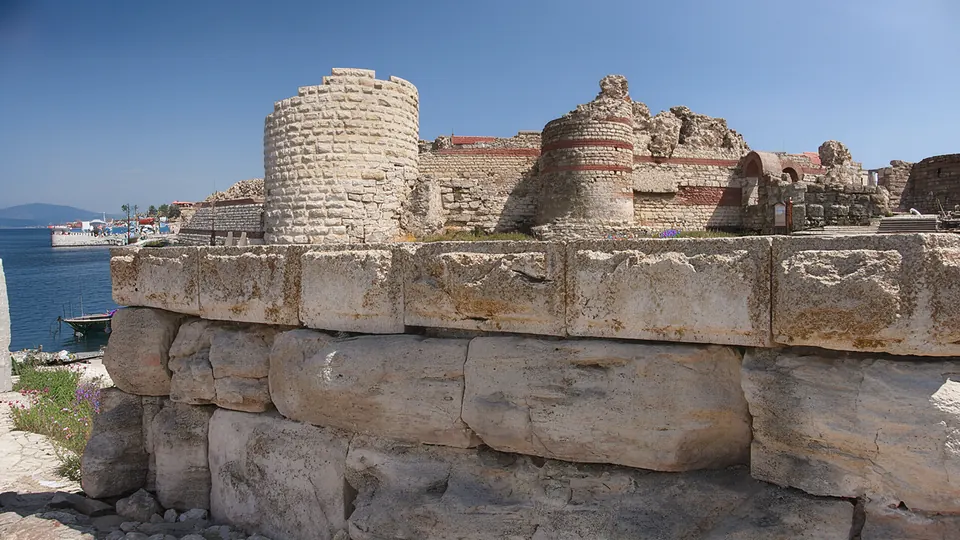
There are few places on the planet where you can walk three thousand years of European history in twenty minutes. Nesebar is one of them. This small rocky peninsula, joined to the mainland by a slender man-made isthmus, has been continuously inhabited since the Bronze Age — Thracians, Greeks, Romans, Byzantines, Ottomans, and Bulgarians have all called it home, and each left their stones in the ground. UNESCO inscribed the Ancient City of Nessebar on the World Heritage List in 1983, and to walk it is to read the whole story of the Black Sea in a single afternoon.
This is that story — who came, what they built, and why this little peninsula matters to the history of Europe.
A Thracian Beginning: Menebria
The first settlement here belonged to the Thracians, the warlike, gold-loving people who inhabited the eastern Balkans long before written history. They called their settlement Menebria or Melsambria — the name is said to combine Mena, a Thracian founder or ruler, with bria, the Thracian word for "town." So the very name of Nesebar means, in the oldest layer, "the town of Mena." Traces of this Thracian past survive in the foundations and the fortifications.
The Greek City-State: Messambria (6th century BC)
Around 510 BC, Greek colonists from Megara and Byzantium (Doric Greeks) settled the peninsula and refounded it as Messambria (Μεσημβρία). It flourished as an independent Greek polis — a maritime trading city that struck its own silver and bronze coins, built temples to Apollo and other gods, raised a theatre and an acropolis, and traded grain, wine, and salt across the Black Sea and beyond. For centuries Messambria was one of the most important Greek cities on the western Black Sea coast, rivalling nearby Apollonia (modern Sozopol). The Doric stonework and street grid of this classical city still underlie the town.
Roman Messembria
When Rome absorbed the region in the 1st century AD, Messambria (now in its Latinised form) continued to prosper as part of the province of Thrace and later Moesia. The Romans brought baths, an aqueduct, new fortifications, and the long peace of empire. The city kept its trade and its importance through the Roman centuries, a comfortable provincial port on the great sea.
Byzantine Mesembria: The Golden Age of Churches
This is the era that made Nesebar what it is. As the Roman Empire shifted east and became Byzantium, Mesembria became a major Byzantine stronghold and bishopric on the Black Sea — a fortified frontier city, a religious centre, and a prize fought over for a thousand years.
Between roughly the 5th and 14th centuries, Mesembria's wealth and faith expressed themselves in a remarkable density of churches. The town is sometimes said to have had as many as forty churches for a tiny population — a "town of churches." Among the most famous surviving examples:
- The Old Metropolitan Church (Basilica of Hagia Sophia) — a grand early Christian basilica, 5th-6th century, the great ruined church at the heart of the Old Town.
- Christ Pantocrator (Church of Christ Pantocrator) — 13th-14th century, one of the best-preserved, famous for its dazzling exterior of brick, stone, and green ceramic discs in decorative bands. The picture-postcard church of Nesebar.
- Church of St Stephen (the New Metropolitan Church) — 11th century and later, celebrated for its interior covered in some 250 medieval frescoes.
- St John Aliturgetos — a beautiful 14th-century ruin on the southern shore, an architectural showpiece of patterned brick and stone.
- St Paraskeva, St Theodore, the Pantocrator and others — a whole gallery of medieval Byzantine and Bulgarian church architecture, many in the picturesque, decorative style for which the town is known.
This architecture — the rhythmic banding of red brick, pale stone, and glazed ceramic — is the signature of the Black Sea Byzantine and medieval Bulgarian church, and Nesebar is the single best place on earth to see it.
A City Fought Over: Byzantines and Bulgarians
Throughout the Middle Ages, Mesembria changed hands repeatedly between the Byzantine Empire and the Bulgarian Empire. Bulgarian rulers prized it: Khan Krum besieged it; Tsar Simeon and later medieval Bulgarian rulers held it; Tsar Ivan Alexander held the city in the 14th century, a period that produced some of its finest churches. The peninsula's powerful walls — successive layers of Thracian, Greek, Roman, and Byzantine fortification, parts of which still guard the isthmus entrance today — were built and rebuilt because everyone wanted this harbour.
Ottoman Mesambria and the Bulgarian Revival
In 1453, the year Constantinople fell, the Black Sea coast passed to the Ottoman Empire, and Mesembria entered the long Ottoman centuries. Yet the town kept its Greek and Bulgarian Christian character, its churches, and its sea trade. In the 18th and 19th centuries came the Bulgarian National Revival (Vazrazhdane), and Nesebar filled with the distinctive Revival-era wooden houses that give the Old Town so much of its charm today: stone ground floors, projecting timber upper storeys with bay windows, leaning out over the cobbled lanes. Many of these beautiful houses still stand and are lived in or run as guesthouses and restaurants.
After the Liberation of Bulgaria in 1878, the town — its name now in the Bulgarian form Nesebar (Несебър) — became part of the modern Bulgarian state, and in the 20th century grew into the beloved cultural and seaside destination it is today.
Why UNESCO Listed It (1983)
UNESCO inscribed the Ancient City of Nessebar as a World Heritage Site in 1983 for reasons that the layered history above makes obvious. The official grounds, in essence:
- More than three millennia of continuous, multi-layered habitation — Thracian, Greek, Roman, Byzantine, Ottoman, Bulgarian — preserved together on one small peninsula.
- An exceptional ensemble of medieval churches illustrating the development of Eastern Orthodox church architecture over many centuries, the picturesque Black Sea style at its finest.
- The ancient fortifications, the acropolis and ancient remains, and the Bulgarian Revival domestic architecture surviving in a remarkably intact historic townscape.
In short: Nesebar is a living museum of Black Sea civilisation, where the streets, walls, churches, and houses of every era stand together. It is one of just a handful of UNESCO sites in Bulgaria, and the only one of its kind on the coast.
Walking the History Today
The whole Old Town is the monument. A slow walk takes you from the windmill and ancient walls at the isthmus, past the Basilica of Hagia Sophia and the Church of Christ Pantocrator, through lanes of leaning Revival houses, down to St John Aliturgetos on the southern shore at sunset. The Archaeological Museum at the entrance frames it all, with Thracian gold, Greek coins, and church icons. Allow at least half a day; the peninsula rewards lingering.
To stand inside the world heritage site at dawn before the day-trippers arrive, stay in or beside the Old Town — browse historic apartments and houses in Nesebar, and find more local guides in our articles.
FAQ
Why is Nesebar a UNESCO World Heritage Site?
It was inscribed in 1983 for its more than three thousand years of continuous, layered habitation — Thracian, Greek, Roman, Byzantine, Ottoman, Bulgarian — and especially its exceptional ensemble of medieval Black Sea churches and surviving Bulgarian Revival houses, all preserved together on one peninsula.
What does the name "Nesebar" mean?
It descends from the ancient Thracian name Menebria/Melsambria, said to mean "the town of Mena" (a Thracian founder), via the Greek Messambria and the Byzantine Mesembria. The modern Bulgarian form is Nesebar.
Which churches should I see in Nesebar?
The standouts are the Church of Christ Pantocrator (the famous decorated 13th-14th-century church), the Old Metropolitan Basilica of Hagia Sophia, the Church of St Stephen (with about 250 frescoes), and St John Aliturgetos on the southern shore.
How old is Nesebar?
The peninsula has been continuously inhabited for more than three thousand years, since the Bronze Age, beginning with a Thracian settlement and refounded as the Greek city of Messambria around 510 BC.
How long do I need to see the Old Town?
At least half a day to walk the main churches, the walls, the Revival houses, and the museum without rushing. Staying overnight lets you experience the peninsula at dawn and dusk, when it is at its most atmospheric and least crowded.
Is there an entrance fee to the Old Town?
The Old Town itself is open and free to walk. Individual churches and the Archaeological Museum charge small admission fees (typically a few BGN each), and some operate seasonal hours.
Get local stories & deals
One email a month with the best Black Sea stories and seasonal deals. No spam.