Festivals and Events in Nesebar: A Month-by-Month Calendar
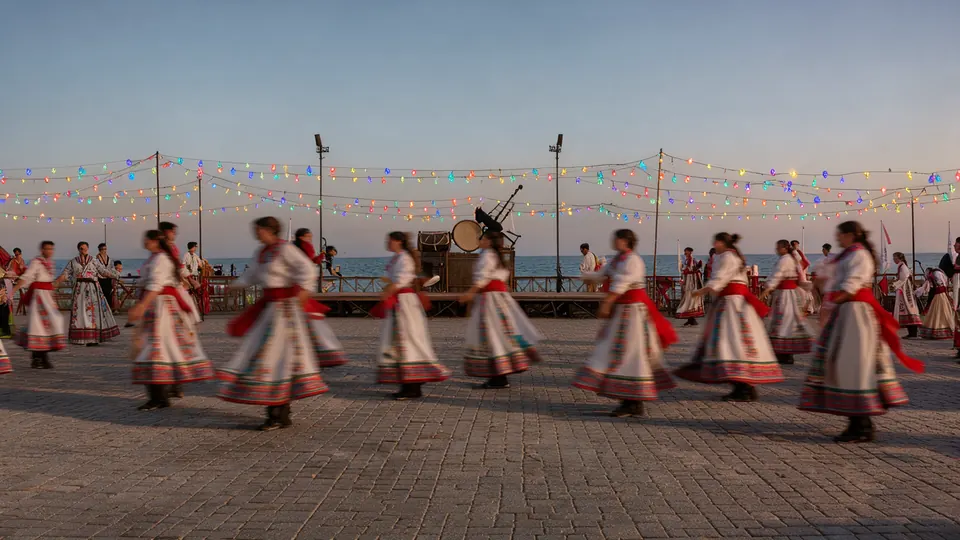
Nesebar is far more than a beach. The Old Town's cobbled lanes and Revival houses become a stage in summer for music, folklore, and centuries-old religious tradition — and the wider Black Sea coast hosts everything from fire-dancing rituals that survive from pagan antiquity to electronic music festivals that draw tens of thousands. Time your visit right and the holiday becomes a cultural event.
This is a month-by-month guide to what is on around Nesebar and the southern Black Sea coast. Exact dates shift year to year — local feast days move with the Orthodox calendar and festival dates are announced each spring — so confirm with your host or the Nesebar municipality before travelling specifically for an event.
The Bulgarian Festival Year in Brief
The coastal cultural calendar has three rhythms layered on top of each other: the Orthodox Christian calendar of saints' days and feasts, the folk calendar of seasonal rituals inherited from pagan and Thracian tradition, and the modern summer-season calendar of music, art, and tourism festivals. Together they fill the warm months.
Spring
March — Baba Marta and the martenitsa
On 1 March, all of Bulgaria celebrates Baba Marta ("Grandmother March"). People give each other martenitsi (мартеници) — red-and-white woven tassels worn on the wrist or lapel to welcome spring and ward off ill health. You wear yours until you see the first stork or blossoming tree, then tie it to a branch. If you visit in early March you will see them everywhere and locals will happily give you one. A charming, deeply Bulgarian custom.
Liberation Day — 3 March
Bulgaria's national holiday, marking liberation from Ottoman rule in 1878. Flags, wreaths, and ceremonies; a public holiday across the country.
April-May — Orthodox Easter
Velikden (Великден), Orthodox Easter, is the most important religious festival of the year and usually falls in April or early May (it follows the Eastern church calendar, often a week or more after Western Easter). In Nesebar's Old Town, the historic churches hold midnight Resurrection services with candlelit processions — a genuinely moving experience in a town of medieval churches. The tradition of egg-tapping (chukane na yaytsa) with red-dyed eggs and the Easter bread kozunak fill the table. Nesebar in Easter week is atmospheric and uncrowded.
24 May — Day of Bulgarian Culture and Slavonic Script
A beloved national holiday celebrating the Cyrillic alphabet and its creators, Saints Cyril and Methodius. Processions, school celebrations, and music. A proud day across Bulgaria.
Summer — The Heart of the Season
June
- 1 June — Children's Day, marked across the coast with events for families.
- Enyovden / Midsummer (around 24 June) — the feast of St John, overlaid on an ancient midsummer herb-gathering ritual. Folk tradition holds that herbs picked at dawn on Enyovden have special healing power, and water and fire feature in the celebrations. A magical folk holiday.
- Early summer folklore festivals begin along the coast as the season opens.
July-August — peak festival season
This is when the coast comes fully alive:
- Sand Sculpture Festival (Burgas) — a short drive from Nesebar, the annual sand sculpture park in Burgas's Sea Garden is a major regional draw, with vast carved scenes on a yearly theme. Runs through the summer.
- Burgas international festivals — the city of Burgas, 35 km from Nesebar, hosts a packed summer of music, folklore, sand art, and the Spirit of Burgas / coastal music festivals that have drawn international acts.
- Folklore and music evenings in Nesebar Old Town — through July and August the peninsula stages open-air concerts, folk-dance performances, and classical and choral music in and around the historic churches and squares.
- Sozopol Apollonia Arts Festival (early September, sometimes late August) — in nearby Sozopol, one of Bulgaria's most prestigious arts festivals, with theatre, music, literature, and film over about ten days.
Nestinarstvo — fire dancing (early June, the Strandzha)
One of the most extraordinary surviving rituals in Europe. Nestinarstvo (нестинарство) is barefoot fire-dancing on glowing embers, performed in trance to the rhythm of a sacred drum and bagpipe, traditionally on the feast of Saints Constantine and Helena (3-4 June). It survives authentically in a few villages of the Strandzha mountains south of Burgas — the village of Bulgari is the most famous — and is inscribed on UNESCO's list of Intangible Cultural Heritage. Tourist-show versions appear at coastal resorts in summer, but the real ritual is a profound, ancient thing. If you are on the coast in early June, it is worth seeking out.
Autumn
Late August / early September — Day of Nesebar and the Antiquity Festival
Nesebar marks its own town day and stages cultural events celebrating its ancient and medieval heritage as the season winds down — concerts and performances among the churches of the UNESCO Old Town. A lovely time to visit, with the heat softened and the crowds thinning.
September — grape harvest (grozdober) and rakia season
Across Bulgaria, September and October are grozdober — the grape harvest — and the season when families distil the year's rakia from their own fruit. In the coastal wine country around Pomorie, harvest festivities and tastings mark the season. The autumn bonito (palamud) also runs now, making early autumn a feast for food and drink. See our wine and rakia guide.
Winter
Christmas and New Year
Koleda (Коледа, Christmas) and Nova Godina (New Year) bring koledari (carol singers), the New Year banitsa with fortunes baked inside, and survakane — children tapping elders gently with a decorated dogwood stick (survachka) for health and luck on 1 January. Nesebar is quiet and atmospheric in winter, its medieval churches dusted with frost.
Trifon Zarezan — 14 February (the vintners' day)
The day of the wine-growers, Trifon Zarezan, when vines are ceremonially pruned and blessed and a great deal of wine is drunk. A joyous day in the wine country.
Planning Around a Festival
| Month | Key event | Type |
|---|---|---|
| March | Baba Marta (martenitsa) | Folk tradition |
| April-May | Orthodox Easter (Velikden) | Religious |
| June | Nestinarstvo fire-dancing; Enyovden | Folk / UNESCO ritual |
| July-Aug | Burgas Sand Festival, coastal music festivals, Old Town concerts | Modern / arts |
| Aug-Sep | Day of Nesebar; Apollonia (Sozopol) | Civic / arts |
| Sept-Oct | Grozdober (grape harvest), rakia season | Folk / food |
| Dec-Jan | Koleda, New Year survakane | Religious / folk |
A practical tip: dates for Orthodox feasts move each year with the church calendar, and modern festival dates are confirmed each spring. If you are travelling specifically for an event — Easter in the Old Town churches, or Nestinarstvo in the Strandzha — confirm the exact date well ahead and book early, as the best dates fill fast.
Base yourself in the Old Town for the summer concerts and Easter services — browse stays in Nesebar, and find more culture guides in our articles.
FAQ
What is the biggest festival near Nesebar?
In summer, the Burgas Sand Sculpture Festival and Burgas's coastal music festivals are the biggest regional draws, a short trip from Nesebar. For prestige arts, the Apollonia festival in nearby Sozopol (early September) is among Bulgaria's most respected.
Can I actually see Nestinarstvo fire-dancing?
The authentic ritual survives in a few Strandzha villages (notably Bulgari) on the feast of Saints Constantine and Helena around 3-4 June and is UNESCO-listed. Tourist-show versions appear at resorts in summer; the real thing requires a trip into the Strandzha in early June.
Is it worth visiting Nesebar for Orthodox Easter?
Yes — the medieval churches of the UNESCO Old Town hold candlelit midnight Resurrection services, and the town is atmospheric and uncrowded in Easter week. Note that Orthodox Easter often falls a week or more after Western Easter.
What is a martenitsa?
A red-and-white woven tassel given on 1 March (Baba Marta) to welcome spring. You wear it until you see the first stork or blossom, then tie it to a tree. A lovely Bulgarian spring custom you will encounter if visiting in early March.
When is the grape harvest on the coast?
September into October is grozdober — the grape harvest and rakia-distilling season — celebrated in the Pomorie wine country south of Nesebar. It coincides with the autumn bonito run, making early autumn a great time for food and drink.
Do festival dates change each year?
Yes. Orthodox religious feasts move with the church calendar, and modern festival dates are announced each spring. Always confirm exact dates with your host or the local municipality before travelling for a specific event.
Get local stories & deals
One email a month with the best Black Sea stories and seasonal deals. No spam.