The Sea in Nesebar — Water Temperature, Jellyfish, and the Best Time to Swim
The Sea in Nesebar — Water Temperature, Jellyfish, and the Best Time to Swim
The Black Sea coast around Nesebar is one of Bulgaria's most popular bathing destinations. But when exactly is the water warm enough? Are there jellyfish? Which beaches are the calmest? This comprehensive guide answers all your questions about swimming in Nesebar.
Water Temperature by Month
Understanding the sea temperature is key to planning your beach holiday:
- May (16–18°C): Too cold for most people. Only the bravest take a quick dip. Great for walks along the coast.
- June (20–23°C): The sea becomes pleasant by mid-June. Mornings can still feel cool, but afternoons are ideal — especially for children who love splashing in shallow waters.
- July (24–26°C): Peak swimming season. The water is warm and inviting all day long. This is the busiest month, so arrive early at popular beaches.
- August (25–27°C): The warmest month. Water can reach 27–28°C in sheltered bays. Perfect for long swims and snorkeling.
- September (22–24°C): Still very comfortable for swimming, especially in the first two weeks. Fewer crowds, warmer water than June. Many locals consider this the best month.
- October (17–19°C): Swimming season is over for most. Occasional warm days allow a quick dip, but evenings are cool.
Pro tip: The shallow sandy beaches near Sunny Beach warm up faster than the rocky coves of Old Nesebar.
Jellyfish — What You Need to Know
Jellyfish are a natural part of the Black Sea ecosystem. Here's what to expect:
Common species:
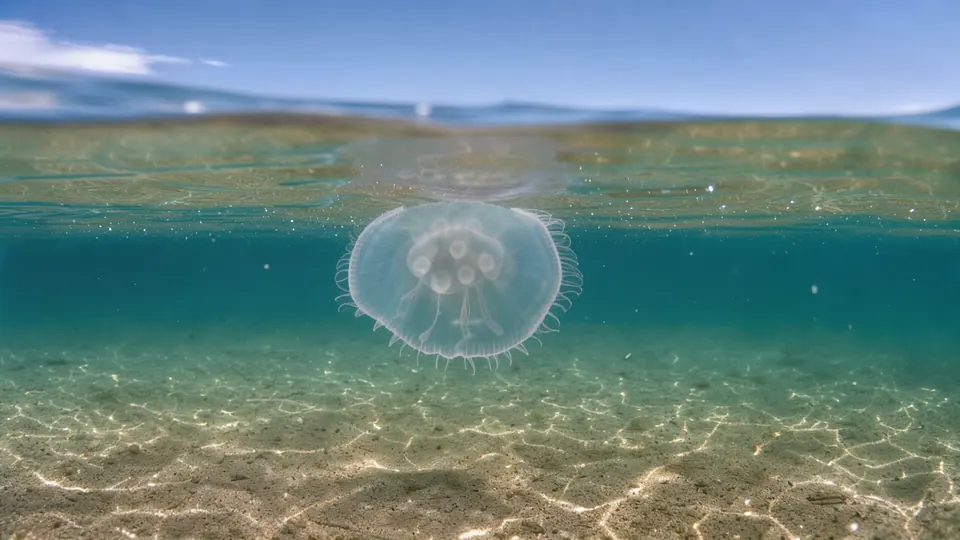
- Moon jellyfish (Aurelia aurita): The most common. Translucent, saucer-shaped, up to 30 cm. Their sting is very mild — most people don't feel anything. Completely harmless.
- Barrel jellyfish (Rhizostoma pulmo): Larger, white-blue with purple edges. Also mostly harmless, though sensitive skin may feel a mild tingle.
When do they appear?
- Jellyfish are most common in late July and August, especially after storms or strong onshore winds that push them toward the coast.
- Early June and September are usually jellyfish-free.
- They tend to concentrate near the surface in calm, warm water.
What to do if you see jellyfish:
- Don't panic — Black Sea jellyfish are not dangerous.
- Avoid touching them directly, especially with sensitive skin.
- If stung: rinse with seawater (not fresh water), apply vinegar if available, and take antihistamines if itching persists.
- Children are more sensitive — consider a rash guard for extra protection.
Waves and Sea Conditions
The Black Sea is generally calmer than the Mediterranean or Atlantic:
- Calm days (June, early July, September): Flat, crystal-clear water. Perfect for children and swimming.
- Windy days (common in mid-July to August): Onshore winds can create 0.5–1.5 m waves. Great for body surfing, but small children should stay in shallow areas.
- After storms: Water can be murky for 1–2 days. Avoid swimming near breakwaters.
Safest beaches for families:
- South Beach (Nesebar): Shallow entry, lifeguards, calm waters
- Cacao Beach: Well-organized, sheltered from northern winds
- Ravda beaches: Wide, sandy, very gradual entry — ideal for toddlers
Best Time to Go to the Beach
- Morning (8:00–11:00): Cooler air, empty beaches, calm sea. Best for families with small children.
- Midday (11:00–15:00): Hottest part of the day. Use sunscreen SPF 50+, seek shade. UV index peaks at 8–9 in July/August.
- Afternoon (15:00–18:00): The sweet spot. Air is warm, UV drops, the sea is at its warmest after absorbing sun all day.
- Evening (18:00–20:00): Romantic walks, sunset swims. The water retains warmth even as air cools. Less crowded.
Water Quality
Nesebar's beaches consistently receive high water quality ratings:
- The EU Blue Flag beaches near Sunny Beach are tested weekly during summer.
- Avoid swimming near the port or fishing boats.
- After heavy rain, wait 24 hours before swimming at any beach — runoff can temporarily affect quality.
What to Bring for a Beach Day
- Sunscreen SPF 50+ — reapply every 2 hours and after swimming
- Water shoes — some beaches near Old Nesebar have rocky sections
- Umbrella/shade — most organized beaches rent them (4–8 €/day)
- Fresh water — stay hydrated; beach vendors charge 1,5–2,5 € per bottle
- Waterproof phone pouch — for photos and safety
- Rash guard for children — protects from sun and jellyfish
Quick Summary
| Period | Water Temp | Crowds | Jellyfish | Rating |
|---|---|---|---|---|
| Early June | 20–22°C | Low | Rare | Great |
| Late June | 22–24°C | Medium | Rare | Excellent |
| July | 24–26°C | High | Possible | Great |
| August | 25–27°C | Very High | Common | Good |
| Early Sept | 23–25°C | Low | Rare | Excellent |
| Late Sept | 20–22°C | Very Low | None | Great |
Our verdict: Late June and early September offer the perfect balance of warm water, fewer crowds, and minimal jellyfish. If you can only travel in peak summer, aim for July over August for slightly better conditions.
Get local stories & deals
One email a month with the best Black Sea stories and seasonal deals. No spam.