Money in Bulgaria: Currency, Cards, ATMs, Tipping and Avoiding Scams
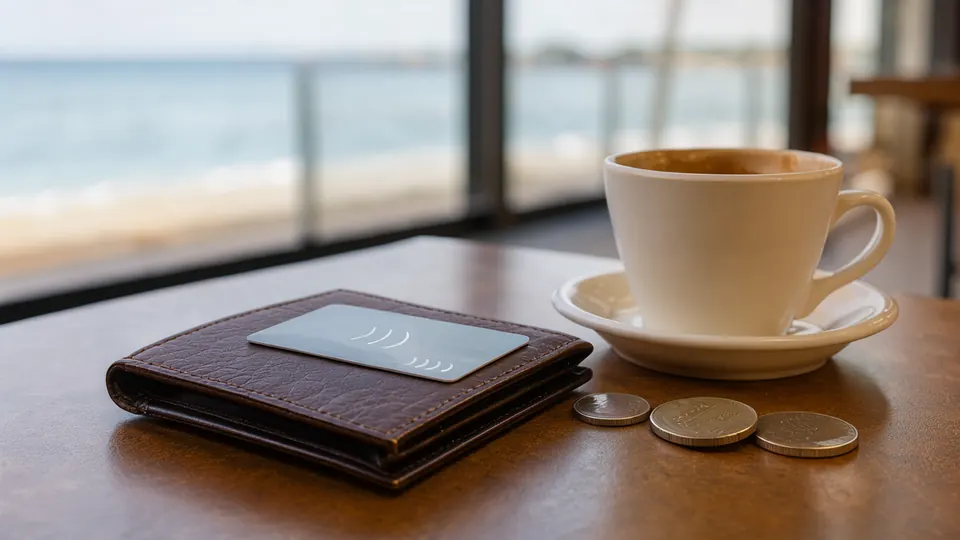
Getting your money right is the difference between a smooth Bulgarian holiday and a string of small, avoidable losses. This guide covers everything practical: the lev and its fixed relationship to the euro, where to use cards and where you still need cash, how to use ATMs without paying needless fees, tipping norms, typical prices so you know when you are being overcharged, the classic currency-exchange traps, and how VAT works for visitors.
The Currency: Bulgarian Lev (BGN)
Bulgaria's currency is the Bulgarian lev (plural: leva), code BGN, often written lv. The lev is divided into 100 stotinki.
The single most useful fact for a visitor: the lev is pegged to the euro at a fixed rate of 1 EUR = 1 €. This has been fixed for years and does not move. In practice:
- 1 euro ≈ 1.96 lev (round to "just under 2 lev per euro").
- 1 lev ≈ 0.51 euro (a little over half a euro).
- A quick mental shortcut: halve the lev price to get a rough euro figure (10 lev ≈ €5; 50 lev ≈ €25; 100 lev ≈ €51).
Because the rate is fixed, you never need to worry about the lev "moving against" the euro. Any exchange booth offering a rate far from 1.96 is simply charging you a fee dressed up as a rate.
Euro adoption: Bulgaria has been on track to adopt the euro, and the changeover has been a live topic. Until the euro is fully in everyday use, prices are quoted in lev and you should expect to pay in lev. Some tourist businesses accept euro informally, but usually at a poor rate — so leva remain the practical choice. Check current status before you travel, as this is evolving.
Cards vs Cash: What You Actually Need
Bulgaria is increasingly card-friendly, especially in tourist areas, but cash still matters.
Cards work well for:
- Supermarkets (Lidl, Billa, Kaufland, T-Market)
- Larger restaurants and hotels
- Petrol stations
- Bigger shops and pharmacies
- Most modern businesses in Nesebar, Sunny Beach and Burgas
Contactless (Visa, Mastercard, Apple Pay, Google Pay) is widely accepted in these places.
Cash is still needed for:
- Small bakeries, kiosks and street-food stalls
- Local buses (bus 11, bus 15) — carry small change
- Beach sunbed and umbrella rentals
- Tips
- Small family taverns and markets
- Some taxis (confirm card acceptance first)
- Public toilets and small parking lots
Practical rule: carry 40-75 € in cash for day-to-day small spending, and use cards for everything larger. Keep small notes and coins for buses, tips and kiosks.
Using ATMs Without Wasting Money
ATMs are everywhere in Nesebar, Sunny Beach and at Burgas Airport. A few habits save you real money:
- Use bank ATMs (DSK, UniCredit Bulbank, Postbank, Fibank, UBB) rather than the standalone branded machines (such as Euronet) in tourist zones, which often charge higher fees and push worse conversions.
- Always choose to be charged in lev (BGN), not your home currency. When the ATM offers to "convert" to euros, pounds or dollars — "dynamic currency conversion" — it uses a poor rate and you lose money. Decline the conversion; let your own bank do it.
- Withdraw larger amounts less often to minimise per-withdrawal fees, within sensible safety limits.
- Check your own bank's foreign-withdrawal fee before you travel; some travel-focused cards (Revolut, Wise, and similar) charge little or nothing and give near-interbank rates — ideal for Bulgaria.
- Use ATMs inside or beside bank branches during the day for safety, and shield your PIN.
Avoiding Currency-Exchange Traps
This is where most visitors lose money needlessly.
- Skip airport and tourist-strip exchange booths. Their rates are far from the fixed 1.96 and the "0% commission" sign usually hides a bad rate.
- Beware "no commission" offices — the catch is always in the exchange rate, not a separate fee.
- Watch for tiny print and two-rate boards — the attractive rate displayed is sometimes only for huge amounts; the rate you actually get is the worse one.
- Count your money before leaving the counter, every time.
- The smart approach: withdraw lev from a bank ATM (declining dynamic currency conversion) or pay by card, and avoid cash exchange almost entirely. Because the lev-euro rate is fixed, there is no "good day" to exchange — there is only the fee you do or do not pay.
- Never change money with someone on the street. Street money-changers are a scam, full stop.
Tipping in Bulgaria
Tipping is appreciated but modest and not as obligatory as in North America.
- Restaurants: rounding up or leaving about 10% for good service is normal and generous. In a casual mehana, rounding the bill up is fine. Check whether a service charge is already included on the bill before adding more.
- Cafes and bars: rounding up to the nearest lev or two is typical.
- Taxis: round up the fare; an extra few lev for help with luggage is appreciated.
- Transfer drivers: €2-3 or 2,5-5 € for a helpful door-to-door driver is generous.
- Housekeeping / hosts: not expected, but a small tip or a thank-you gift for an attentive host is a kind gesture.
- Hotel porters / beach attendants: a lev or two is fine.
Tip in cash where you can — it reaches staff more reliably than a card tip.
Typical Prices: Know When You Are Overcharged
A rough price map so you can sense-check what you pay (low season and away from tourist traps; resort-beach prices run higher):
| Item | Typical price |
|---|---|
| Espresso / coffee | 1,5-2,5 € (€1.50-2.50) |
| Banitsa (cheese pastry) | 1-1,5 € |
| Bottle of water (shop) | 0,5-1 € |
| Draught beer (mehana) | 2-3 € |
| Glass of Bulgarian wine | 2,5-5 € |
| Shopska salad | 3-5 € |
| Grilled main (mehana) | 5-9 € |
| Restaurant meal for two with wine | 30-55 € |
| Scoop of ice cream | 1-2 € |
| Bus 11 ride | 1-1,5 € |
| Sunbed + umbrella set (day) | 5-8 € |
| Litre of petrol | ~1-1,5 € |
| Taxi (per km, daytime) | 0,5-1 € |
Beach-bar and Old Town tourist-terrace prices can be two to three times these figures — that is the "view tax," not a scam, but worth knowing. If a casual cafe charges triple the going rate, walk on.
VAT and Shopping
- VAT is already included in the prices you see on shelves and menus in Bulgaria — the standard rate is 20%, and the displayed price is the price you pay. You do not add tax at the till.
- Tax-free shopping: non-EU visitors may be able to reclaim VAT on qualifying goods above a minimum spend when leaving the EU, via tax-free forms from participating shops and a refund at the airport. This applies to non-EU residents only and to goods, not meals or services. If you plan significant shopping, ask the shop about tax-free paperwork at the time of purchase.
- Receipts: keep them, both for any tax-free claim and to check you were charged the menu/shelf price.
A Simple Money Plan for Your Trip
- Before you fly, get a travel-friendly card (low foreign fees) and tell your bank you are travelling.
- On arrival at Burgas Airport, withdraw 50-100 € from a bank ATM, choosing to be charged in lev (decline conversion). Skip the exchange booths.
- Use the cash for the transfer, first groceries, buses and tips; use your card for everything larger.
- Top up cash from bank ATMs as needed, always in lev.
- Tip modestly in cash, round up bills, and sense-check prices against the table above.
Do this and you will spend like a savvy local rather than a marked-up tourist.
FAQ
What currency is used in Bulgaria?
The Bulgarian lev (BGN), divided into 100 stotinki. It is pegged to the euro at a fixed 1 EUR = 1 €, so roughly 2 lev per euro. Prices are quoted and paid in lev; euro adoption is in progress, so check the current status before travelling.
Should I pay in euros or lev?
Lev. Some tourist businesses accept euros informally but at a poor rate. Pay in lev, withdraw lev from bank ATMs, and you avoid losing money on bad informal conversions.
Can I use my card everywhere in Nesebar?
Cards work in supermarkets, larger restaurants, hotels, petrol stations and bigger shops. Carry cash for buses, bakeries, beach rentals, tips, small taverns and some taxis — around 40-75 € a day is sensible.
How do I avoid ATM and exchange fees?
Use bank ATMs (DSK, UniCredit Bulbank, Postbank, UBB), always choose to be charged in lev (decline dynamic currency conversion), withdraw larger amounts less often, and use a low-fee travel card. Avoid tourist exchange booths and standalone non-bank ATMs.
How much should I tip?
About 10% in restaurants for good service (check it is not already included), round up cafe and bar bills, round up taxis, and give a transfer driver €2-3 or 2,5-5 €. Tip in cash where possible.
Is VAT included in prices, and can I claim it back?
Yes, the displayed shop and menu prices already include 20% VAT. Non-EU residents may reclaim VAT on qualifying goods (not meals or services) above a minimum spend when leaving the EU, using tax-free forms from participating shops.
With the money side sorted, you are free to enjoy the coast. When you are ready to book, compare apartments and message hosts directly at nesebar.net/apartments/nesebar and nesebar.net/properties — and if you are thinking longer term about a coastal home, nesebar.net/valuation gives a structured estimate of local property values.
Get local stories & deals
One email a month with the best Black Sea stories and seasonal deals. No spam.