Local Markets Near Nessebar: Where to Buy Fresh Fish and Produce
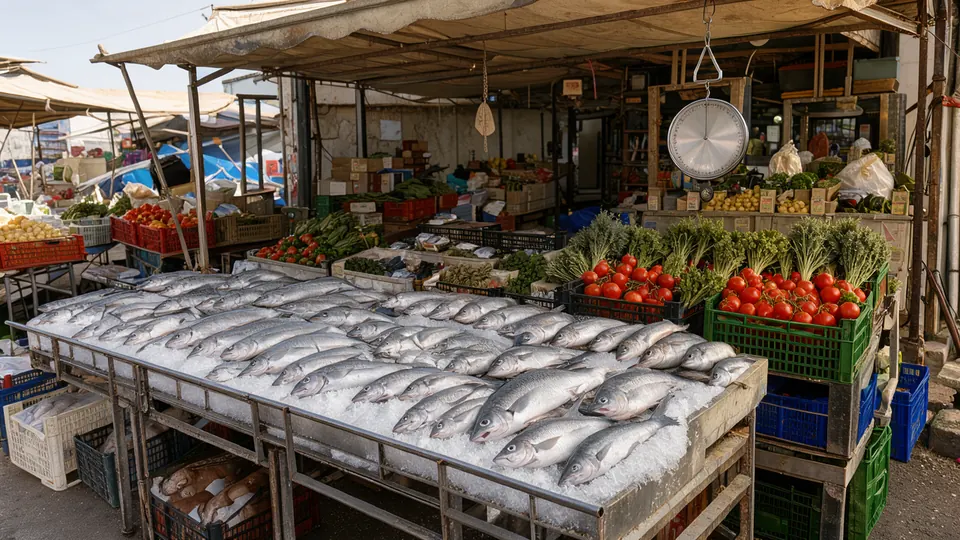
One of the most underrated ways to experience the Bulgarian coast is to get up early and go to a market. Not the resort supermarket, but the real municipal market where the seller tells you which village the tomatoes came from and which fish came in last night. If you have rented an apartment with a kitchen — and most guests in our properties do — the market is also the fastest way to cut your food bill in half.
Why bother with the market
- Price. A kilo of tomatoes or peaches at the market usually costs a third to half of the resort shop price.
- Seasonality. The market shows you in real time what is ripe. If something is piled on every table and cheap, it is in season.
- Fish. Genuinely fresh Black Sea fish rarely reaches tourist shops. It is sold early, fast, and in specific places.
- Contact. Even ten words of Bulgarian will earn you cooking advice. Pointing and a smile also work.
Fish: where and when
Nessebar and around
Nessebar has no large open fish market in the classic sense. Fresh fish is sold in fishmongers' shops in the new town and along the road towards Ravda and Sveti Vlas. They restock in the morning and often sell out by midday. The second option is buying directly from fishermen at the old town harbour when boats come back, but quantities are small and unpredictable. Treat it as luck, not as a plan.
The practical rule: go before 10:00. After lunch, what is left is usually frozen.
Burgas — the Krasnodar market
The biggest and best-stocked market in the region is Krasnodar in Burgas, the central municipal market. It has a dedicated fish section with Black Sea and imported fish, mussels and rapana snails, plus a huge fruit and vegetable area.
Rough prices for Black Sea fish (they swing a lot with the catch):
| Fish | Best season | Approximate price |
|---|---|---|
| Horse mackerel (safrid) | Autumn–winter | around €5–7 / kg |
| Garfish (zargan) | Spring | around €3–4 / kg |
| Grey mullet (kefal) | Autumn | around €4–6 / kg |
| Sea bream (farmed) | Year-round | around €5–7 / kg |
| Rapana snail | Summer | around €6–9 / kg |
Burgas is about 35 km from Nessebar with frequent buses — see getting around by public transport. Bring a cool bag if you plan to buy fish.
Pomorie and Aheloy
Pomorie is a fishing town with a long tradition and a small but lively central market. In summer you will often find fresh rapana, and in colder months salted and dried fish. Pomorie is also the place for local salt and wine — combine it with the salt lake day trip.
The produce calendar
The coast itself is not a farming region, but the Burgas plain and the interior keep the markets well supplied.
- May–June: early cucumbers, lettuce, cherries, strawberries, young garlic, spring onions.
- July: the first real tomatoes, courgettes, apricots, peaches, roasting peppers.
- August: the peak — tomatoes, peppers, aubergines, watermelons, melons, plums, grapes. Cheapest and best month of the year.
- September–October: peppers for preserving, walnuts, quinces, late grapes, pumpkin, wild mushrooms after rain.
- November–March: cabbage, onions, potatoes, citrus (imported), pickles, honey and nuts.
Look for stalls with small, uneven quantities — that is usually a real grower rather than a reseller. The best tomato here is lumpy, irregular, and smells before you cut it.
What else is worth buying
- Honey — acacia, linden or forest honey, from beekeepers' stalls with a producer label.
- White brined cheese and kashkaval from the dairy stalls, not the souvenir stalls.
- Dried herbs — thyme, oregano and above all savory (chubritsa), the backbone of Bulgarian seasoning.
- Homemade pickles and lyutenitsa in autumn.
- Rose oil and lavender as gifts, sold at every larger market.
For cooking ideas, see 15 Bulgarian dishes you must try.
Market etiquette and practical tips
- Do not handle the produce without asking. At many stalls the seller picks for you — that is normal, not distrust.
- Bring a bag. Plastic bags are usually provided, but a sturdy tote saves trouble.
- Carry small cash. Bulgaria adopted the euro in 2026 and prices are in euro. Most stalls take cards, but not all — see the money and payments guide.
- Haggle only for volume. A crate of tomatoes, yes. One kilo, no.
- Early beats cheap. Afternoon discounts are usually on what nobody wanted in the morning.
Fitting it into your holiday
The easiest pattern is market on Saturday morning, cooking in the evening. Without a car, combine an early bus to Burgas with a walk through the city and be back for lunch — see the Burgas gateway guide. With a car, Pomorie is 20 minutes away and the quickest option.
To orient yourself in Nessebar use the interactive map, and for the bigger picture the Nessebar destination guide.
Frequently asked questions
Is there a fish market in Nessebar itself?
Not a large classic one. Fresh fish comes from fishmongers in the new town and occasionally directly from fishermen at the harbour in the morning. For real choice, go to the Krasnodar market in Burgas.
What time should I go?
Between 07:00 and 10:00. Fish sells out first, and the best vegetables are gone by midday.
Can I pay by card?
At most larger stalls and shops, yes. At small tables with homemade produce, carry small euro notes and coins.
Which month is best?
August, when everything local ripens at once and prices bottom out. September is nearly as good with far fewer crowds — see the autumn travel guide.
Get local stories & deals
One email a month with the best Black Sea stories and seasonal deals. No spam.