E-Scooters in Nesebar and Sunny Beach: Rules, Age Limits, Banned Zones and Fines
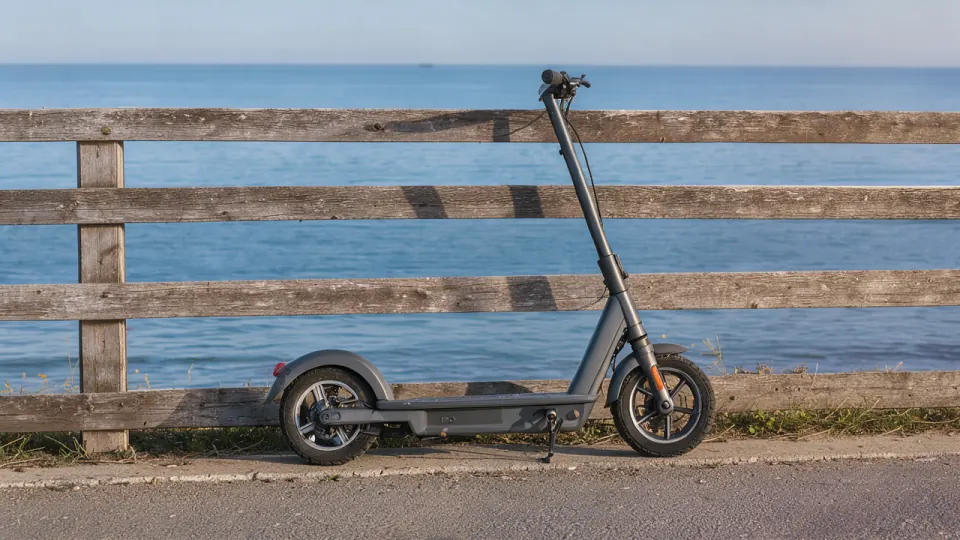
An electric scooter (e-scooter) is a handy way to get from your hotel to the beach. Since September 2025, though, Bulgaria's rules for e-scooters have been much stricter, and Nesebar Municipality adds its own bans: on the historic Old Town peninsula, on Otets Paisiy Street and on the seafront promenades. This guide sets out what the national law and the municipal ordinance actually say as of November 2026: the minimum age, where you may not ride, the helmet rule and the fines.
All amounts are in euros. The Road Traffic Act still states its fines in the old Bulgarian currency, so we have converted them at the fixed rate of 1.95583 and rounded to the cent. The municipal ordinance already gives its fines in euros.
The short version
- Minimum age: 16. A helmet is compulsory for every rider, whatever their age.
- The scooter must not be able to go faster than 25 km/h, and in Nesebar Municipality the speed limit is 20 km/h.
- Riding after dark is banned, as is carrying a passenger, holding a phone and riding in pedestrian-only areas.
- Across Nesebar Municipality you may not ride or park on pavements, squares, seafront promenades, park paths or green areas. In the town of Nesebar this also covers the Old Town, Otets Paisiy Street and the pedestrian zones.
- The law requires third-party liability insurance and registration with a municipality. The registration ordinance has been adopted, but its main chapters take effect only 12 months after its publication.
- National fines run from €25.56 to €255.65; municipal fines from €51.13 to €255.65.
What counts as an "individual electric vehicle"
Bulgarian law does not use the word "scooter". It speaks of an individual electric vehicle (in Bulgarian ИЕПС): a vehicle with an electric motor that can go faster than 6 km/h but no faster than 25 km/h, weighs up to 50 kg and has no seat or only a very low one. The e-scooter is the typical example, but other small electric vehicles that meet these conditions are included too. Wheelchairs are not.
One consequence matters: a scooter built to go faster than 25 km/h is not allowed on the road. The rider must use a vehicle in good working order with a maximum speed of 25 km/h.
Who may ride, and what you need
The minimum age is 16. If a child under 16 rides on the road, the parent or guardian who allowed it can be fined €255.65. Nesebar's ordinance goes further: the owner or user of a scooter may not hand it over to minors.
The rider must:
- wear a protective helmet, whatever their age;
- in poor visibility, ride with lights on and wear a reflective vest or reflective elements on their clothing;
- have valid third-party liability ("Civil Liability") insurance under the Insurance Code.
The municipal ordinance also sets requirements for the scooter itself: working brakes, a mechanical or electronic bell and no other horn, a white or yellow light at the front and a red one at the back.
Where you may and may not ride
Under the law, a scooter belongs on cycling infrastructure; where there is none, you ride as close as possible to the right-hand edge of the carriageway. The law bans riding:
- on roads and streets with a speed limit above 50 km/h, unless they have a cycle lane;
- in zones marked with sign B9 ("No entry for bicycles");
- in lanes or carriageways marked with sign G13, reserved for scheduled public transport vehicles;
- in pedestrian-only areas.
What Nesebar Municipality adds
The Municipal Council's Ordinance No. 1, amended in June 2025, bans riding and parking scooters and other individual electric vehicles throughout the municipality, which also includes Sunny Beach and the villages, on:
- pavements and squares;
- children's playgrounds and sports grounds;
- seafront promenades and park paths;
- wooded and landscaped green areas.
In the town of Nesebar the ban also covers three named zones: Otets Paisiy Street, the Old Town (the historic peninsula) and the pedestrian zones set by the municipal transport plan. In practice, leave the scooter outside the Old Town and explore it on foot. For ideas, see our walking routes through Old Nessebar.
The ordinance allows these vehicles on the municipality's cycling infrastructure, provided the law and the ordinance are respected, with a maximum speed of 20 km/h.
What is banned while riding
Besides the places above, the law forbids an e-scooter rider to:
- ride during the hours of darkness. Riding home after dark is an offence even with lights on;
- carry another person;
- use a mobile phone or other distracting device unless it is hands-free;
- ride without holding the handlebars, jump or ride on one wheel;
- ride side by side with another scooter or a bicycle, ride in close proximity to another vehicle or hold on to it;
- carry, tow or push objects that hinder control;
- lead animals;
- go faster than 25 km/h.
When crossing the road you must give way to approaching traffic. At a pedestrian crossing, get off and walk across.
Where to leave the scooter
The law bans parking these vehicles in parks, gardens, squares, playgrounds and sports grounds, green areas, pedestrian-only areas, on pavements, at building entrances, at surface public transport stops, on pedestrian crossings and in front of disabled-access ramps, except in designated places. Nesebar's ordinance also bans parking them on pavements, squares, promenades and green areas. Look for a marked bay, or leave the scooter where it blocks no one and is not in one of the banned places.
How much the fines are
As of November 2026 the Road Traffic Act sets these fines for e-scooter riders (converted to euros at the fixed rate):
| Offence | Fine |
|---|---|
| No helmet; crossing the road incorrectly, including not getting off at a pedestrian crossing | €25.56 |
| No lights or reflective elements in poor visibility; riding after dark; on a road with a limit above 50 km/h; in a B9 zone or G13 lane; no hands or stunts; carrying objects, riding side by side, riding close to or holding on to a vehicle; in pedestrian areas; holding a phone; with an animal; parking in a banned place; rider under 16 | €51.13 |
| Off the cycling infrastructure and away from the right-hand edge; a scooter able to exceed 25 km/h; speeding above 25 km/h; carrying a passenger; an unregistered scooter | €102.26 |
| Parent or guardian who lets a child under 16 ride on the road | €255.65 |
Riding without the required liability insurance is punished under the Insurance Code.
Separately, Nesebar's Ordinance No. 1 sets a fine of €51.13 to €255.65 for breaking its scooter rules (the banned zones, the 20 km/h limit, the equipment, handing a scooter to minors). For the other local bans, see fines in Nesebar Municipality on the beach and in the streets.
Registration and insurance: what applies now and what is coming
Since 1 July 2026 the law has banned riding an unregistered individual electric vehicle. Registration is done at the municipality of the owner's permanent address (for companies, their registered seat), and the data go into a national register kept by the State Agency for Road Safety.
The Council of Ministers adopted the registration ordinance by a decree of 2 October 2026. According to the Agency, the ordinance takes effect three days after its publication in the State Gazette, but its Chapters Two and Four take effect 12 months after publication. That gives municipalities time to prepare and owners time to register before penalties are pursued. If you own a scooter, watch for announcements from the municipality of your permanent address.
Third-party liability insurance has been a legal duty of the rider since September 2025. Ask your insurer how your particular scooter can be insured.
If you rent a scooter in the resort
The rider's rules are the same for an owned and a rented scooter: the age limit, the helmet, the ban on riding after dark, the banned zones and the fines. Before setting off, check that you are given a helmet and that the lights work. If you are thinking of a moped or motorbike instead, the rules and licence requirements are different: see renting a scooter or motorbike on the coast. To get around without a vehicle of your own, there are also buses and taxis around Nesebar.
Sources
- About Nesebar Municipality (in Bulgarian) — Nesebar Municipality (read 5 November 2026)
- Road Traffic Act, consolidated text (in Bulgarian) — Ciela Norma (read 5 November 2026)
- Act amending and supplementing the Road Traffic Act, State Gazette No. 64 of 5 August 2025 (in Bulgarian) — State Gazette (read 5 November 2026)
- Ordinance No. 1 on public order … in Nesebar Municipality (in Bulgarian) — Nesebar Municipal Council (read 5 November 2026)
- The Council of Ministers adopted the Ordinance on the registration of individual electric vehicles in the municipalities (in Bulgarian) — State Agency for Road Safety (read 5 November 2026)
Get local stories & deals
One email a month with the best Black Sea stories and seasonal deals. No spam.