Heat and the UV Index on the Black Sea: Staying Safe in the Summer Sun
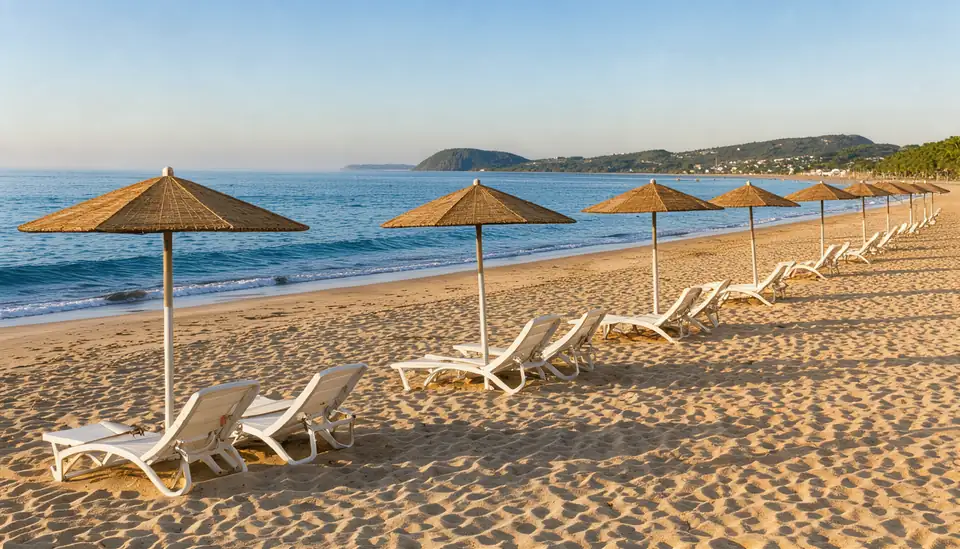
A summer on the coast at Nesebar and Sunny Beach brings two different risks that are easy to mix up: heat and ultraviolet (UV) radiation. You feel heat straight away: you sweat, tire and get thirsty. You do not feel UV at all, and it burns skin and eyes even on a cool, breezy day or under thin cloud.
This guide explains how to read the UV index and the heat warnings of Bulgaria's National Institute of Meteorology and Hydrology (NIMH), which hours to spend in the shade, how to protect children and older people, and how to recognise overheating. The advice comes from the World Health Organization (WHO), the NIMH and the Bulgarian Red Cross. For anything personal (medicines, chronic illness, pregnancy, babies) ask a doctor or a pharmacist.
In short
- UV index 3 or above: sun protection is needed: shade, clothing, a hat, sunglasses and sunscreen (WHO).
- UV index 8 or above: WHO advises avoiding being outside around midday.
- NIMH heat warnings are issued per municipality, including Nesebar, on weather.bg/obshtini, for today and tomorrow.
- Babies under one year should never be in direct sun (WHO).
- Confusion or another change in mental state in someone who has overheated may be heatstroke: get medical help. The emergency number is 112.
What the UV index tells you
The UV index measures the level of ultraviolet radiation from the sun. The higher it is, the faster you can burn. WHO's practical guide to the index uses one scale and one set of colours worldwide:
| UV index | Level | Colour | What WHO advises |
|---|---|---|---|
| 1–2 | low | green | You can safely be outside |
| 3–5 | moderate | yellow | Shade around midday, a shirt, a hat and sunscreen |
| 6–7 | high | orange | Shade around midday, a shirt, a hat and sunscreen |
| 8–10 | very high | red | Avoid being outside around midday; shade, shirt, hat and sunscreen are a must |
| 11+ | extreme | purple | Avoid being outside around midday; shade, shirt, hat and sunscreen are a must |
According to the guide, below 3 the risk is limited even for very fair skin; above 3 protection is necessary, and from 8 up it matters even more.
Things people forget on the beach:
- Clouds do not protect you. Up to 80% of UV passes through light cloud.
- Water does not protect you. The sea gives only minimal protection, and reflection from the water adds to your exposure.
- Sand and foam reflect. Dry beach sand reflects about 15% of UV, sea foam about 25%.
- A tan is not protection. A dark tan on fair skin protects about as much as a sunscreen with a factor of around 4.
- The sun does not have to feel hot to harm you. UV cannot be seen or felt, so do not trust a cool sea breeze.
Where to check the UV index for Nesebar
WHO offers the free SunSmart Global UV app for iPhone and Android on its website. It shows the UV level for a chosen place and the times when protection is needed. As of November 2026, WHO lists it in Chinese, English, French, German, Russian, Dutch and Spanish (not Bulgarian). Many weather apps also show the UV index.
No phone to hand? WHO's guide has a simple rule: if your shadow is short or you are in the sun for a long time, protect yourself.
Which hours to avoid
The two risks peak at different times:
- UV is strongest in the four hours around solar noon, which WHO puts between 12:00 and 14:00 depending on location and summer time.
- Heat lasts longer into the afternoon. In its thermal comfort maps, NIMH notes that 15:00 summer time is usually close to the warmest hours of the day.
In practice: the beach in the morning and late afternoon, and in the middle of the day lunch in the shade, a rest in your room or something indoors. WHO/Europe advises not going out or doing strenuous activity in the hottest part of the day and, if needed and possible, spending 2–3 hours a day somewhere cool. The Bulgarian Red Cross advises putting off journeys during the hot hours and, if you must travel, using an air-conditioned vehicle.
How to read the NIMH heat warnings
On the NIMH map of dangerous weather by municipality (in Bulgarian), choose Burgas province and find Nesebar municipality. The map covers today and tomorrow, and "Високи температури" means high temperatures. The colours:
- green: no dangerous weather;
- yellow: the weather is potentially dangerous;
- orange: the weather is dangerous;
- red: the weather is very dangerous.
For extremely high temperatures NIMH gives advice by level of danger. At the low level: be careful, very high temperatures are expected and health problems are possible for sensitive and ill people, older people and children. At the medium level: be prepared, follow the forecasts and act on the authorities' advice. At the high level: take action, protect yourself and help vulnerable people.
NIMH also forecasts the felt temperature: how warm or cold the actual weather feels to a person, not just what the thermometer reads. The upper classes of its scale:
| Felt temperature | Class | What it means, per NIMH |
|---|---|---|
| 26–32 °C | very warm | much of the body is covered in sweat |
| 32–38 °C | hot | almost the whole body is covered in sweat |
| 38–44 °C | very hot | cooling by sweating is impaired |
| above 44 °C | dangerously hot | heat shock is possible with long work or stays outdoors |
Children, older people and chronic illness
WHO/Europe explains why heat hits some people harder: babies and young children cannot yet regulate their body temperature well, and older adults sweat less easily. People with heart and respiratory disease or diabetes, pregnant women and people who work outdoors are also at higher risk. The Bulgarian Red Cross adds people with fair skin.
- Babies under one should never be in direct sun, and children under 15 have more sensitive skin and eyes (WHO).
- Young children and older people should drink enough even when they are not thirsty (Red Cross).
- Never leave children or animals in a parked car (WHO/Europe).
- Check on relatives and neighbours who live alone.
- Medicines and cosmetics. Some medicines, and perfumes and deodorants, make skin more sensitive to the sun. Ask a pharmacist; see also what you can buy in pharmacies on the coast. If a doctor has limited how much you drink, ask them what to do in hot weather.
For the first beach days with small children, see The Black Sea for beginner swimmers and families with small children.
What actually protects you from the sun
WHO is clear: shade, clothing and hats protect best, and sunscreen is for the parts of the body that stay uncovered, such as the face and hands. Sunscreen is not a way to stay in the sun longer.
- Seek shade, especially around midday.
- Wear protective clothing and a broad-brimmed hat that shades the eyes, face, ears and neck.
- Sunglasses should block 99 to 100% of UVA and UVB and wrap around the sides.
- Use a broad-spectrum sunscreen of at least SPF 15, per WHO's guide, applied generously and reapplied. The Red Cross advises a high protection factor.
- Avoid sunbeds: WHO warns that they increase the risk of skin cancer.
Water and a cool place
- The Red Cross advises drinking at least 2–3 litres of fluid a day, such as water or ayran (a salty yoghurt drink). Fizzy drinks, caffeine and alcohol do not quench thirst.
- WHO/Europe advises drinking water regularly and avoiding sugary, alcoholic and caffeinated drinks.
- Wear light, loose clothing in pale colours and take cool showers.
- In your room: keep the blinds closed during the day, air it at night when it is cooler and switch off appliances you do not need.
How to recognise overheating and what to do
The descriptions and first steps come from the Bulgarian Red Cross.
Dehydration
Headache, nausea, vomiting, muscle cramps or not having passed urine in the last few hours. Drink water in small sips and get medical help.
Heat exhaustion
Pale, cold, sweaty skin, a fast pulse, normal or slightly raised temperature, feeling faint, vomiting, muscle spasms. Put the feet in cold water; in a mild case without nausea or clouded consciousness, give fluids. If circulation is unstable and consciousness is affected, get medical help.
Heatstroke
At first dry, hot, red skin, rising body temperature, nausea, dizziness, headache, fast pulse and breathing, clouded or lost consciousness. Cool the body. According to the Red Cross, confusion, disorientation, aggression or any other change in mental state most likely means heatstroke: get medical help.
112 is the free emergency number across the EU, from mobile and landline phones. For emergency departments and hospitals in the area, see If something goes wrong: emergency care around Nesebar.
Sources
- Radiation: The ultraviolet (UV) index — World Health Organization (read 19 November 2026)
- Ultraviolet radiation (fact sheet) — World Health Organization (read 19 November 2026)
- Global Solar UV Index: A Practical Guide — World Health Organization (read 19 November 2026)
- SunSmart Global UV App — World Health Organization (read 19 November 2026)
- How summer heat impacts health and how to #KeepCool — WHO/Europe (read 19 November 2026)
- Dangerous weather by municipality and province — NIMH (read 19 November 2026)
- Numerical forecasts: comfort conditions and felt temperature — NIMH (read 19 November 2026)
- Advice for hot days — Bulgarian Red Cross (read 19 November 2026)
- 112: the European emergency number — European Commission (read 19 November 2026)
Get local stories & deals
One email a month with the best Black Sea stories and seasonal deals. No spam.