What a Nesebar Apartment Really Costs to Hold: The Bill That Arrives Whether You Visit or Not
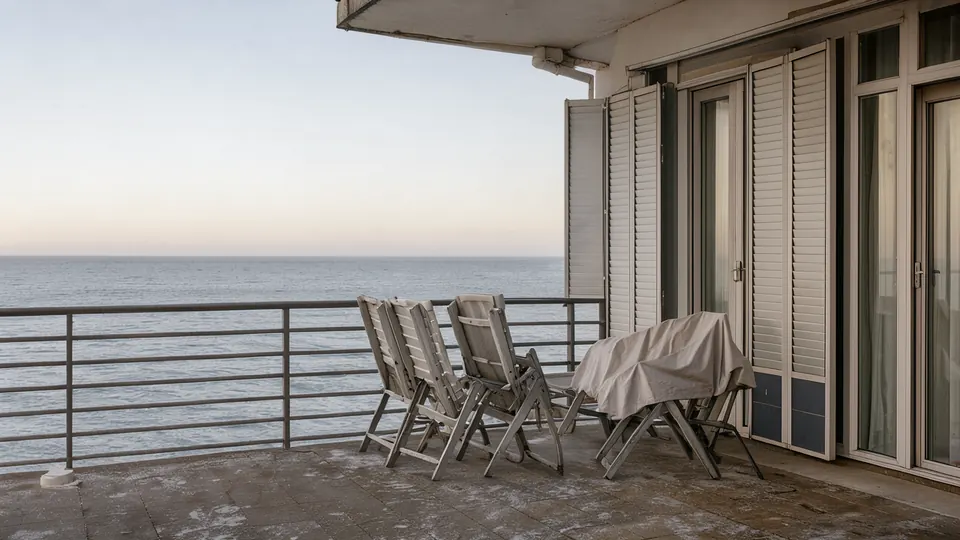
What a Nesebar Apartment Really Costs to Hold
People budget carefully for the purchase and vaguely for the years afterwards. On this coast that is the wrong way round, because the annual bill has one large item that is fixed, unavoidable, and enforceable against you even though you never signed anything.
Before the numbers, a warning about the numbers you will find elsewhere. Estate-agent "running costs" pages on this coast are often years out of date. One live agency page still quotes electricity at 0.17 leva (about €0.09) per kWh and water at 1.5–1.8 leva (about €0.77–0.92) per cubic metre. The 2026 figures are about 72% higher for electricity and roughly three times that for water. The same page describes local taxes as percentages of the purchase price, which is wrong in kind — Bulgarian local taxes are levied on the tax assessment, a separate and much lower figure.
The maintenance fee: the item that decides everything
In a resort complex this is usually the largest annual cost, and it is the one people misunderstand.
Its legal basis is a private contract, not the law. The investor owns the pool, the gardens, the gates and the security; the owners pay for the right to use them. The contract is signed with notarised signatures and registered against each apartment's file at the Registry Agency — and that registration is what makes it binding on later buyers.
So a resale buyer who never signed it is bound by it anyway. If you bought second-hand and were never shown this contract, you still owe under it. Ask for it before you buy.
What it costs: roughly €8 to €15 per square metre per year, with most observed complexes clustering at €10–14 and outliers above €20. For a 60 m² flat that is €480 to €900 a year, most likely around €720.
This is a range assembled from listings and worked examples, not a published tariff. The fee is set by the contract of your specific complex, so the only reliable number is the one in that complex's own registered contract.
What it covers: stairwell and lobby cleaning, lift maintenance, landscaping, security or CCTV, common lighting, refuse handling inside the complex, administration, and in resort complexes the pool, gym and playgrounds. Some complexes fold in building insurance and common utilities.
What it does not cover: anything inside your own front door.
If you think the fee is wrong
Non-payment is pursued through a fast-track court order — but a single objection filed within one month kills it and forces the manager into a full civil claim, where the burden flips onto them to prove both that the contract is valid and that the services were actually delivered.
Owners have successfully defended on grounds including that the complex does not meet the legal definition of a closed-type complex at all, defective notarisation or registration, non-performance, inaccurate calculation, and unilateral increases with no mechanism in the contract. Whether any of those apply to your complex is a question for a lawyer, not for a guide.
Utilities: near zero when the flat is empty
This is the genuinely good news, and it is structural rather than a matter of frugality.
There is no fixed monthly standing charge on a Bulgarian household electricity account. Every network component — distribution, transmission, access — is billed per kilowatt-hour, not as a monthly fee. A flat switched off over the winter therefore costs essentially nothing in electricity.
The supplier along the whole Burgas-region coast, including Nesebar, Sunny Beach, Sveti Vlas, Ravda and Pomorie, is EVN. The 2026 regulated household day rate is €0.14986 per kWh. Worth knowing if you are comparing coasts: the northern coast around Varna is served by a different company at about 16% less per unit.
Water is also purely volumetric. ViK Burgas charges €2.71 per cubic metre including VAT from 1 March 2026. Again, no household standing charge was found, so an empty flat costs nothing.
Both are regulated prices that reset annually, so treat them as a snapshot rather than a permanent figure.
The two local taxes, and why this guide will not give you a number
Property tax is a promille charge on the tax assessment — not the market value and not what you paid. Nesebar charges 2.2 promille from 1 January 2026, raised from 1.8, the first change since 2019.
Two points that catch second-home owners. There is no 50% discount — that applies only to a main residence, and a holiday flat is not one. And the tax is due whether or not the property is used; leaving it empty changes nothing.
It is payable in four instalments, with a 5% discount for paying the whole year in the first window, which runs from 1 February to 31 March.
The waste collection fee is charged separately, still calculated the old way in 2026 as a promille of the same assessment, because the "polluter pays" reform has been deferred yet again.
We are not printing a euro figure for either, and you should distrust any guide that does. Both are promilles of the tax assessment, and we could not obtain a real assessment for a representative coastal flat — so any euro figure would be invention. Nesebar's own waste-fee promille for 2026 is set by an annual council decision that is not published in any machine-readable form, and we could not get it.
The fix is easy and takes one phone call. Ask the local taxes office of Nesebar municipality for the tax assessment of the specific apartment. Everything else follows from that one number.
Management, if you are not here
For an absent owner, key-holding services exist. One published price on this coast is €400 a year, covering 24/7 key holding with emergency call-out, inspections twice monthly in winter and monthly in summer, a spring deep clean, and paying your utility and tax bills on your behalf — though the bills themselves are extra, and out-of-hours call-outs are charged separately.
That is one company's price for one bundle, not a market norm. Shop it.
The honest annual picture
For a 60 m² apartment in a complex with a pool, used about four weeks a year:
| Item | Annual |
|---|---|
| Maintenance fee | €480–900, most likely ~€720 |
| Key-holding, if used | €0–400 |
| Electricity | ~€0 when empty, metered otherwise |
| Water | metered only |
| Property tax | 2.2‰ of the tax assessment |
| Waste fee | a promille of the same assessment |
| Building insurance | not researched here |
The fixed, unavoidable core is the maintenance fee. It is due in full whether you come or not, and it is enforceable against you even though you never signed. Everything metered is close to zero for an empty flat. The two local taxes are real but cannot be converted into euro without the assessment.
Any guide that hands you a confident all-in total either has that assessment for your specific flat, or is guessing.
The short version
Get the registered maintenance contract before you buy, not after. Get the tax assessment from the municipality and compute the two local taxes from it. Expect around €720 a year in maintenance on a 60 m² flat, plus roughly nothing in utilities if it sits empty. And treat any published running-cost table on this coast as out of date until you check its electricity price against €0.14986 per kWh.
Get local stories & deals
One email a month with the best Black Sea stories and seasonal deals. No spam.