Thracian Heritage Around Nesebar — Ancient Civilizations of the Black Sea
Before the Greeks, Before Rome — The Thracians
Long before Nesebar became a Greek colony called Mesembria, the peninsula was home to the Thracians — one of ancient Europe's most powerful and mysterious civilizations. The Thracians inhabited the lands of modern Bulgaria, northern Greece, and European Turkey for thousands of years, and their legacy permeates the culture, geography, and archaeology of the Nesebar region.
Who Were the Thracians?
The Thracians were an Indo-European people who settled in southeastern Europe during the Bronze Age (around 3000 BC). Homer described them as allies of Troy in the Iliad. Herodotus called them "the most numerous people in the world after the Indians" and noted that if united, they would be invincible — but they never did unite, remaining a collection of tribes.
Key Characteristics
- Warriors: Renowned fighters who served as mercenaries for Greek, Persian, and later Roman armies. Spartacus, who led the famous slave revolt against Rome, was Thracian.
- Horsemen: Exceptional horse breeders and riders. The Thracian Rider — a mounted warrior-deity — is one of the most common archaeological finds in Bulgaria.
- Metalworkers: Created stunning gold and silver artifacts. The Panagyurishte Treasure (4th century BC) is one of the finest gold collections ever found.
- Wine lovers: The Thracians were legendary winemakers and drinkers. Dionysus, the Greek god of wine, may have originated as a Thracian deity.
- Orpheus: The mythical musician Orpheus, whose singing could charm animals, trees, and even stones, was Thracian — from the region of present-day Rhodope Mountains.
Thracian Sites Near Nesebar
Nesebar Archaeological Museum
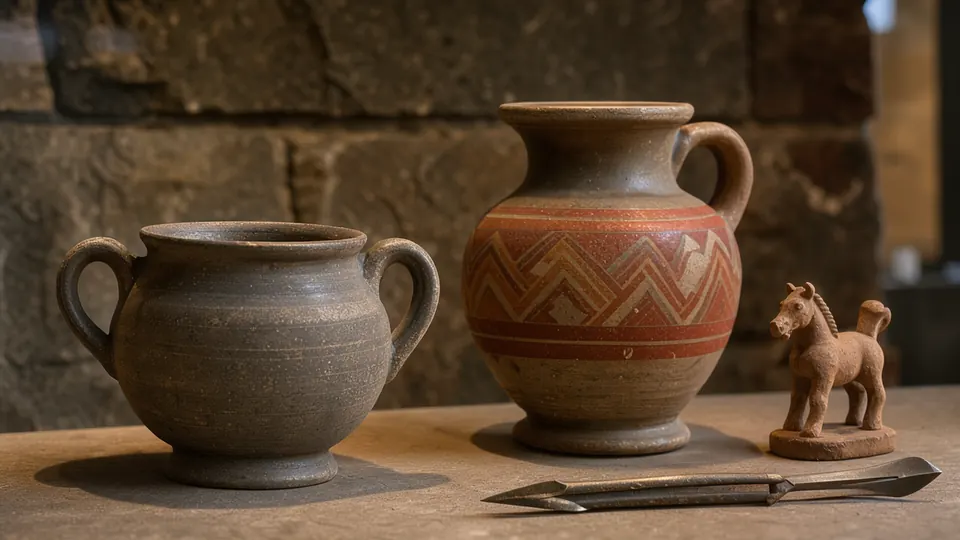
The museum's collection includes Thracian pottery, tools, and ornaments found during excavations of the earliest settlement layers on the peninsula. These artifacts prove that the site was inhabited by Thracians from at least the 8th century BC, before Greek colonization around 510 BC.
Pomorie Thracian Tomb (20 km north)
A unique 3rd-4th century AD Thracian-Roman beehive tomb near Pomorie. The circular domed chamber with a corridor entrance is one of the best-preserved ancient tombs in Bulgaria. It's the only tomb of its "mushroom" shape known in Thracian archaeology. Small but fascinating — the engineering of the dome is remarkably sophisticated.
- Open daily in summer, limited hours in winter
- Entry: 2 €
- Located on the outskirts of Pomorie, signposted from the main road
Burgas Regional Museum (35 km)
The archaeological section houses significant Thracian finds from the region, including gold jewelry, bronze weapons, and pottery from burial mounds (tumuli) excavated around Burgas. The collection provides context for understanding Thracian civilization in the Black Sea coastal area.
Major Thracian Sites in Bulgaria
For deeper exploration, these sites are accessible as day trips or short excursions:
Kazanlak Thracian Tomb (3 hours drive)
A UNESCO World Heritage site in the Valley of Thracian Kings. The tomb's extraordinary 4th-century BC frescoes — depicting a funeral feast with remarkably lifelike figures — are considered the finest surviving Thracian paintings. A replica is open to visitors (the original is sealed for preservation). Combined with a visit to the Kazanlak Museum of Roses, this makes an excellent day trip.
Valley of Thracian Kings (3 hours)
The area around Kazanlak and Shipka contains over 1,500 Thracian burial mounds — more concentrated than the Egyptian Valley of the Kings. Several are excavated and open to visitors, including the Golyama Kosmatka tomb where a solid gold mask was discovered in 2004.
Perperikon (4 hours south)
A massive rock-cut city in the Rhodope Mountains, believed to be the site of the ancient Temple of Dionysus. The megalithic structures carved directly into the mountain peak date to 5000 BC, making it one of Europe's oldest settlements. The ruins include a palace, temple, fortress, and a rock-cut altar where sacred wine rituals were performed.
The Thracian Legacy in Modern Bulgaria
Thracian influence remains visible in Bulgarian culture today:
- Wine tradition: Bulgaria's winemaking tradition is directly descended from Thracian practices. The grape varieties, the rituals of harvest, and the culture of wine drinking maintain ancient roots.
- Rose cultivation: Some scholars believe rose growing in the Valley of Roses may have Thracian origins.
- Kukeri festival: The masked dancers of Bulgarian folk tradition may descend from Thracian Dionysiac rituals.
- Folk music: Some musicologists trace elements of Bulgarian folk music's distinctive irregular rhythms to pre-Slavic, possibly Thracian, origins.
- Place names: Many Bulgarian place names preserve Thracian roots — "Mesembria" (Nesebar) itself is Thracian, meaning "city of Melsas" (a mythical founder).
Visiting Tips
- Start at the museum: Visit Nesebar's Archaeological Museum first for context before exploring other Thracian sites.
- Guided tours: For the Valley of Thracian Kings, a guide is invaluable — many tombs are in fields and hard to find without local knowledge.
- Photography: Most museums and tombs allow photography (no flash). The Kazanlak Tomb replica is particularly photogenic.
- Combine interests: Thracian sites often combine well with wine tasting (Thracian Valley wineries) or rose products (Kazanlak Rose Museum).
Get local stories & deals
One email a month with the best Black Sea stories and seasonal deals. No spam.