The Warrior Khan's Prize: How Khan Krum Conquered Byzantine Mesembria
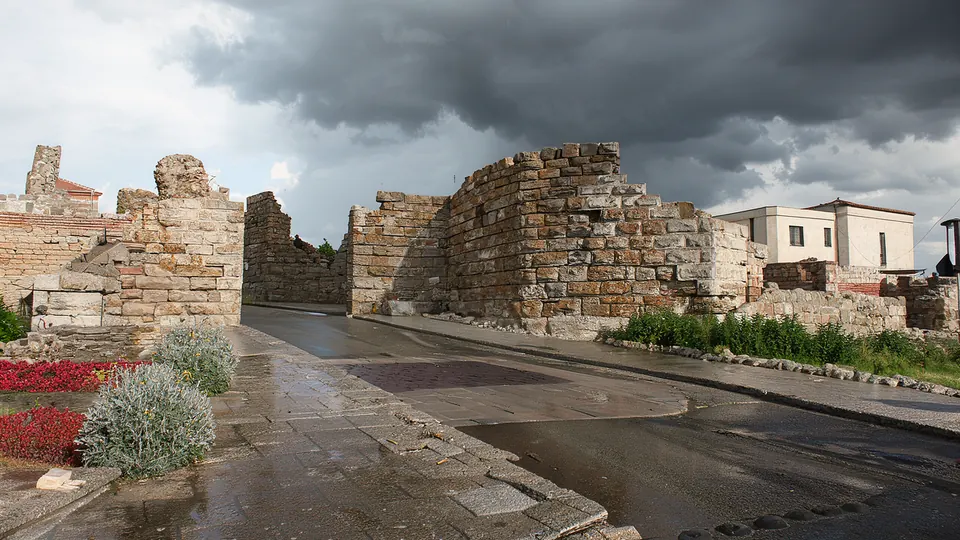
In the early 9th century, the Black Sea city of Mesembria, today's Nessebar, was a glittering jewel in the Byzantine Empire's crown. Heavily fortified and prosperous from maritime trade, it was considered nearly impregnable, a vital naval base guarding the western coast of the Black Sea. However, a formidable new power was rising to the north: the First Bulgarian Empire, led by the ambitious and relentless Khan Krum. As the conflict between the two empires intensified, Mesembria's strategic importance placed it directly in the path of Krum's expansionist ambitions.
The decisive moment came in the autumn of 812 AD. Following a series of military victories, Khan Krum turned his attention to the fortified city. In a remarkable display of military evolution, the traditionally cavalry-based Bulgarian army arrived not just with soldiers, but with sophisticated siege engines, including trebuchets and battering rams. Historical sources suggest these were constructed with the help of a highly skilled Arab engineer who had defected from the Byzantine army, bringing with him crucial knowledge of siege warfare. The Byzantine defenders, confident behind their massive walls, were shocked by the effectiveness and intensity of the Bulgarian assault.
The siege was surprisingly brief, a testament to Krum's tactical prowess and advanced weaponry. The mighty walls that had repelled invaders for centuries were breached, and the city fell to the Bulgarian forces. The capture of Mesembria was not merely a territorial gain; it was a treasure trove. Khan Krum’s warriors seized vast quantities of gold and silver, but the most significant prize was the discovery of 36 copper siphons used for projecting the legendary 'Greek fire', one of the most feared secret weapons of the Byzantine Empire. This technological capture provided the Bulgarians with invaluable insight into Byzantine military secrets.
The fall of Mesembria in 812 AD sent shockwaves through Constantinople and marked a pivotal moment in the Byzantine-Bulgarian wars. It demonstrated that the Bulgarian state was no longer just a regional nuisance but a major power capable of challenging the empire for control of its most valuable coastal cities. The city remained under Bulgarian control for a period, serving as an important administrative and military outpost. This chapter in Nessebar's history adds a dramatic layer of Slavic and Bulgarian heritage to its predominantly Hellenic and Roman story, highlighting its role as a coveted prize fought over by empires.
As you walk along the ancient fortress walls of Nessebar today, particularly near the main gate on the isthmus, take a moment to imagine the scene from over 1200 years ago. Picture the formidable siege towers of Khan Krum looming over the defenses and hear the clash of a battle that reshaped the map of Southeastern Europe. These stones are not just remnants of Byzantine glory; they are also silent witnesses to one of the greatest triumphs of the First Bulgarian Empire, a story etched into the very fabric of this UNESCO World Heritage site.
Get local stories & deals
One email a month with the best Black Sea stories and seasonal deals. No spam.