The First Inhabitants of the Peninsula
The earliest known inhabitants of Nessebar were the Thracians, who called the settlement Menebria or Mesembria. Archaeological excavations have uncovered Thracian artifacts dating back to the end of the Bronze Age, around 1000 BC.
The Thracians were one of the largest groups of peoples in the ancient world; the historian Herodotus, writing in the 5th century BC, declared them the most numerous people after the Indians, and judged that if only they could unite they would be invincible. They occupied much of the eastern Balkans and left a deep imprint on the lands that later became Bulgaria. They did not form a single unified state but were organised into numerous tribes; the territory around Mesembria lay in the lands of tribes of the western Pontic coast. Lacking a written tradition of their own, the Thracians are known largely through Greek and Roman authors and, above all, through archaeology, which has revealed a culture rich in metalwork, horsemanship, and elaborate burial customs.
The end of the Bronze Age and the dawn of the Iron Age, around 1000 BC, was a period when fortified settlements multiplied across the Thracian lands. The community on the Nessebar peninsula belonged to this world of strongholds and chieftains. Long before any Greek ship dropped anchor in its bays, the site was already a functioning settlement with its own defences, trade, and traditions, so the Greek colony of 510 BC was a refoundation of an existing place rather than the creation of something new on empty ground.
A Naturally Fortified Settlement
The Thracians were skilled metalworkers and warriors who established a fortified settlement on the peninsula, taking advantage of its naturally defensible position. They built the first stone walls around the city and developed trade routes with neighboring settlements along the Black Sea coast.
The choice of the rocky peninsula was strategically astute. Connected to the mainland only by a narrow isthmus and surrounded by the sea on every other side, it could be defended by a small force and offered safe anchorage in two natural bays. This same geography would later attract Greek colonists, Romans, and Byzantines, each of whom reinforced and extended the defences first laid down by the Thracians. The peninsula's harbours opened the settlement to seaborne contact with other coastal communities long before the arrival of the Greeks.
Metalwork and Warfare
Thracian craftsmen were renowned across the ancient world for their work in gold, silver, and bronze, producing ornate vessels, ceremonial armour, and finely decorated horse-trappings. Their warriors served as prized mercenaries in Greek armies, and the famous gladiator Spartacus, who led a great slave revolt against Rome, was himself of Thracian origin, a reminder of how widely Thracian martial skill was known. The Thracians were also celebrated as masters of the horse; cavalry was central to their way of war, and the figure of the Thracian Horseman became one of the most enduring images of their religion, appearing on countless votive reliefs across the region.
Burials, Treasures, and Beliefs
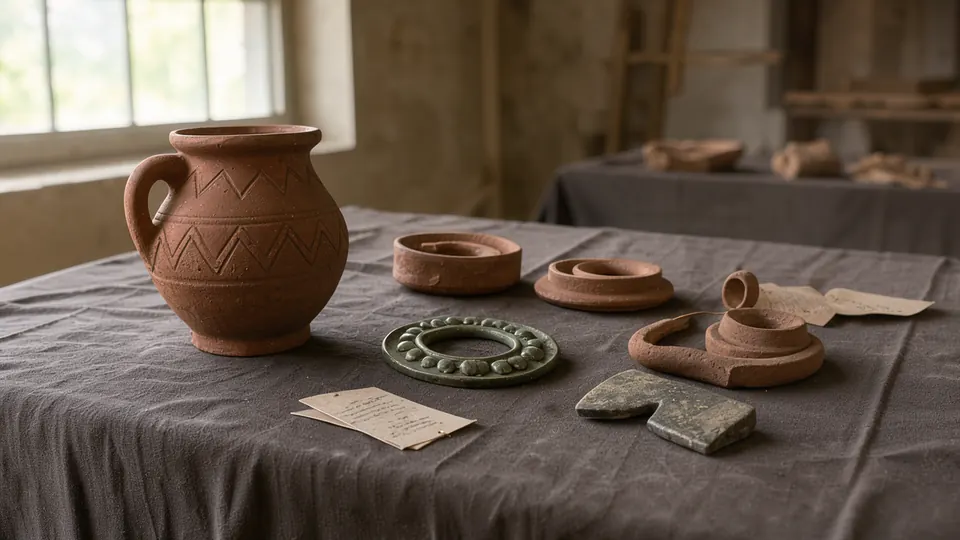
Thracian burial sites found near Nessebar have yielded gold jewelry, bronze weapons, and ceramic vessels decorated with intricate geometric patterns. These artifacts are now displayed in the Archaeological Museum of Nessebar, providing valuable insights into the daily life and spiritual practices of these ancient people.
The Thracians believed strongly in an afterlife, equipping their dead with weapons, ornaments, and vessels for the journey beyond. Elites were sometimes interred under earthen burial mounds, called tumuli, a practice seen across Thrace and reflected in the spectacular treasures discovered elsewhere in Bulgaria, such as the gold of Panagyurishte and Valchitran and the painted tomb of Kazanlak. The ancient Greeks themselves traced several of their own religious figures, including the mythical singer Orpheus and the god Dionysus, to Thracian origins, evidence of how deeply the two cultures were intertwined along this coast. The geometric ornament on Thracian pottery and the fine craftsmanship of their jewellery reveal both an artistic sensibility and a worldview bound up with ritual and the sacred.
The Meaning of the Name
The name "Mesembria" is believed to derive from the Thracian personal name "Melsas" or "Menas," combined with the Thracian word "bria" meaning "city." Thus, Mesembria literally translates to "City of Menas."
The element "-bria," meaning "town" or "city," appears in several Thracian place names across the region, making it one of the most recognisable fingerprints of the Thracian language in ancient geography. According to a tradition preserved by ancient authors, Melsas was the legendary founder of the settlement, so the name itself preserves the memory of the peninsula's pre-Greek, Thracian origins.
What Visitors Can See Today
The Archaeological Museum of Nessebar, at the entrance to the Old Town, devotes its earliest displays to the Thracian period, including gold jewellery, bronze weapons, and hand-formed pottery with geometric decoration recovered from burials and settlement layers. The lowest courses of the fortification walls at the isthmus rest on defences whose origins reach back to the Thracian settlement, and the very layout of the peninsula, ringed by the sea and guarded by its narrow neck, lets visitors grasp why the Thracians chose this spot more than three thousand years ago.
To walk the streets that grew from this ancient Thracian foundation, see our guide to Nessebar.
Frequently Asked Questions
Who were the first inhabitants of Nessebar?
The earliest known inhabitants were the Thracians, who called the settlement Menebria or Mesembria. Archaeological finds show occupation from the end of the Bronze Age, around 1000 BC.
What does the name Mesembria mean?
It is believed to combine a Thracian personal name, Melsas (or Menas), with the Thracian word "bria," meaning city. The name therefore translates roughly as the "City of Melsas/Menas," preserving the settlement's Thracian origins.
Why did the Thracians settle on the Nessebar peninsula?
The rocky peninsula was naturally defensible, joined to the mainland only by a narrow isthmus and surrounded by the sea, with safe bays for anchorage. This made it easy to defend and ideal for trade.
What Thracian artifacts have been found at Nessebar?
Excavations of burial sites have yielded gold jewellery, bronze weapons, and ceramic vessels with intricate geometric patterns, many now displayed in the Archaeological Museum of Nessebar.
Where can I see Thracian finds in Nessebar today?
The Archaeological Museum of Nessebar, near the entrance to the Old Town, displays Thracian gold, bronze, and pottery, while the foundations of the fortification walls preserve traces of the earliest defences.
Get local stories & deals
One email a month with the best Black Sea stories and seasonal deals. No spam.