The Spiritual Guardian of the Black Sea: A History of the Bishopric of Mesembria
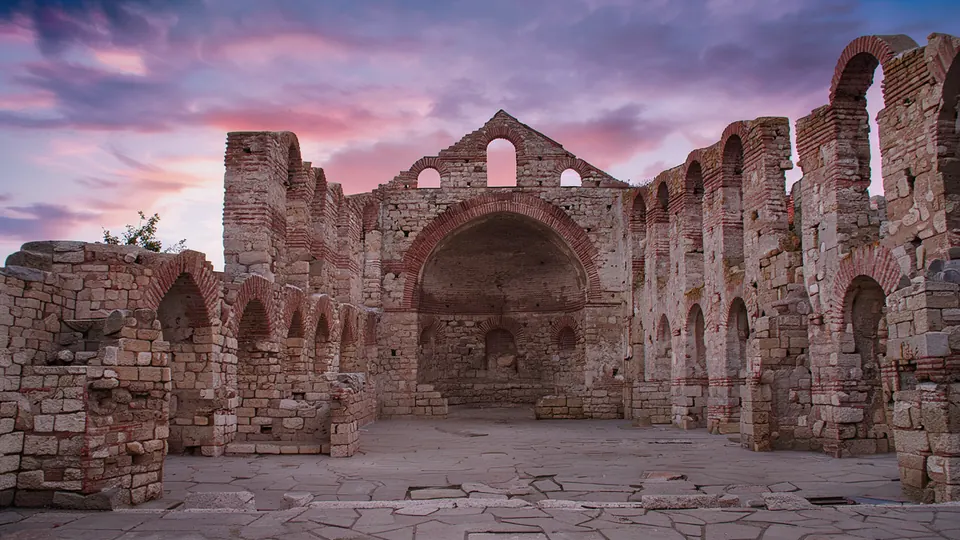
While the dozens of churches dotting Nessebar's peninsula stand as testament to its profound faith, they tell a story deeper than just architectural brilliance. They are the legacy of one of the most significant spiritual centres on the Black Sea coast: the Bishopric of Mesembria. For over 1,500 years, this powerful ecclesiastical seat shaped the destiny of the city, navigating the currents of sprawling empires, theological debates, and political intrigue. To understand Nessebar is to understand the authority and influence wielded by its bishops, whose story is etched into the very stones of the ancient city.
A See of Ancient Power: The Founding of the Bishopric
The seeds of Christianity in Mesembria were planted early, carried along the same maritime trade routes that brought wealth and amphorae to its port. By the time the Roman Empire embraced the new faith, the city was already a burgeoning Christian community. The official establishment of the Bishopric of Mesembria, however, is formally documented in the 5th century. Its bishop is first mentioned by name—Paulus—as a participant in the pivotal Fourth Ecumenical Council of Chalcedon in 451 AD. This single entry in the council's acts confirms Mesembria's status as an established and important episcopal see, subordinate to the Metropolitan of Adrianople (modern-day Edirne).
In these early centuries, the Bishop of Mesembria was not merely a spiritual leader but a key figure in civic life. The bishop's residence, likely located near the great basilica now known as the Old Metropolis (St. Sophia), was a centre of administration and learning. The bishop oversaw the construction of the city's first grand churches, managed church properties, and represented the city's interests to the imperial authorities in Constantinople. This period laid the foundation for a millennium of ecclesiastical influence, establishing Mesembria as a vital outpost of Byzantine Orthodoxy on the western shore of the Euxine Sea.
Between Constantinople and Tarnovo: A Crossroads of Empires
Nessebar's strategic position made it a coveted prize for both the Byzantine Empire and the rising Bulgarian state. The Bishopric of Mesembria often found itself at the very heart of this struggle. When the formidable Khan Krum sacked the city in 812, he not only captured immense treasure but also absorbed the bishopric into the fold of the Bulgarian state. For the first time, the See of Mesembria fell under the jurisdiction of the Bulgarian church leadership in Pliska, marking a significant shift in its allegiance.
Throughout the medieval period, control of the city—and its bishopric—swung back and forth. During the Second Bulgarian Empire (1185-1396), particularly under rulers like Tsar Ivan Alexander, Nessebar flourished as a cultural and religious hub. In the 13th century, its bishop was elevated to the rank of Metropolitan, granting him greater autonomy and prestige. This was the golden age of church building in Nessebar, with powerful metropolitans and wealthy local patrons commissioning the stunning churches we see today, such as Christ Pantocrator and St. John Aliturgetos. The famous Nessebar School of art and iconography thrived under their patronage, creating masterpieces that blended Byzantine tradition with unique Bulgarian artistic sensibilities. The Metropolitan of Mesembria was a powerful feudal lord, a political player whose loyalty was courted by emperors in Constantinople and tsars in Tarnovo alike.
Notable Bishops and Their Legacy
While the names of many early bishops are lost to time, historical records and inscriptions have preserved the memory of several key figures. Following the first recorded bishop, Paulus, in 451, we know of a Bishop Peter who participated in the Sixth Ecumenical Council in Constantinople in 680-681. His name, along with others, appears in official church documents, offering glimpses into the bishopric's continuous operation through centuries of turmoil.
Later, during the medieval era, inscriptions within the churches themselves sometimes name the presiding metropolitan, linking the man to the monument. For instance, the identity and influence of these church leaders are often inferred from the sheer quality and quantity of religious art and architecture produced during their tenure. They were the patrons, the commissioners of works, and the spiritual authorities who consecrated these holy sites. Their legacy is not found in grand statues of themselves, but in the enduring beauty of the frescoes within St. Stephen's Church and the intricate ceramic inlays of the churches built during the 13th and 14th centuries. Their influence is quiet but omnipresent.
The Decline and Titular Legacy
The fall of Nessebar to the Ottoman Turks in 1453 marked the beginning of a slow decline for the city and its metropolitan see. While the bishopric continued to exist, its influence and wealth diminished dramatically under Ottoman rule. Christian communities faced new pressures, and the grand church-building of the past ceased. Over the centuries, the importance of the see waned, and its administrative centre was eventually moved to a more prominent location. The once-mighty Metropolitan of Mesembria became a shadow of his former self.
Interestingly, the title did not disappear. In a practice common in both the Orthodox and Catholic churches, a defunct bishopric can become a 'titular see'. This means a bishop is consecrated with the title of that ancient city, even though they do not reside there or have any actual jurisdiction. Today, there exists a Titular Metropolitan of Mesembria within the Bulgarian Orthodox Church, a title bestowed upon an auxiliary bishop. Similarly, the Roman Catholic Church also maintains Mesembria as a titular see. This fascinating modern legacy serves as a constant reminder of the historical weight and prestige that the name 'Mesembria' once carried throughout the Christian world.
Tracing the Bishop's Path Today: A Visitor's Guide
For a visitor to modern Nessebar, the story of the bishopric is waiting to be discovered. Your journey should begin at the magnificent ruins of the Church of St. Sophia, the Old Metropolis. Standing within its skeletal nave, you are on the very ground of the original cathedral, the administrative and spiritual heart of the see for centuries. Imagine the solemn liturgies, the synods of clergy, and the powerful bishops who presided here.
Next, visit Nessebar's Archaeological Museum. Among its treasures are lead seals belonging to bishops of Mesembria, tangible proof of their authority and correspondence. You can also see numerous icons and religious artifacts that once adorned the city's churches, commissioned under the watchful eyes of its metropolitans. Finally, as you visit the medieval churches like St. Stephen or Christ Pantocrator, look for any surviving donor's inscriptions (ktitor's inscriptions). These texts often name the ruling metropolitan, providing a direct link between the beautiful frescoes you see and the historical figure who oversaw their creation. By following this path, you transform a tour of old churches into a journey through the history of a great spiritual power.
Get local stories & deals
One email a month with the best Black Sea stories and seasonal deals. No spam.