A Craft at the Heart of Daily Life
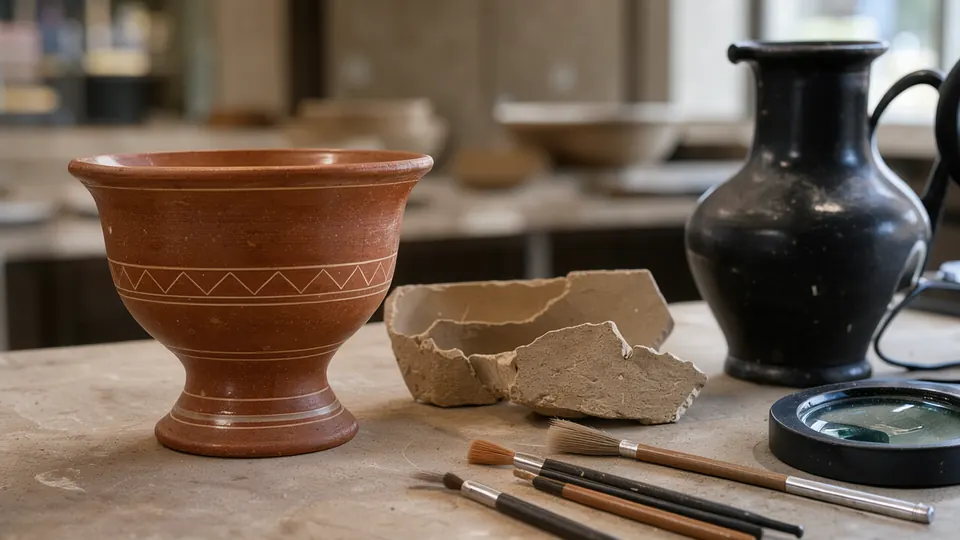
Pottery production was one of the most important crafts in ancient Mesembria, serving both practical and artistic purposes. Archaeological excavations have uncovered thousands of ceramic fragments and complete vessels that provide invaluable insights into daily life, trade connections, and artistic tastes across different periods.
For archaeologists, pottery is one of the most valuable categories of evidence from the ancient world. Fired clay survives in the ground for thousands of years, even when it breaks, and the shapes, fabrics, and decoration of vessels change steadily over time. This makes pottery an essential tool for dating sites and for tracing trade, since a vessel made in one city and found in another maps a connection between them. The thousands of sherds recovered at Mesembria therefore form a detailed archive of the city's history.
From Thracian Hands to the Potter's Wheel
The earliest pottery found in Mesembria dates from the Thracian period, featuring characteristic hand-formed vessels with geometric decorations. With the arrival of Greek colonists in the 6th century BC, pottery production underwent a dramatic transformation, adopting the wheel-thrown techniques and decorative styles of the Aegean world.
Thracian pottery was built up by hand, often coil-formed and burnished, and decorated with incised or impressed geometric motifs that reflected the artistic vocabulary of the local Iron Age culture. The Greek potter's wheel, by contrast, allowed thinner, more regular, and more elegant vessels to be produced quickly and in quantity. With the wheel came the whole repertoire of Greek ceramic forms and the painted styles of the Aegean, transforming both the look and the scale of local production almost overnight.
A Vocabulary of Shapes
Greek pottery came in a rich array of specialised forms, each suited to a particular use: the krater for mixing wine and water, the kylix and kantharos for drinking, the hydria for carrying water, and the amphora for storage and transport. Fine wares were often decorated in the black-figure and later red-figure techniques developed in centres such as Athens and Corinth, examples of which reached Mesembria through trade.
Amphorae and the Trade Networks
During the Hellenistic period, Mesembria became known for producing high-quality amphorae used for storing and transporting wine and olive oil. These distinctive vessels, often stamped with the city's name, have been found across the Black Sea region and beyond, testifying to the extent of Mesembria's trading networks.
The transport amphora was the shipping container of the ancient world, and stamps pressed into the clay handles, often naming the city and sometimes officials or potters, allow archaeologists to identify where a vessel was made and roughly when. Mesembrian amphora stamps recovered at distant sites are direct, datable proof of the city's commercial reach, showing how its wine and oil travelled across the Pontic coast and into the wider Mediterranean. Conversely, imported amphorae found at Mesembria reveal which other centres supplied the city.
What Visitors Can See Today
The Archaeological Museum of Nessebar displays an impressive collection of local pottery spanning over two millennia, from simple Thracian cooking pots to elaborately decorated Greek drinking vessels and Byzantine glazed ceramics. Visitors can follow the whole story in a single room: hand-formed Thracian wares with geometric ornament, wheel-thrown Greek vessels with painted decoration, Hellenistic transport amphorae bearing the city's stamps, and the colourful glazed ceramics of the Byzantine and medieval town. Many pieces were recovered both from the land and from the seabed around the peninsula, where centuries of harbour traffic left their traces.
To see this collection and explore the ancient town for yourself, consult our guide to Nessebar.
Frequently Asked Questions
Why is ancient pottery so important to archaeologists?
Fired clay survives for thousands of years even when broken, and vessel shapes and decoration change over time. This makes pottery essential for dating sites and for tracing trade, since vessels made in one place and found in another reveal connections between them.
What did Thracian pottery at Mesembria look like?
The earliest pottery was hand-formed, often burnished, and decorated with incised or impressed geometric patterns typical of the local Iron Age culture, before the Greek potter's wheel arrived.
How did Greek colonization change local pottery?
From the 6th century BC, Greek colonists introduced the potter's wheel and Aegean decorative styles, allowing thinner, more elegant vessels to be made quickly and bringing the full repertoire of Greek ceramic forms and painted wares.
What were amphorae used for, and why are they stamped?
Amphorae were the shipping containers of antiquity, used to store and transport wine and olive oil. Stamps pressed into the clay, often naming the city, let archaeologists identify where and roughly when a vessel was made, tracing trade routes.
Where can I see ancient Mesembrian pottery today?
The Archaeological Museum of Nessebar displays a rich collection spanning more than two thousand years, from Thracian cooking pots to Greek drinking vessels, Hellenistic stamped amphorae, and Byzantine glazed ceramics.
Get local stories & deals
One email a month with the best Black Sea stories and seasonal deals. No spam.