The Liberation of Nessebar and Modern History
After nearly five centuries within the Ottoman Empire, the modern history of Nessebar opens with liberation, follows through a dramatic transformation of its population, and culminates in its reinvention as one of Bulgaria's most treasured destinations. The story of the last 150 years is in many ways as remarkable as the ancient and medieval chapters that precede it, for it explains how a quiet Greek-speaking fishing town became the UNESCO-listed open-air museum that visitors know today.
Liberation from Ottoman Rule
Nessebar was liberated from Ottoman rule on February 13, 1878, following the Russo-Turkish War of 1877-1878. This conflict, fought largely on Bulgarian soil, ended Ottoman control over much of the region and gave birth to a modern Bulgarian state. The Treaty of San Stefano, signed in March 1878, sketched out an expansive Bulgaria, but the Great Powers, anxious about Russian influence, swiftly revised it. The subsequent Treaty of Berlin established the borders of the new Bulgarian state on more modest terms, and Nessebar became part of the autonomous province of Eastern Rumelia, a semi-independent territory nominally under Ottoman suzerainty but governed by Bulgarians. In 1885 Eastern Rumelia united with the Principality of Bulgaria, an act of national unification that brought Nessebar firmly within the Bulgarian fold.
A Greek-Speaking Fishing Town
In the early 20th century, Nessebar remained a quiet fishing town with a primarily Greek-speaking population, a legacy of its ancient origins as the Greek colony of Mesembria and of centuries of Greek Orthodox community life under Ottoman rule. The townspeople made their living from the sea and from small-scale trade, and the rhythm of life had changed little in generations. The crumbling medieval churches stood half-forgotten among the fishermen's houses, their former grandeur a backdrop to ordinary daily existence.
The Population Exchange
This demographic character was transformed by the population exchange between Bulgaria and Greece in 1919-1925, carried out in the aftermath of the First World War under the Treaty of Neuilly. As part of a broader settlement intended to align populations with the new national borders, the Greek inhabitants of Nessebar departed for Greece and were replaced by Bulgarian refugees from Thrace and Macedonia, who had themselves been displaced from their homes. In the space of a few years the town's language, customs, and community were fundamentally remade, ending more than two millennia of continuous Greek presence on the peninsula.
The Coming of Mass Tourism
For several decades Nessebar continued its quiet existence, but the 1960s brought changes more dramatic than anything since the population exchange. The development of the Sunny Beach resort, built on the sweeping bay just north of the Old Town, transformed the entire district. Under the socialist government's drive to develop Black Sea tourism, a massive infrastructure of hotels, restaurants, and holiday facilities rose almost overnight, turning a sleepy backwater into one of Bulgaria's premier tourist destinations and bringing visitors — and prosperity — on a scale the town had never known.
Preservation of the Old Town
Despite these sweeping changes, the Old Town managed to preserve its historical character, and this is perhaps the most important achievement of Nessebar's modern era. Recognising the unique value of the medieval town, authorities undertook extensive restoration efforts from the 1950s onward, stabilising the ancient churches and protecting the picturesque timber-framed houses of the National Revival period that crowd the peninsula's lanes. The Old Town was designated an architectural and archaeological reserve, and in 1983 it was inscribed on the UNESCO World Heritage List, ensuring that the integrity of its monuments would be maintained and that future generations could continue to experience this remarkable open-air museum.
The Revival Houses
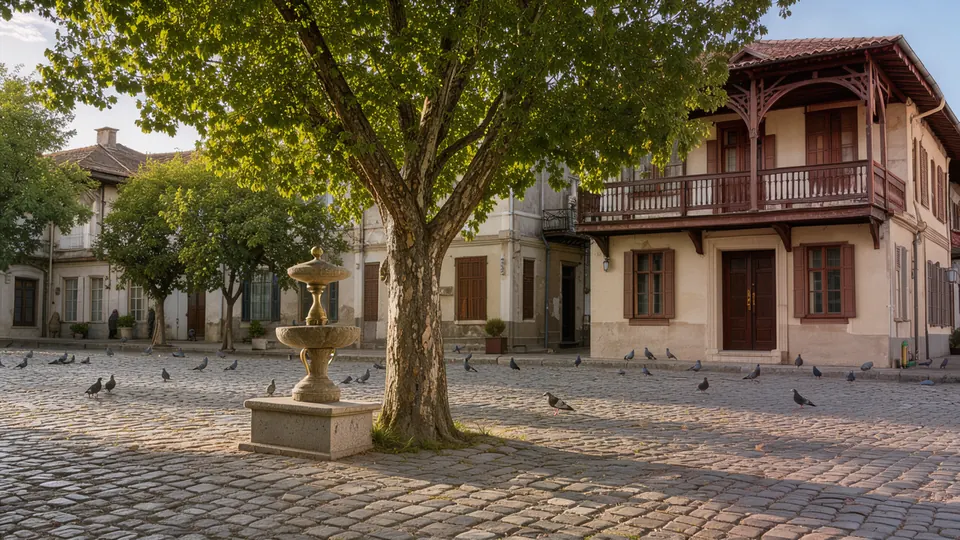
The wooden houses that line the Old Town are themselves an essential part of this heritage. Built in the characteristic Black Sea style of the National Revival period in the 18th and 19th centuries, they typically present a modest stone ground floor — once used for storage or workshops — beneath a broad, projecting upper storey of timber framing that oversails the narrow street below. Generous bay windows catch the sea light, and the overhanging eaves shelter the cobbles. So distinctive and well preserved is this domestic architecture that it formed a major part of the case for UNESCO recognition, standing alongside the medieval churches as evidence of a continuous living tradition. The careful conservation of these fragile timber structures, vulnerable to fire, damp, and the pressures of tourism, remains an ongoing task for the town.
Balancing preservation with the demands of a thriving resort economy is the defining challenge of contemporary Nessebar. The summer crowds that fill the Old Town's lanes bring the income that sustains the town, but they also place strain on its fragile fabric. The story of the last century is therefore not only one of survival but of stewardship — of a community learning to protect an inheritance of extraordinary value while still living among it.
What Visitors Can See Today
The modern visitor encounters all these layers at once. The narrow streets of the Old Town are lined with the wooden Revival houses, their upper storeys overhanging the cobbles, that the restorers worked so hard to save. Between them stand the medieval churches that survived the centuries. Just across the isthmus, the high-rise resort of Sunny Beach offers a vivid contrast — the tourism economy that the 1960s created. The Ethnographic and Archaeological Museums tell the story of the liberation, the population exchange, and the town's twentieth-century reinvention, allowing visitors to trace the entire arc of Nessebar's modern history in an afternoon's walk. The contrast between the quiet, cobbled peninsula and the bustling resort beside it is itself a lesson in how dramatically the last century reshaped this stretch of coast, and how deliberately the Old Town has been held apart from the development that surrounds it.
Frequently Asked Questions
When was Nessebar liberated from Ottoman rule?
On February 13, 1878, following the Russo-Turkish War of 1877-1878.
What was Eastern Rumelia?
An autonomous province created by the Treaty of Berlin, of which Nessebar became part; it united with the Principality of Bulgaria in 1885.
Why did the town's population change so dramatically?
The population exchange between Bulgaria and Greece in 1919-1925, following the Treaty of Neuilly, saw the Greek inhabitants replaced by Bulgarian refugees from Thrace and Macedonia.
How did Sunny Beach affect Nessebar?
The resort's development in the 1960s built massive tourism infrastructure just north of the Old Town, transforming the area into one of Bulgaria's premier tourist destinations.
How has the Old Town been preserved?
Through extensive restoration efforts from the 1950s onward and its inscription on the UNESCO World Heritage List in 1983, which protect its medieval churches and Revival-period houses.
Walk through every chapter of this history in person by exploring our guide to Nessebar.
Get local stories & deals
One email a month with the best Black Sea stories and seasonal deals. No spam.