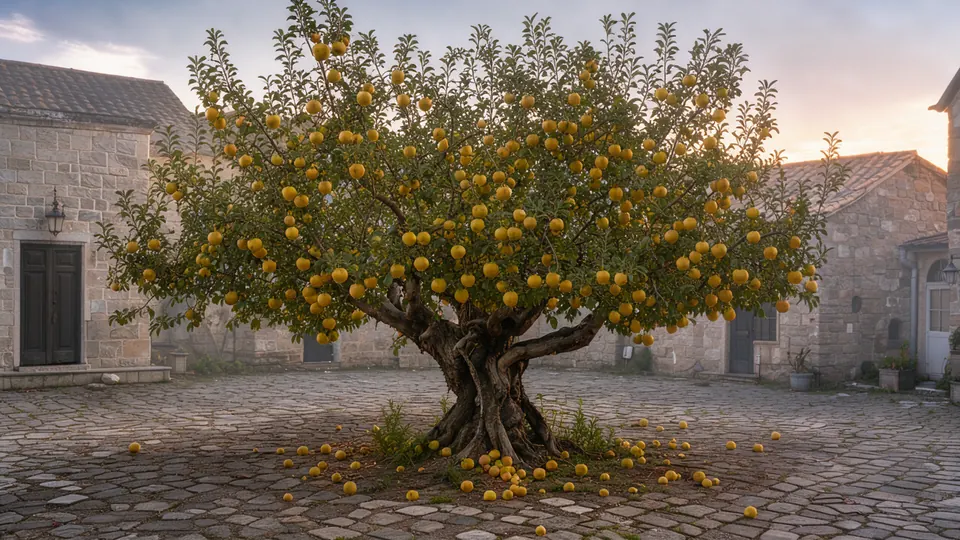
Among the many legends associated with Nessebar, the tale of the Golden Apple Tree is perhaps the most enchanting. Every old town has its myths, but few are as evocative as this one, which links the founding of the city to a single magical tree and a humble fisherman. According to local folklore, a magnificent golden apple tree once grew at the tip of the peninsula, its fruit possessing magical healing properties that attracted pilgrims from across the ancient world.
The Tale Itself
The legend tells of a young fisherman named Nesebar — from whom the city supposedly takes its name — who discovered the tree growing from a crack in the rocks. When he picked one of its golden apples and ate it, he was granted the gift of eternal health and wisdom. Rather than keeping this gift for himself, he shared the remaining apples with his fellow villagers, and the settlement around the tree grew into a prosperous city.
It is a story with a clear moral at its heart: the reward of the magical fruit is multiplied, not diminished, by being shared. The fisherman's generosity, not his luck, is what turns a poor seaside hamlet into a thriving city. In this respect the Golden Apple Tree belongs to a wider family of Black Sea founding legends that explain a great place through a small act of virtue.
Apples in Myth and Memory
Golden apples are among the most enduring symbols in European folklore and classical mythology, from the apples of the Hesperides guarded at the edge of the world to the golden apple that sparked the Trojan War. That a coastal Bulgarian town should anchor its origin story to the same potent symbol places Nessebar within an ancient Mediterranean tradition in which golden fruit stands for immortality, knowledge, and divine favour.
A Kernel of History?
Some scholars believe the legend may reflect the historical importance of Mesembria as a centre of religious healing. Ancient Greek temples, including those dedicated to Asclepius — the god of medicine — were known to exist in many Black Sea colonial cities. Healing sanctuaries dedicated to Asclepius, called asklepieia, functioned as something between temples and hospitals, where the sick travelled to seek cures, made offerings, and slept in the sacred precinct hoping for healing dreams.
The golden apples may symbolise the precious offerings brought to these healing sanctuaries, or the hope of cure that drew pilgrims to the coast. In this reading, the magical tree is a folk memory of a real religious function: Mesembria as a place people journeyed to in search of health, just as the legend's pilgrims came for the golden fruit. Whether or not an asklepieion stood on the peninsula, the wider pattern of healing cults along the ancient Black Sea coast lends the story an intriguing historical shadow.
The Name Behind the Story
The legend also offers a folk explanation for the town's name through the fisherman Nesebar. The scholarly view is different — the modern name "Nesebar" derives from the ancient Thracian and Greek "Mesembria," itself thought to combine the name of a founder, Melsas, with the Thracian word bria, meaning "town." But folk etymology rarely worries about linguistics; the charm of the legend is that it gives the name a human face.
A Living Legend
The legend continues to resonate in modern Nessebar, where golden apple motifs can be found in local art, souvenirs, and even the names of some businesses, keeping this ancient tale alive for new generations. Visitors who know the story will start to notice it everywhere — in painted ceramics, in the signs above shops and guesthouses, in the small details that give the Old Town its character. Asking a local to tell the tale is itself part of the experience, and versions differ from one telling to the next, as living legends always do.
FAQ
What is the Legend of the Golden Apple Tree?
It is a Nessebar folk tale about a magical golden apple tree that grew on the peninsula. A young fisherman ate one of its apples, gained eternal health and wisdom, shared the rest, and the grateful settlement grew into a city.
Does the legend explain the town's name?
In the legend, the fisherman is named Nesebar, and the town takes its name from him. Historically, however, the name derives from the ancient "Mesembria," linked to a founder named Melsas and the Thracian word for "town."
Is there any historical truth behind the legend?
Possibly. Some scholars connect it to the role of ancient Black Sea cities as centres of religious healing, with temples to Asclepius, the god of medicine — the golden apples standing for the offerings or cures pilgrims sought.
Who was Asclepius?
Asclepius was the ancient Greek god of medicine and healing. His sanctuaries, called asklepieia, were healing centres where the sick came to seek cures, and several Black Sea colonial cities had such temples.
Can I still see the legend in Nessebar today?
Yes, in spirit. Golden apple motifs appear in local art, souvenirs, and business names around the Old Town, keeping the tale alive for visitors who know to look for it.
To wander the peninsula where the legend is set, see our Nessebar destination guide and find a place to stay in the Old Town and beyond.
Get local stories & deals
One email a month with the best Black Sea stories and seasonal deals. No spam.