The Gilded Cage: Mesembria as a Place of Byzantine Exile
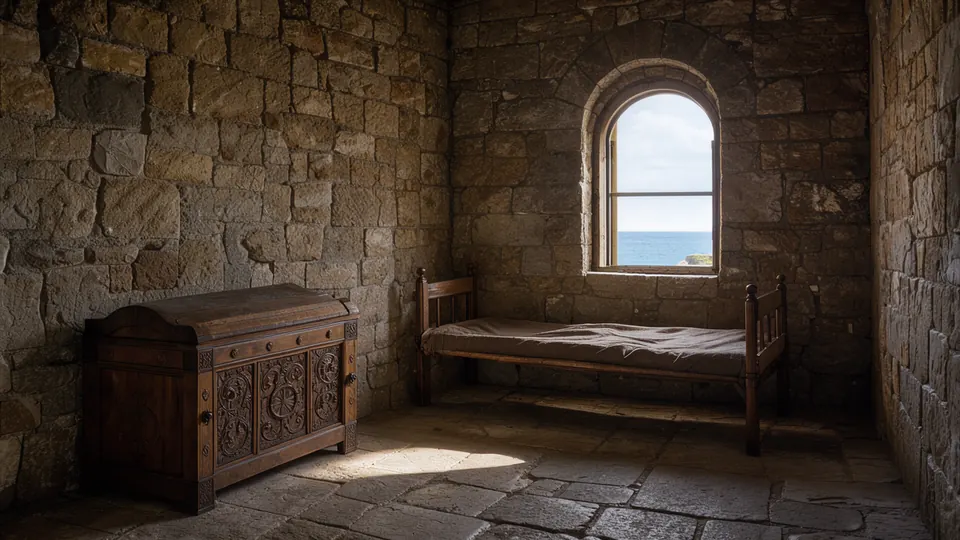
Nessebar, the jewel of the Black Sea, is celebrated for its rich tapestry of history—a story told through its ancient churches, sturdy fortress walls, and the treasures housed in its archaeological museum. We know it as a thriving Greek polis, a key Roman outpost, and a prized possession of Bulgarian tsars. Yet, one of its most fascinating and subtle roles within the Byzantine Empire is often overlooked: that of a 'gilded cage,' a prestigious and secure location for the exile of disgraced nobles, ambitious generals, and problematic members of the imperial family.
Unlike a harsh sentence to a remote, barren island or forced tonsure in a desolate monastery, exile to Mesembria (the city's Byzantine name) was a uniquely political statement. It was a form of house arrest for the elite, a removal from the center of power without the finality of execution or the complete dishonor of a penal colony. This practice reveals as much about Byzantine political strategy as it does about Mesembria's status within the empire. It was a clear signal that the exile was too influential to be ignored, too well-connected to be executed, but too dangerous to remain in the viper's nest of Constantinople.
A Prison of Comfort and Control
What made Mesembria the perfect location for this unique form of punishment? Firstly, its geography. Situated on a peninsula connected to the mainland by a narrow isthmus, it was eminently defensible and easy to control. The formidable fortress walls, parts of which still stand today, made an unauthorized departure nearly impossible. Any ship arriving or leaving its busy harbor could be easily monitored by the local strategos (military governor) and his garrison. This physical security ensured that a political rival, once sent there, would stay there.
Secondly, Mesembria was no backwater. It was a prosperous commercial hub and a significant episcopal see, boasting magnificent churches like the St. Sophia Basilica (the Old Metropolis). An exiled noble would not be languishing in squalor. They would inhabit a comfortable residence, attend lavish church services, and enjoy the fresh sea air and the city's cosmopolitan atmosphere. This was the 'gilded' aspect of the cage. The comforts served a purpose: they kept the exile placated and reduced the risk of their allies attempting a risky rescue. However, this comfort was superficial. The exile was under constant surveillance, their communications were likely intercepted, and they were utterly cut off from the networks of power and influence in the capital, just 300 kilometers across the sea—a distance that was both tantalizingly close and politically infinite.
Notable Exiles and Political Pawns
While specific records detailing every high-profile exile sent to Mesembria are scarce, the practice was common throughout the Byzantine era, particularly during periods of intense political instability. During the tumultuous Iconoclast controversies of the 8th and 9th centuries, bishops and high-ranking officials who fell on the wrong side of the theological debate were often dispatched to provincial cities. Mesembria, with its strong Orthodox bishopric, would have been a prime location to 're-educate' or simply isolate a dissenting clergyman.
Later, during the Komnenian and Palaiologan dynasties (11th-15th centuries), family politics became lethal. An emperor might send a younger brother with a potential claim to the throne, or a popular general whose loyalty was suspect, to a city like Mesembria. A famous example of this type of political maneuvering involves the future emperor Andronikos I Komnenos. Before he seized the throne in 1183, he spent years moving between imprisonment and exile for his various conspiracies. While his specific exiles were to other locations, his case exemplifies the type of powerful, charismatic, and dangerous individual who would be sent to a secure but comfortable location like Mesembria. The goal was neutralization, not martyrdom. An execution could spark a civil war; a comfortable exile in Mesembria simply removed a piece from the political chessboard.
The Cultural Impact of High-Status Prisoners
The presence of these cultured, educated, and wealthy exiles, even as prisoners, would have inevitably left its mark on Mesembria. They would have brought with them the latest trends in art, theology, and literature from the capital. Their patronage may have funded the decoration of a local church or supported a scriptorium, contributing to the city's intellectual life and its reputation as a center of culture on the Black Sea. These individuals, steeped in the sophisticated world of Constantinopolitan politics and culture, would have interacted with the local elite, sharing ideas and knowledge.
This role as a gilded cage adds another layer to our understanding of Nessebar's history. It was more than just a fortress or a trading port; it was a living, breathing component of the vast and complex Byzantine political machine. The city's serene beauty and formidable walls served a dual purpose: they protected it from external enemies while also confining the internal ones. As you walk the cobblestone streets today, looking at the ruins of St. Sophia or the imposing fortress gates, consider the silent dramas that played out here—the whispered conversations of fallen nobles, the lonely vigils of disgraced generals, and the constant, watchful eyes of the Empire, all set within the beautiful but inescapable confines of the Mesembrian peninsula.
Get local stories & deals
One email a month with the best Black Sea stories and seasonal deals. No spam.