The Artistic Soul of Mesembria: Unveiling the Nessebar School of the 13th-14th Centuries
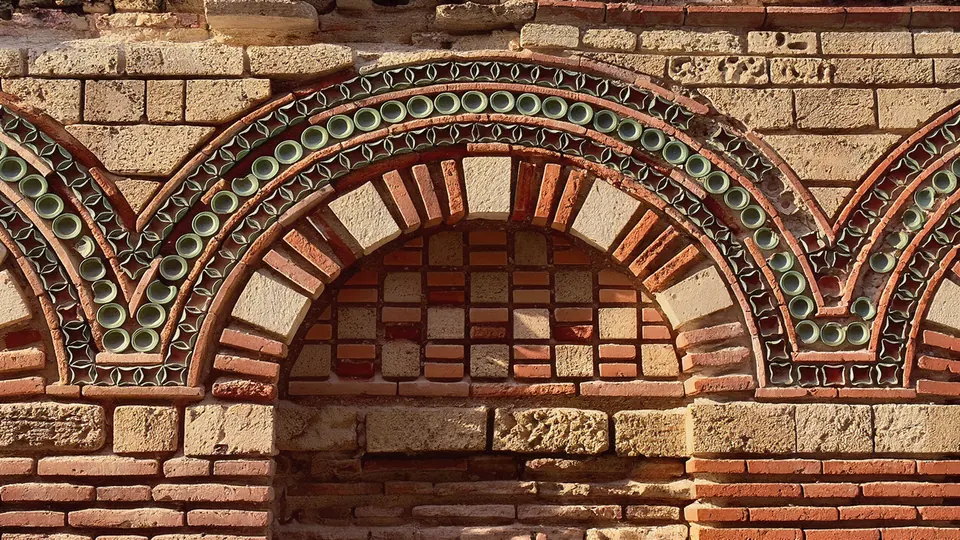
When visitors walk the cobblestone streets of Old Nessebar, they are often struck by the sheer density of history, particularly the incredible number of medieval churches. While each tells its own story, many of these architectural jewels are not isolated creations but are, in fact, shining examples of a distinct artistic movement known as the Nessebar School of art and architecture. Flourishing in the 13th and 14th centuries, during the height of the Second Bulgarian Empire, this school developed a unique and vibrant "picturesque style" that fused Byzantine traditions with local Bulgarian sensibilities, leaving an indelible mark on the town and securing its place as a UNESCO World Heritage site. To truly appreciate Nessebar is to understand this golden age of creativity, a period when the city was not just a strategic port, but a thriving center of artistic innovation.
The Birth of a Style: Political Turmoil and Cultural Flourishing
The 13th and 14th centuries were a dynamic and often turbulent period for Nessebar, then known as Mesembria. The city was a coveted prize, frequently changing hands between the Byzantine Empire and the burgeoning Second Bulgarian Empire. This constant political friction, however, created a unique cultural crucible. Bulgarian tsars, from Kaloyan in the early 13th century to the great patron of the arts, Ivan Alexander (1331–1371), understood Mesembria's strategic and economic importance. As a vital Black Sea port, the city was wealthy, its coffers filled by trade with Genoa, Venice, and the wider Mediterranean world. This wealth funded an unprecedented wave of church construction and renovation. It was under the patronage of Bulgarian rulers and wealthy local citizens that the Nessebar School reached its zenith. Artists and master builders, while deeply influenced by the sophisticated artistic canons of the Byzantine capital, Constantinople, began to incorporate local tastes and innovative decorative techniques. This synthesis resulted in an architectural language that was both familiar in its Orthodox Christian framework and strikingly original in its execution, a testament to a city confidently asserting its own cultural identity amidst the empires that vied for its control.
Architectural Hallmarks: The "Picturesque Style"
The most visible and celebrated feature of the Nessebar School is its exterior decoration, often referred to as the "picturesque style" (стил "питореск"). This style turned church facades into elaborate tapestries of stone, brick, and ceramic. The builders abandoned plain, monolithic walls in favor of dynamic surfaces that played with color, texture, light, and shadow. One of the key techniques was the use of mixed masonry, or opus mixtum, where courses of meticulously dressed white limestone blocks alternated with bands of red brick. But the masters of Nessebar took this a step further, using the bricks to create intricate geometric patterns: checkerboards, zig-zags, meanders, and sun motifs. The crowning glory of this style was the incorporation of glazed ceramic elements. Small, round ceramic discs and four-leaf rosettes, glazed in vibrant shades of green, turquoise, and yellow-brown, were embedded into the mortar, catching the sunlight like jewels. This decorative scheme is best exemplified in the Church of Christ Pantocrator and the Church of St. John Aliturgetos, whose facades are masterpieces of the style. Other churches, like the Church of the Holy Archangels Michael and Gabriel and the Church of St. Paraskeva, showcase the same principles with their own unique variations, featuring elegant blind arches, complex friezes, and rhythmic niches that animate the entire structure. This deliberate, almost painterly approach to architecture is the defining characteristic of the school.
Beyond the Walls: Frescoes and Interior Art
While the exterior ornamentation of the Nessebar School is what first captures the eye, the artistic achievements continued within the sacred interiors. Unfortunately, due to the passage of time, Ottoman-era alterations, and the exposed coastal climate, many of the original frescoes from the 13th and 14th centuries have been lost. The Church of St. John Aliturgetos, for instance, was never consecrated and its interior was likely never fully painted. However, from the fragments that remain elsewhere and from the stunningly preserved murals in the slightly earlier Church of St. Stephen (often called the "Sistine Chapel of the East"), we can glean the exceptional quality of the painters of Mesembria. The artists worked within the tradition of the Byzantine Palaeologan Renaissance, a period of renewed classicism and humanism in art. Yet, like their architectural counterparts, they infused their work with a distinct local character. The figures in Nessebar's frescoes often display a greater emotional intensity and a more dynamic sense of movement than their Constantinopolitan contemporaries. The iconographic programs were complex, narrating biblical scenes with a vividness and detail meant to educate and inspire the largely illiterate populace. The artists demonstrated a masterful command of color and composition, transforming the dark interiors of the cross-in-square churches into vibrant, spiritual realms. Though much has vanished, the surviving art points to an interior decorative tradition as rich and innovative as the architecture that housed it.
The Legacy of the Nessebar School
The golden age of the Nessebar School of art came to an end with the Ottoman conquest of the city in 1453. The new political reality brought an end to the large-scale patronage that had fueled this artistic flourishing. Church construction ceased, and many existing churches were either abandoned or repurposed. Yet, the legacy of this unique cultural period was literally set in stone and brick. The surviving churches stand today as the most eloquent testament to this remarkable chapter in Bulgarian history. The artistic and architectural achievements of the 13th and 14th centuries are a primary reason why UNESCO recognized the entire Old Town of Nessebar as a World Heritage site in 1983. The designation honors not just the age of the ruins, but the specific, unified artistic vision that they represent. So, as you wander through Nessebar, look closely at the walls of the churches. See the rhythm in the brickwork, the glint of a ceramic rosette, and the elegant curve of a blind arch. You are not just looking at old buildings; you are reading the visual language of a brilliant and distinctive artistic school that, for a brief but glorious period, made Mesembria one of the brightest jewels of the medieval world.
Get local stories & deals
One email a month with the best Black Sea stories and seasonal deals. No spam.