Rivals on the Pontus: The Ancient Feud Between Mesembria and Apollonia
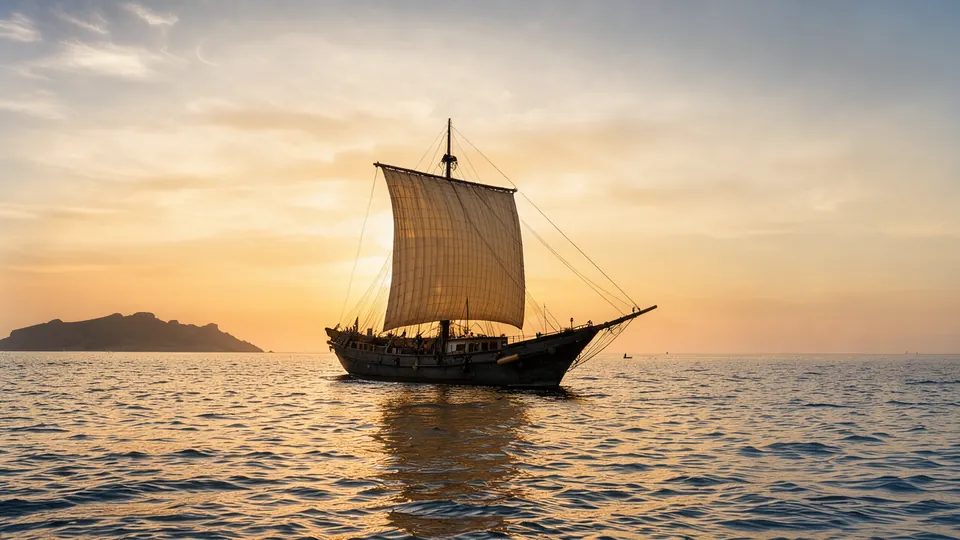
A visitor to the Bulgarian Black Sea coast today might see Nessebar (ancient Mesembria) and Sozopol (ancient Apollonia Pontica) as two beautiful, historic peninsulas offering similar charms: cobblestone streets, Revival-era houses, and stunning sea views. Yet beneath this picturesque surface lies the story of a deep and enduring rivalry that spanned centuries. These were not just neighbouring Greek colonies; they were the two dominant powers of the Western Pontus, locked in a struggle for economic dominance, political influence, and control over the rich Thracian hinterland. Their feud, rooted in their very origins, shaped the destiny of the entire coastline and its echoes can still be traced in the stones and artefacts of these magnificent UNESCO-listed towns.
The Dawn of Two Powers on the Black Sea
The story begins with the great wave of Greek colonization in the 7th and 6th centuries BC. Seeking new resources, trade routes, and land, colonists from the bustling city-states of mainland Greece and Ionia set sail for the shores of the Euxine Pontus, the 'Hospitable Sea'. The first to establish a major foothold on this stretch of coast were Ionian Greeks from Miletus, who founded Apollonia Pontica around 610 BC on a peninsula with two excellent harbours. They brought with them their Ionian dialect, their democratic traditions, and their devotion to Apollo, the god of healing and arts, in whose honour they named their new home.
Nearly a century later, towards the end of the 6th century BC, another group of colonists arrived just 35 kilometres to the north. These were Dorian Greeks, primarily from Megara and its colonies of Byzantion and Chalcedon. They settled on the rocky, easily defensible peninsula that would become Mesembria. Their Dorian origins meant they brought a different dialect, a more oligarchic political structure, and different cultural traditions. This fundamental difference in origin—Ionian Miletus versus Dorian Megara—was the seed of their future rivalry. In the complex web of Greek alliances, Dorians and Ionians often found themselves on opposing sides, most famously in the Peloponnesian War between Sparta (Dorian) and Athens (Ionian). From their very founding, Mesembria and Apollonia were destined to be competitors, not just neighbours.
Competing for Coin and Commerce
The primary theatre of conflict between Mesembria and Apollonia was not the battlefield, but the marketplace. Both cities were strategically positioned to exploit the immense wealth of the Thracian tribes inland. They acted as crucial intermediaries, trading Greek wine, olive oil, fine pottery, and metalwork for Thracian grain, timber, leather, honey, and precious metals. Control over these trade routes was paramount to their prosperity.
Apollonia, with its head start, initially dominated this trade. Its wealth became legendary, best exemplified by the colossal 13-metre-high bronze statue of Apollo created by the sculptor Calamis, which stood before the city's main temple and was counted among the wonders of the ancient world. The city's extensive coinage, bearing the symbols of an anchor and a crayfish, has been found far and wide, testament to its vast trading network. However, Mesembria quickly grew into a formidable challenger. Its natural peninsula provided a superb defensive position, and its harbour was equally valuable. The city began minting its own high-quality silver and bronze coins, often featuring a Corinthian helmet (a nod to its Dorian roots) or a radiant wheel, symbolizing the sun or the goddess of fortune, Tyche. This numismatic evidence is a clear indicator of a thriving economy and a direct challenge to Apollonia's commercial supremacy. They competed fiercely to establish exclusive trading posts (emporia) along the coast and inland, and to secure favourable treaties with powerful Thracian kings.
Alliances, Wars, and Shifting Loyalties
Economic competition inevitably spilled over into political and military conflict. During the 5th century BC, Apollonia joined the Athenian-led Delian League, an alliance of maritime states. As a member, it paid tribute to Athens and likely benefited from its protection. Mesembria, with its Dorian heritage, remained independent and did not join the league, placing it firmly in the opposing sphere of influence during the Peloponnesian War. While there is no direct record of the two cities fighting each other during this period, their opposing allegiances would have deepened the mistrust between them.
The most direct confrontation we know of occurred in the 3rd century BC. Historical sources mention a war in which Mesembria, in a strategic alliance with the powerful city of Byzantion (modern Istanbul), imposed a naval blockade on Apollonia's port. This was a bold move aimed at crippling Apollonia's trade and asserting Mesembria's own maritime power. The conflict demonstrates that the rivalry was not just a cold war of commerce but could escalate into open hostilities. Both cities also had to navigate the rise of the Kingdom of Macedon under Philip II and Alexander the Great. They were forced to balance their independence with the reality of this new superpower, making calculated alliances to preserve their autonomy and commercial interests.
The Roman Shadow and a Fading Rivalry
The ultimate arbiter of the centuries-long rivalry was not a Thracian king or a Greek alliance, but the unstoppable rise of Rome. In the 1st century BC, as Roman legions marched east, every city in the region had to make a choice. During the Mithridatic Wars, a major conflict between Rome and King Mithridates VI of Pontus, Apollonia made a fatal miscalculation. It sided with Mithridates. In 72 BC, the Roman general Marcus Terentius Varro Lucullus besieged and sacked the city. Apollonia was plundered, its fortifications destroyed, and its magnificent bronze statue of Apollo was carted off to Rome as a war trophy to be displayed on the Capitoline Hill.
Mesembria, in stark contrast, played its political cards perfectly. It chose to ally with Rome, welcoming the new power. In exchange, it was granted the privileged status of a 'civitas foederata'—an allied city that retained a degree of self-governance and was exempt from certain taxes. This single political decision sealed the fates of the two rivals. While Apollonia entered a long period of decline from which it would never fully recover its former glory, Mesembria flourished under Roman protection. It became a key administrative and commercial centre on the Black Sea, a status it would maintain and build upon throughout the Byzantine and medieval Bulgarian eras. The ancient feud was over, with Mesembria the undisputed victor.
Echoes in Stone: The Archaeological Legacy
Today, the legacy of this ancient power struggle is written in the very fabric of the two towns. In Nessebar, the wealth accumulated during its rise and its favoured status under Rome and Byzantium is visible in the sheer density of its churches and the strength of its fortification walls, built and rebuilt over the centuries. The Archaeological Museum of Nessebar is filled with artefacts that speak of a city that was a continuous centre of culture and commerce.
In Sozopol, the story is more fragmented, a testament to the cataclysm of 72 BC. Its Archaeological Museum holds incredible treasures, especially from its vast necropolis, hinting at the immense wealth of the pre-Roman city. Yet the monumental public architecture of Apollonia is largely lost, a ghost of its former greatness. For the modern visitor, understanding this ancient rivalry adds a profound new layer to their experience. To walk the streets of Nessebar and Sozopol is to walk on the grounds of two ancient capitals, to see the physical results of their competing ambitions, and to appreciate that the history of the Black Sea coast was forged in the crucible of their epic feud.
Get local stories & deals
One email a month with the best Black Sea stories and seasonal deals. No spam.