Orthodox Easter in Nesebar — Traditions, Rituals, and Where to Experience Them
Bulgaria's Most Sacred Holiday
Orthodox Easter (Великден — Velikden, literally "Great Day") is the most important religious and cultural event in the Bulgarian calendar. If your visit coincides with Easter (which follows the Orthodox calendar and often falls on a different date than Western Easter), you'll witness deeply moving traditions that have been practiced for over 1,000 years.
When Is Orthodox Easter?
Orthodox Easter is calculated using the Julian calendar and always falls between April 4 and May 8. It coincides with Western Easter roughly one-third of the time. Check the specific date for your travel year.
Holy Week Traditions
Great Thursday (Велики четвъртък)
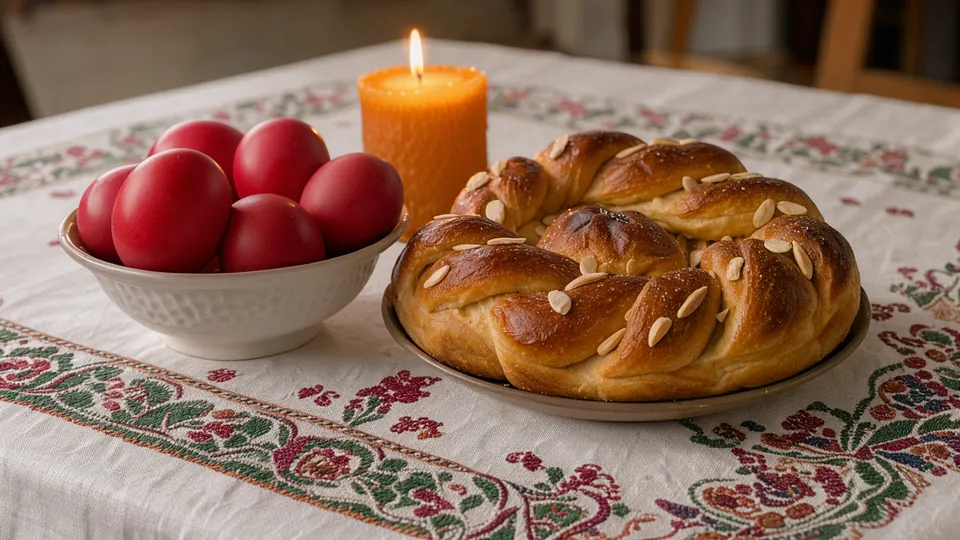
The day of egg dyeing. Bulgarian families gather to dye hard-boiled eggs, always starting with red — the most important color, symbolizing the blood of Christ. The first red egg is set aside as a protector of the house (kept until next Easter). Additional colors follow — each family has their own artistic traditions. This is a warm, communal activity you might witness in guesthouses or be invited to join.
Great Friday (Велики петък)
The most solemn day. The Epitaphios (Плащаница — a decorated funeral bier representing Christ's burial shroud) is carried in procession around the church and through the streets. In Nesebar's Old Town, this procession through medieval streets lit by candles is extraordinarily atmospheric. Shops and businesses often close early. A day of fasting and reflection.
Great Saturday Night — The Resurrection Service
The highlight of the Orthodox Easter experience. At midnight, churches hold the Resurrection service:
- All lights in the church are extinguished
- The priest emerges with a single candle — representing the light of Christ
- Congregants light their candles from this flame, passing it person to person until the church glows
- At midnight, the priest announces "Христос воскресе!" (Christ is risen!) and the congregation responds "Воистина воскресе!" (Truly He is risen!)
- Church bells ring, fireworks light the sky, and the faithful process around the church three times
Non-religious visitors are welcome to attend and observe. It's one of the most moving experiences you can have in Bulgaria, regardless of your beliefs. In Nesebar, the service at the Church of the Assumption near the Old Town entrance is particularly atmospheric.
Easter Sunday
Egg Cracking (Чукане на яйца)
The most fun tradition! After midnight service or on Sunday morning, everyone cracks their red eggs against each other. Two people each hold an egg; they tap them together, end to end. The person whose egg remains uncracked is said to have the most health and luck in the coming year. The "champion egg" is kept as a good luck charm. You'll see this in restaurants, cafes, and on the streets — join in if offered!
Easter Feast
After 40 days of Lenten fasting (observed by many Bulgarians), Easter Sunday is a feast:
- Kozunak (козунак): Sweet Easter bread, similar to Italian panettone but uniquely Bulgarian. Braided, sometimes filled with raisins or Turkish delight. Available in every bakery for 1,5-4 €.
- Lamb: Roast lamb is the traditional Easter main course. Whole spit-roasted lamb is common in rural areas; in Nesebar restaurants, expect lamb chops, stews, and grilled cuts.
- Easter soup (великденска супа): Light lamb broth, often the first food consumed after the midnight service.
Where to Experience Easter in Nesebar
- Church of the Assumption: The main active church near the Old Town entrance. The midnight service here is the most attended and atmospheric.
- New Church of St. Stephen: In New Nesebar, a larger church with equally beautiful services.
- Traditional restaurants: Many restaurants offer special Easter menus featuring lamb dishes and kozunak. Reservations recommended for Easter Sunday lunch.
- Bakeries: The days before Easter, every bakery produces kozunak. The aroma fills the streets. Buy fresh — it's incomparably better than packaged versions.
Tips for Visitors
- Dress respectfully: For church services, cover shoulders and knees. Dark colors are appropriate for Good Friday.
- Bring a candle: Candles are available at church entrances for the midnight service (0,5-1 € donation). It's traditional to try to carry the lit candle home — the longer it stays lit, the more luck it brings.
- Learn the greeting: "Христос воскресе!" (Hristos voskrese!) — Christ is risen! Response: "Воистина воскресе!" (Voistina voskrese!) — Truly He is risen! Use this greeting with anyone you meet from Saturday night through the following week.
- Photography: Ask before photographing during services. Outdoor processions and egg-cracking events are generally fine to photograph.
- Shops and services: Many businesses close for Good Friday through Easter Monday. Plan accordingly for groceries and essentials.
Get local stories & deals
One email a month with the best Black Sea stories and seasonal deals. No spam.