Nesebar's Traditional Crafts — Pottery, Weaving, and Woodwork
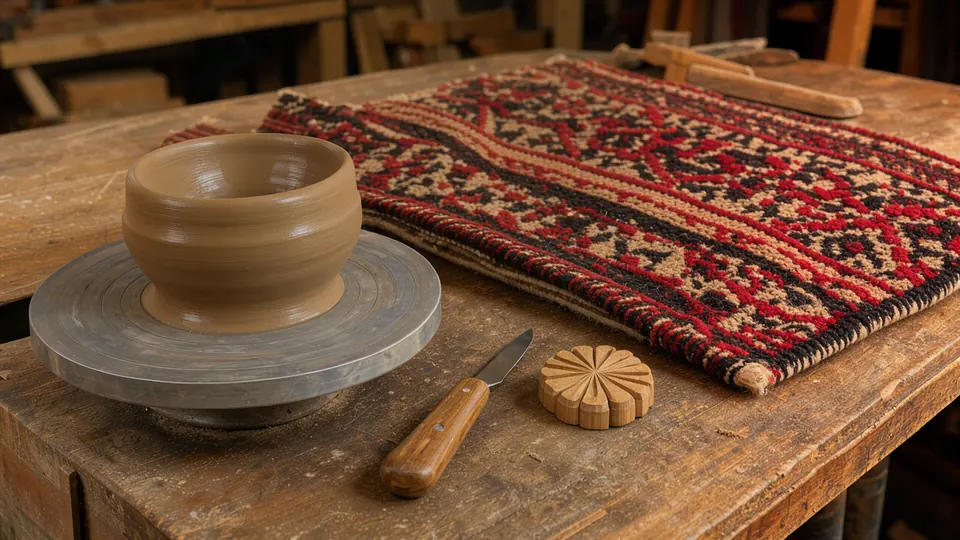
Living Heritage in the Old Town
Walk through Old Nesebar and you'll notice craft workshops tucked between souvenir shops and restaurants. These aren't tourist attractions created for show — they represent centuries of Bulgarian artisan tradition that continues to thrive. From hand-thrown pottery to intricate woodcarving, Nesebar's craftspeople maintain techniques passed down through generations.
Pottery (Грънчарство)
Bulgarian pottery has roots stretching back to the Thracians, who produced some of antiquity's finest ceramics. In Nesebar, you can watch potters at work and purchase handmade pieces directly.
Traditional Styles
- Troyan pottery: The most recognizable Bulgarian style, featuring distinctive "peacock eye" patterns in brown, green, and yellow glazes. While originating from central Bulgaria, many Nesebar shops carry authentic pieces.
- Black Sea coastal ceramics: Local potters create pieces inspired by the sea — bowls and plates in blues and greens, fish-shaped dishes, and vessels decorated with wave motifs.
- Redware (червена керамика): Unglazed terracotta in traditional forms — perfect for serving shopska salad or keeping water cool in summer.
Where to Buy
Several workshops on the main streets of Old Nesebar sell pottery directly from the artisan. Prices range from 2,5 € for small items to 50+ BGN for large decorative pieces. Watching the potter work on a wheel is free — they welcome observers.
Weaving and Textiles (Тъкачество)
Bulgarian textile arts are extraordinarily rich, with each region having distinct patterns and techniques. In the Black Sea area, you'll find both traditional and modern expressions of this ancient craft.
Traditional Items
- Kilims (килими): Flat-woven rugs with geometric patterns. Each region has signature colors and motifs. A genuine handwoven kilim takes weeks to produce and costs accordingly (50-255 €), but machine-made versions are affordable souvenirs.
- Table runners and doilies: Often featuring the Bulgarian rose or Black Sea motifs. Handmade lace doilies are a specialty of older artisans — a dying art worth supporting.
- Embroidered shirts (ризи): Traditional Bulgarian embroidery uses cross-stitch patterns that encode information about the wearer's region, marital status, and family. Modern versions make beautiful gifts.
- Wool items: Handknitted socks, slippers (терлици), and shawls make practical souvenirs. Bulgarian wool from local breeds is naturally lanolin-rich and water-resistant.
Woodcarving (Дърворезба)
Bulgarian woodcarving reached its peak during the National Revival period (18th-19th century), when master carvers created elaborate iconostases, ceiling decorations, and furniture. This tradition continues in Nesebar.
What to Look For
- Religious icons: Hand-carved and hand-painted icons following Byzantine traditions. Some workshops in Old Nesebar produce icons using centuries-old techniques — egg tempera on lime wood.
- Decorative panels: Carved scenes of Bulgarian village life, folklore, and nature. A quality panel makes a unique wall decoration.
- Kitchen items: Wooden spoons, bowls, cutting boards, and mortar-and-pestle sets carved from walnut, cherry, or pear wood. Both beautiful and functional.
- Musical instruments: Some craftspeople make traditional Bulgarian instruments — the gadulka (bowed string instrument) and kaval (wooden flute). These are both art objects and functional instruments.
Other Crafts to Discover
Rose Products
The Bulgarian Rose Valley produces 85% of the world's rose oil. In Nesebar you'll find rose-based cosmetics, jams, and liqueurs (розов ликьор). Look for products from Kazanlak or Karlovo — the heart of the Rose Valley.
Copper Work
Traditional Bulgarian copper coffee pots (джезвета), trays, and decorative items. Genuine hand-hammered copper has subtle irregularities — machine-stamped copies are perfectly smooth.
Leather Goods
Handmade leather sandals, belts, and bags using traditional tanning methods. A few workshops in the Old Town still produce these by hand.
How to Spot Authentic vs. Mass-Produced
- Watch the maker: Genuine workshops let you see the artisan at work. If everything comes from sealed boxes, it's likely imported.
- Ask about origin: Proud artisans will tell you about their materials and techniques. "Made in Bulgaria" is good; "Made here" is better.
- Check the price: If a "handmade" item costs the same as a factory product, it probably is one. Real handcraft has a fair price that reflects the labor.
- Look for imperfections: Subtle irregularities are the fingerprints of handwork. Perfect uniformity signals machine production.
Supporting Local Artisans
Buying directly from craftspeople ensures your money supports the artisan, not a middleman. Many Nesebar crafters are elder artisans — purchasing their work helps preserve skills that might otherwise be lost. The best souvenir from Nesebar isn't a fridge magnet — it's a piece of living Bulgarian heritage you can use every day.
Get local stories & deals
One email a month with the best Black Sea stories and seasonal deals. No spam.