Nesebar at a Slower Pace: A Guide for Older Travellers and Anyone Avoiding the Crowds
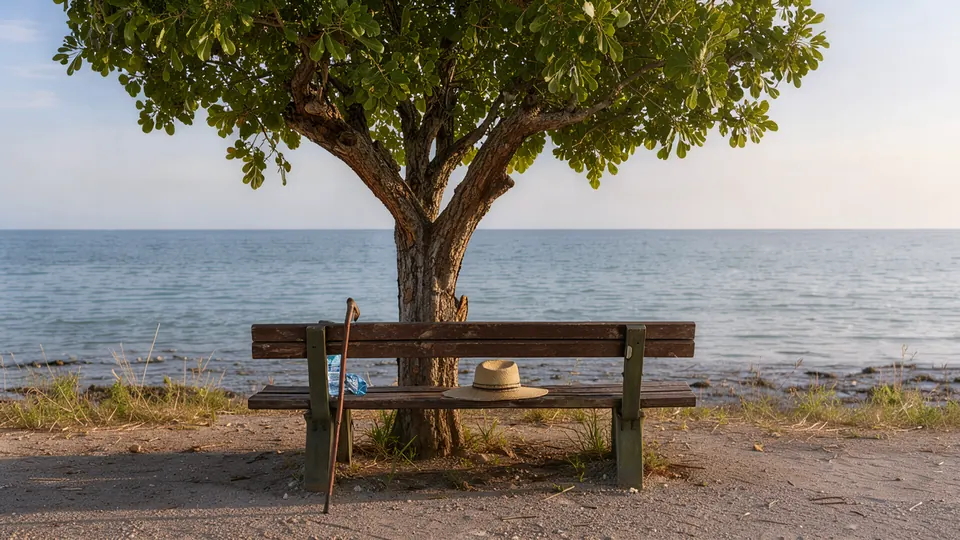
Nesebar at a Slower Pace
Nesebar is usually sold at high volume: the beaches, the nightlife next door in Sunny Beach, the packed summer lanes of the Old Town. That version of the town exists, and it is not the only one.
This guide is for travellers who would rather see the same place properly than see it fast. It is written with older visitors particularly in mind, but it applies equally to anyone recovering from illness, travelling with very small children, or simply allergic to queues.
Choose the month, and the rest follows
Nothing you do on the ground matters as much as when you come. July and August are hot, crowded and expensive. The Old Town's narrow lanes are at their least pleasant precisely when most people visit.
June and September are the obvious answer. The sea is warm enough, the days are long, the crowds are thinner and prices are lower. September in particular gives you a sea that has had all summer to warm up.
May and October are quieter still and genuinely lovely, with the caveat that swimming becomes a matter of temperament in October and some seasonal businesses close.
The off-season is a different town entirely. Fewer places are open, but the peninsula belongs to the people who live there, and walking those lanes in winter light with no one else on them is an experience the July visitor never gets.
Structure the day around the heat
In summer, the useful hours are before eleven and after five. The middle of the day on an exposed stone peninsula with limited shade is not sightseeing, it is survival.
A pattern that works: out early for the Old Town while it is quiet and cool, back to shade and a long lunch through the hottest part, and out again in the late afternoon when the light softens and the town wakes up for the evening.
This is how people who live on the Mediterranean and Black Sea coasts have always organised summer days. Visitors who fight it spend a lot of money on being uncomfortable.
Where to base yourself
The peninsula is atmospheric but demanding: uneven paving, slopes, steps, and buildings that predate lifts. The mainland part of Nesebar has modern accommodation with level access and is a short, flat walk or a very short taxi ride from the historic core.
For a slower trip, the mainland side is usually the better base, with the peninsula as somewhere you go rather than somewhere you navigate at midnight looking for your door.
Consider also the quieter neighbouring places. Ravda is calm and family-oriented. Sveti Vlas sits under the hills with a marina and a gentler atmosphere than Sunny Beach. Pomorie is a spa town with salt lakes and mud treatments, and is the natural choice if wellness is part of the point.
What to actually do
Walk the isthmus in the morning. The approach to the Old Town past the windmill is the classic view and the flattest, easiest walk in the historic area.
Sit at the harbour. Not as a rest between activities, but as the activity. The working boats, the fishermen, the light on the water. This is what the place is.
Take a boat trip. The peninsula from the sea is its best angle, and you get it without walking.
Pick two churches, not nine. Nesebar has a remarkable concentration of medieval churches, and trying to see them all is how a pleasant morning becomes a forced march. Choose two, look at them properly, and leave the rest for another trip.
Go to Pomorie for a day. Salt lakes, a working salt museum, mud treatments and wine. It is close, it is flat, and it is a completely different texture from Nesebar.
Eat late and slowly. Bulgarian restaurant culture does not rush a table. A long dinner is not a waste of an evening here; it is the evening.
Practical matters
Shade and water. Both are things to plan rather than assume, particularly on the peninsula.
Footwear. Worn stone paving is slippery, particularly after rain or where it is polished by centuries of feet. This is the single most common cause of trouble for older visitors, and it is entirely preventable.
Pharmacies. Widely available along the coast and pharmacists are generally helpful and often speak some English or Russian. Bring your prescriptions with generic names as well as brand names, which makes any conversation far easier.
Medical care. For EU visitors the European Health Insurance Card applies. Travel insurance is still worth having. Larger facilities are in Burgas rather than in Nesebar itself, which is a reason to know how you would get there if you needed to.
Sun. The Black Sea coast in summer is stronger than many northern visitors expect, and a hat is more effective than any amount of resolve.
The point of going slowly
The visitors who leave Nesebar unimpressed are usually the ones who saw it at two in the afternoon in August, in a crowd, on the way to something else.
The same streets at seven in the morning in late September, with the sea flat and the light low and almost nobody about, are one of the most beautiful things on this coastline. Going slowly is not a compromise made for age or infirmity. On this particular peninsula, it is simply the better way to see it.
Get local stories & deals
One email a month with the best Black Sea stories and seasonal deals. No spam.