Mesembria's Lifeline: Uncovering Nessebar's Ancient Water Supply Systems
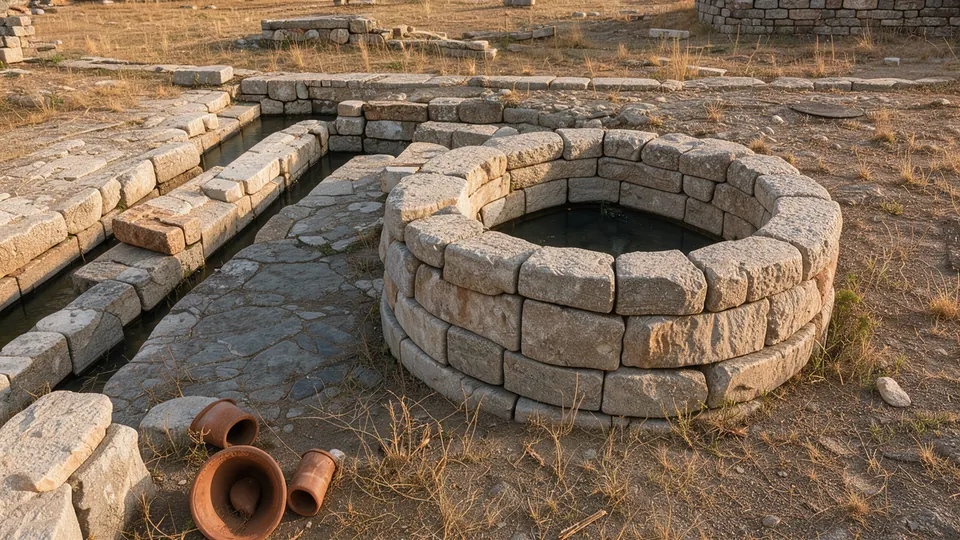
Nessebar, with its dramatic peninsula setting, has always faced a fundamental challenge: how to sustain a substantial population on a rocky outcrop nearly surrounded by undrinkable seawater. The ingenuity of its ancient inhabitants is nowhere more evident than in the sophisticated water supply systems that nourished Mesembria for centuries. Far from being a mere collection of wells, the city developed an impressive network that ensured survival and prosperity even during prolonged sieges, showcasing the advanced urban planning and engineering skills of the Greek, Roman, and Byzantine civilisations that successively shaped it.
The Problem of Fresh Water
A peninsula is a magnificent place to build a defensible city, but it is a difficult place to keep that city watered. Mesembria's rock offered limited room for catchment, and the surrounding sea was useless for drinking. The earliest inhabitants relied on rainwater collected in cisterns and on whatever springs could be reached, but as the city grew into a major port with public buildings, baths, and a dense population, these humble measures were no longer enough. Securing a reliable supply of fresh water became one of the central tasks of civic life — a matter not merely of comfort but of survival.
The Roman and Byzantine Waterworks
During the Roman and early Byzantine periods, Mesembria's water infrastructure reached its peak, reflecting the engineering confidence of an age that built aqueducts across an empire. An impressive aqueduct system, remnants of which can still be found on the mainland, channelled fresh water from springs in the nearby mountains directly toward the peninsula. Carrying water over distance and across the vulnerable isthmus was a major undertaking, requiring careful surveying to maintain the gentle, continuous gradient on which gravity-fed aqueducts depend.
Distribution and Storage
Within the fortified city, this incoming water was meticulously distributed through a complex network of underground pipes that fed public fountains, baths, and private buildings. Just as important as distribution was storage. The city relied on numerous large cisterns — sealed underground or semi-underground reservoirs — to hold great volumes of water against times of need. Some of these cisterns are still visible today or lie beneath modern structures, and their robust, watertight construction is a testament to the skill of their builders and the reason they have endured for fifteen centuries and more.
Water as a Weapon of Survival
These vital waterworks were crucial for the daily life of Mesembria's citizens. They supplied the public baths that were central to ancient and Byzantine social life, ensured the functioning of numerous fountains, and provided water for cooking, cleaning, and every domestic use. But beyond mere convenience, the system had a strategic dimension that could decide the fate of the city. The ability to store vast quantities of water within the walls proved indispensable during times of conflict. An aqueduct could be cut by a besieging army — but a city with full cisterns could outlast the siege. This stored water allowed Mesembria to withstand the prolonged blockades imposed by the many invaders who, across the centuries, sought to seize this strategic Black Sea port. In a very real sense, the cisterns were as important to the city's defence as its walls.
Engineering Knowledge Across the Ages
The water system was not the work of a single moment but the accumulated achievement of successive civilisations. The Greek colonists who founded the city laid the foundations with wells and rainwater cisterns; the Romans, masters of hydraulic engineering, brought the monumental aqueduct and the network of pipes; and the Byzantines maintained, repaired, and extended the system as the city's needs and its defensive priorities evolved. Each generation inherited and improved upon the work of its predecessors, so that the waterworks embody centuries of practical knowledge passed down and refined. The very survival of cisterns built fifteen hundred years ago, still holding their shape beneath the modern town, is a tribute to the quality of that engineering — to waterproof mortars, precise stonework, and a deep understanding of how to move and store water reliably.
This mastery of water was, in the end, inseparable from the city's prosperity. A reliable supply allowed the population to grow, the baths to function, the gardens to flourish, and the port to thrive. Where many ancient settlements failed because they could not solve the problem of water, Mesembria succeeded, and its long continuity of habitation — from Greek colony through Roman and Byzantine port to the living town of today — owes more than is often realised to the unseen network of pipes and cisterns beneath its streets.
What Visitors Can See Today
Exploring Nessebar today, visitors can still encounter whispers of this ancient lifeline. Though much of the system is now submerged beneath the sea that has claimed the peninsula's edges, or integrated into later constructions, certain archaeological sites preserve traces of these hydraulic feats. Remains near the old city gates and within the ruins of the Old Metropolis (the great early Byzantine Basilica of St. Sophia) hint at the immense scale of the engineering that once kept the city alive. Cisterns and channels surface here and there among the ruins for the observant visitor. The Archaeological Museum provides context that helps make sense of these scattered remnants, displaying finds and explanatory material that bring the hidden network back into view. For those willing to look beyond the famous churches, the water system offers a quieter but equally compelling story — that of the practical genius without which none of the city's grander monuments could have stood. Understanding this complex system deepens one's appreciation for Nessebar's resilience and for the advanced civilisation that thrived on so unpromising a rock.
Frequently Asked Questions
How did ancient Nessebar get its fresh water?
Through an aqueduct system that channelled water from springs in the nearby mountains to the peninsula, supplemented by rainwater and stored in large cisterns within the city.
When was the water system at its most developed?
During the Roman and early Byzantine periods, when Mesembria's water infrastructure reached its peak.
Why were the cisterns so important?
They stored vast quantities of water within the walls, which proved indispensable during sieges by allowing the city to withstand prolonged blockades even if the aqueduct was cut.
Can the aqueduct still be seen?
Remnants of the aqueduct system can still be found on the mainland, and traces of cisterns and channels survive among the ruins on the peninsula.
Where on the peninsula can I see traces of the water system?
Particularly near the old city gates and within the ruins of the Old Metropolis, where archaeological remains hint at the scale of the ancient waterworks.
Discover the engineering genius behind this ancient city and plan your visit through our guide to Nessebar.
Get local stories & deals
One email a month with the best Black Sea stories and seasonal deals. No spam.