Medieval Bulgarian Rule and the Golden Age
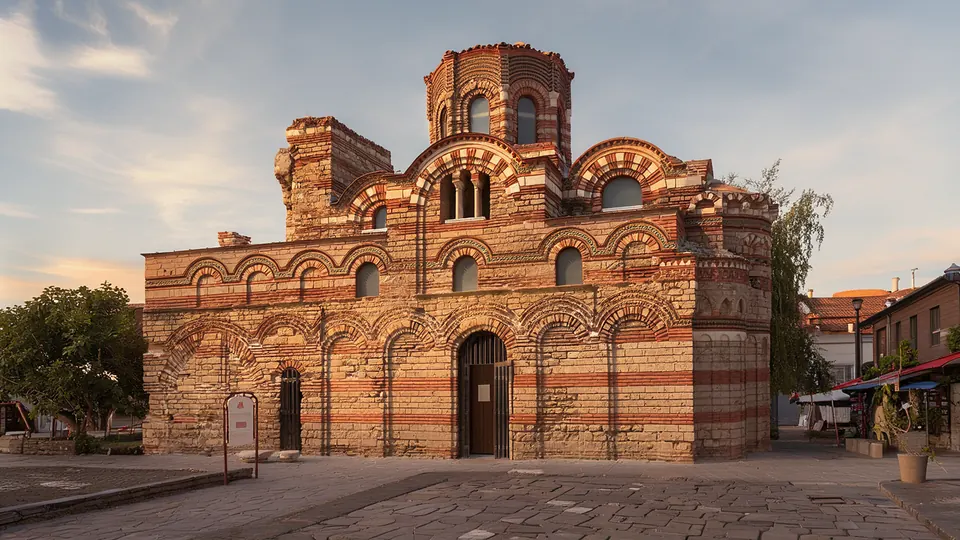
Nessebar's history under Bulgarian rule is marked by alternating periods of conflict, conquest, and remarkable cultural achievement. For more than five centuries the city stood on the contested frontier between the Bulgarian state and the Byzantine Empire, and its fortunes rose and fell with the balance of power along the Black Sea coast. Yet it was precisely this position — coveted by both powers — that made Nessebar a showcase of medieval art and architecture whose monuments still define the peninsula today.
The First Bulgarian Conquest
The city first came under Bulgarian control in 812 AD, when Khan Krum captured the strongly fortified port from the Byzantine Empire. Krum, who had already shattered a Byzantine army and famously turned the skull of Emperor Nikephoros I into a drinking cup, recognised the strategic value of a harbour that commanded the sea routes of the western Black Sea. His seizure of the city began a long pattern of alternating Bulgarian and Byzantine control that would continue, on and off, for centuries — each side fortifying, garrisoning, and adorning the town in turn.
The Golden Age of Tsar Simeon
During the reign of Tsar Simeon the Great (893-927), Bulgaria experienced its Golden Age, an era of unprecedented political power and cultural brilliance, and Nessebar flourished as an important cultural and religious centre within the orbit of the Bulgarian state. The city's churches were adorned with new frescoes and icons, and its monasteries became centres of learning and manuscript production, copying and preserving texts in the newly developed Slavic literary tradition that Simeon so energetically promoted from his capital at Preslav. As a coastal gateway, Nessebar linked the Bulgarian heartland to the wider Christian and Mediterranean world, channelling both goods and ideas.
A Frontier That Changed Hands
The city changed hands multiple times between Bulgaria and Byzantium across the following centuries, each transfer leaving its mark on the urban fabric. But it was during the Second Bulgarian Empire (1185-1396) that Nessebar reached its true architectural zenith. Freed from the long Byzantine domination that had followed the fall of the First Empire, the restored Bulgarian state poured resources into its Black Sea cities, and Nessebar in particular blossomed into a centre of ecclesiastical architecture.
The Great Churches
This period saw the construction of the most celebrated churches that define the city's skyline today. Among them are the Church of Christ Pantocrator, with its richly patterned eastern façade, and the Church of St. John Aliturgetos, dramatically perched above the harbour, widely regarded as the finest expression of the local building tradition. These were joined by numerous other churches — Nessebar is often said to have once held some forty churches, an astonishing number for so small a town — so that the peninsula became a dense gallery of medieval Christian art.
The Nessebar Architectural School
The Nessebar architectural school that developed during this period is one of the great achievements of medieval Bulgarian art. It is characterised by decorative brickwork, in which rows of stone and brick alternate in striking horizontal bands, polychrome façades that play warm reds against pale stone, and the innovative use of glazed ceramic ornaments — rosettes, discs, and friezes of coloured pottery set directly into the walls. Blind arcades, recessed niches, and elegant arched windows complete the effect. Together these features give Nessebar's churches a luminous, decorative quality that distinguishes them sharply from contemporary Byzantine buildings elsewhere, even though they share the same Orthodox architectural roots.
A Town of Many Churches
The concentration of churches on so small a peninsula is one of the most striking facts about medieval Nessebar. Each was endowed by wealthy patrons — merchants, nobles, or the Church itself — as an act of piety and a display of status, so that the building boom reflected the prosperity that trade and royal favour had brought to the town. The interiors were once filled with frescoes and icons, the work of skilled painters who covered the walls with images of Christ, the Virgin, the saints, and the great feasts of the Orthodox calendar. Though much of this painting has been lost to time, weather, and the conversion of churches to other uses, surviving fragments and the icons preserved in the town's museums give a vivid sense of the artistic richness that once filled these spaces.
The End of the Medieval City
The brilliant medieval flowering came to an end with the Ottoman conquest. Nessebar fell to the advancing Ottoman armies around 1453, the same fateful year that saw the fall of Constantinople, and the city passed under Ottoman rule that would last for more than four centuries. The great age of church-building ceased, and the town settled into a quieter existence. Yet the monuments of the Bulgarian golden centuries were not destroyed; they endured, weathering and decaying but surviving, until the restorers of the modern era recognised them for the treasures they are. It is precisely this survival that makes Nessebar so valuable today — a rare, concentrated record of medieval Bulgarian and Byzantine architecture preserved across the centuries.
What Visitors Can See Today
The legacy of medieval Bulgarian Nessebar is everywhere in the Old Town, which is inscribed on the UNESCO World Heritage List largely on the strength of these monuments. Visitors can walk between the standing ruins and partially preserved churches that line the narrow streets, admiring the banded masonry and ceramic decoration up close. The Church of Christ Pantocrator survives in particularly good condition and is among the most photographed buildings in Bulgaria; the ruins of St. John Aliturgetos command sweeping views over the harbour. The Archaeological Museum and the local church museums display frescoes, icons, and architectural fragments that bring the Golden Age and the Second Empire vividly to life.
Frequently Asked Questions
When did Nessebar first come under Bulgarian rule?
In 812 AD, when Khan Krum captured the city from the Byzantine Empire, beginning centuries of alternating Bulgarian and Byzantine control.
What was the Golden Age?
The reign of Tsar Simeon the Great (893-927), a period of exceptional Bulgarian political power and cultural achievement, during which Nessebar prospered as a cultural and religious centre.
Which famous churches were built during the Second Bulgarian Empire?
The most celebrated include the Church of Christ Pantocrator and the Church of St. John Aliturgetos, both built during the Second Bulgarian Empire (1185-1396), the city's architectural high point.
What makes the Nessebar architectural school distinctive?
Decorative alternating brick-and-stone masonry, polychrome façades, and the innovative use of glazed ceramic ornaments — features that set Nessebar's churches apart from Byzantine buildings elsewhere.
Can I see these medieval monuments today?
Yes. Many churches survive as standing ruins or in good condition within the UNESCO-listed Old Town, and museums display frescoes, icons, and architectural fragments from the period.
Plan a visit to walk among these living monuments of medieval Bulgaria by exploring our guide to Nessebar.
Get local stories & deals
One email a month with the best Black Sea stories and seasonal deals. No spam.