Hiking and Nature Near the Black Sea: Trails, Reserves and Birdwatching
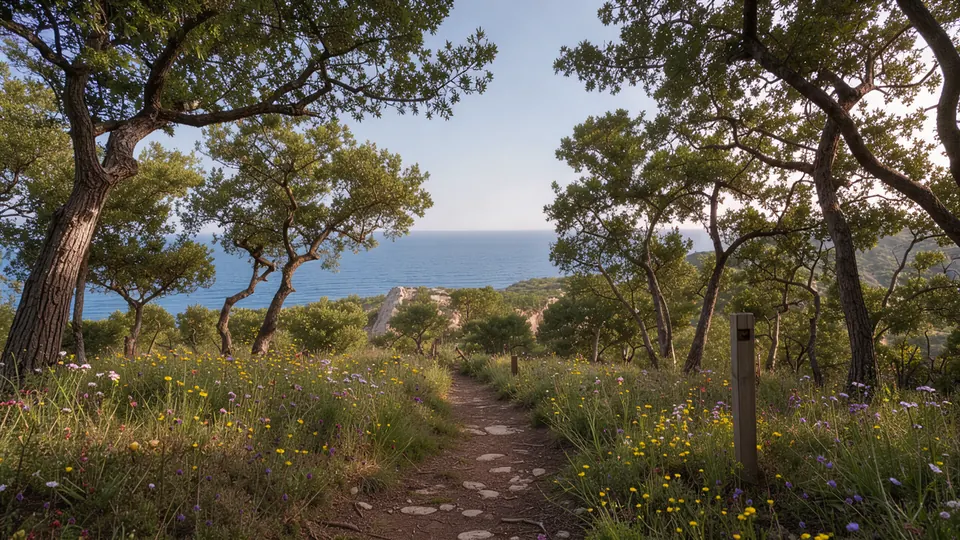
Bulgaria's southern Black Sea coast is far more than beaches. Behind Nesebar rise the green foothills of the Stara Planina (Balkan Mountains), which run all the way to the sea at dramatic Cape Emine; to the south stretch ancient oak forests, jungle-like river reserves, and salt lakes that funnel one of Europe's great bird migrations. For travellers who want to balance beach days with something wilder, the area offers everything from gentle nature walks to a genuine multi-day long-distance trail. This guide covers the best hikes, reserves, and wildlife-watching within reach of Nesebar, with difficulty, distances, and seasons.
The Lie of the Land
Three distinct natural zones surround Nesebar. To the north and northwest, the Stara Planina mountains reach the coast — this is where the famous Kom-Emine trail (the Bulgarian section of the European E3 path) ends, at Cape Emine. To the south lie the protected river reserves of Ropotamo and, further on, the wild Strandzha mountain forests. All around are the wetlands and salt lakes — Pomorie, Atanasovsko, and the Burgas lakes — among the most important bird sites in Europe. You can sample all three on day trips from a beach base.
Mountain and Coastal Hikes
Cape Emine and the End of Stara Planina
- Distance: about 25 km north of Nesebar to the cape area
- Difficulty: easy to moderate coastal walking
- Season: spring to autumn
Cape Emine is where the Balkan mountain range plunges into the sea — the symbolic end of the Kom-Emine trail, Bulgaria's classic long-distance route. You can walk sections of the coastal path here, with cliffs, an old lighthouse, the ruins of a medieval monastery, and big sea views. The village of Emona is the access point. Even a short out-and-back along the clifftops is spectacular. For serious hikers, the final stages of the Kom-Emine make a memorable multi-day trek finishing at the sea.
Sunny Beach Hinterland and Kosharitsa Hills
- Distance: various short loops, 3-8 km
- Difficulty: easy to moderate
- Season: all year, best spring and autumn
Behind the resort, the wooded hills around Kosharitsa village offer quiet forest tracks and viewpoints over the bay. A good half-day escape from the beach crowds, with shade and birdsong. Easy enough for families with older children.
The Coastal Path Nesebar to Sveti Vlas and Beyond
- Distance: 6-10 km depending on how far you go
- Difficulty: easy
- Season: all year
A gentle walk along the coast linking the resorts, passing beaches, marinas, and quiet stretches. Best in the cooler morning. A relaxed way to combine exercise, sea views, and a coffee stop without needing a car.
River and Forest Reserves
Ropotamo Reserve
- Distance: 50 km south of Nesebar
- Difficulty: easy (boat trip + short walks)
- Season: spring to autumn
The jewel of the southern coast: a protected river reserve where the Ropotamo winds through dense forest to the sea. The classic experience is the boat trip up the river through water lilies and overhanging trees (around 6-8 € per person), but there are also marked walking trails through the Arkutino marsh, over the dunes, and to the Maslen Nos headland. Look for herons, cormorants, kingfishers, terrapins, and — if lucky — the reserve's wild boar and deer. Wonderfully atmospheric and great for families.
Strandzha Nature Park
- Distance: 80-120 km south (toward the Turkish border)
- Difficulty: moderate; remote
- Season: spring to autumn
Bulgaria's largest protected area, a vast and little-visited expanse of ancient oak and beech forest, rare relict plants, traditional villages, and the famous fire-dancing (nestinarstvo) tradition. This is a full day-trip or overnight destination for serious nature lovers, with marked trails, river valleys, and a profound sense of wilderness. Best explored with a car and a good map, or a guided eco-tour.
Birdwatching: The Via Pontica Flyway
The Bulgarian Black Sea coast sits on the Via Pontica, the second-largest bird migration route in Europe. In spring and autumn, hundreds of thousands of storks, pelicans, raptors, and waterfowl funnel along the coast. This is world-class birdwatching, and the best sites are remarkably close to Nesebar.
Pomorie Lake
- Distance: 18 km south
- Best for: flamingos, waders, terns; an ornithological station with a visitor centre
The closest serious bird site. This salt lagoon hosts flamingos, avocets, sandpipers, and breeding terns, with a visitor centre and hides. An easy half-day, combinable with the wine town and salt museum.
Atanasovsko Lake (Burgas)
- Distance: 35 km south
- Best for: spectacular migration, raptors, pelicans
A working salt-pan and reserve on the edge of Burgas, and one of the best raptor-migration watchpoints in Europe. In autumn the skies fill with birds of prey and storks riding the thermals. The salt museum and the Via Pontica visitor facilities add context.
The Burgas Lakes Complex
- Distance: 35-40 km south
- Best for: waterfowl, pelicans, overall diversity
Lake Burgas (Vaya) and Mandra Lake complete the trio, hosting Dalmatian pelicans, herons, ducks, and an extraordinary diversity year-round. Hides and trails make for rewarding, easy birdwatching.
Difficulty and Season Table
| Destination | Distance from Nesebar | Difficulty | Best season |
|---|---|---|---|
| Cape Emine | 25 km | Easy-moderate | Apr-Oct |
| Kosharitsa hills | 8-12 km | Easy-moderate | All year |
| Coastal path | 0-10 km | Easy | All year |
| Ropotamo reserve | 50 km | Easy | Apr-Oct |
| Strandzha park | 80-120 km | Moderate | Apr-Oct |
| Pomorie Lake | 18 km | Easy | Spring & autumn migration |
| Atanasovsko Lake | 35 km | Easy | Spring & autumn migration |
| Burgas lakes | 35-40 km | Easy | All year, peak in migration |
What to Bring
- Proper footwear — trail shoes or light boots for the reserves and mountain paths; the coastal and lake walks are fine in trainers
- Water and sun protection — there is little shade on the cliffs and salt lakes; carry at least 1.5 litres per person
- Binoculars — essential for the bird sites; a basic pair transforms the experience
- Insect repellent — the marshes and reserves have mosquitoes, especially at dawn and dusk
- A printed or offline map — phone signal is patchy in Strandzha and parts of the reserves
- Long sleeves and trousers for the forest reserves (ticks are present in spring and summer; check yourself afterwards)
- A camera with a zoom for wildlife
When to Go
- Spring (April-May) is the best all-round season: wildflowers, returning birds, green forests, mild temperatures, and far fewer people
- Autumn (September-October) brings the great raptor and stork migration and golden light — the prime birdwatching window
- Summer (June-August) works for the shaded reserves and early-morning walks, but the salt lakes and clifftops are hot and exposed at midday — start early
- Winter is quiet but the Burgas lakes still hold wintering waterfowl for hardy birders
How to Organise It
Most of these can be done self-drive with a hire car, which gives the freedom to start at dawn (the best wildlife hours). Organised eco-tours and birdwatching trips are available from operators in Burgas and the resorts, often with an expert guide and transport — invaluable for the bird sites and Strandzha, where local knowledge makes the difference. A base close to the trailheads can be found at nesebar.net/properties.
A Note on Conservation
Ropotamo, Strandzha, and the lakes are protected reserves and Natura 2000 sites. Stay on marked trails, take all litter away, keep dogs on leads, and never disturb nesting birds. The wildness that makes these places special survives only because visitors tread lightly. The salt-pans are also working sites — respect signs and fences.
FAQ
Are there real hiking trails near Nesebar, or just beaches?
There are genuine trails — the Stara Planina foothills and Cape Emine to the north (the end of Bulgaria's famous Kom-Emine long-distance route), and the Ropotamo and Strandzha reserves to the south, with everything from short nature walks to multi-day treks.
Where is the best birdwatching near Nesebar?
Pomorie Lake (18 km) is the closest serious site for flamingos and waders. Atanasovsko Lake and the Burgas lakes (35-40 km) are among Europe's best for migrating raptors, storks, and pelicans, especially in spring and autumn.
Is the Ropotamo reserve good for families?
Yes — the river boat trip is gentle, scenic, and a hit with children, and the marked walking trails through the marsh and dunes are easy. It is one of the best nature days for families on the coast.
When is the best time for nature and hiking on the coast?
Spring (April-May) and autumn (September-October) are ideal — mild weather, active wildlife, and the great bird migrations. Summer is hot and exposed on the cliffs and lakes, so start early.
Do I need a car for these trips?
A car gives the most freedom, especially for dawn starts and the remote reserves (Strandzha, Ropotamo). Organised eco-tours and birdwatching excursions are a good alternative, with guides who know where to find the wildlife.
Are there dangerous animals on the trails?
No large predators threaten walkers. The main precautions are ticks in spring and summer (wear long sleeves, check afterwards), snakes (rare and avoid them), and sun and dehydration on exposed sites. Mosquitoes in the marshes at dawn and dusk warrant repellent.
Get local stories & deals
One email a month with the best Black Sea stories and seasonal deals. No spam.