Buying Property in Nesebar as a Foreigner: The Four Gates, Not the One Everybody Talks About
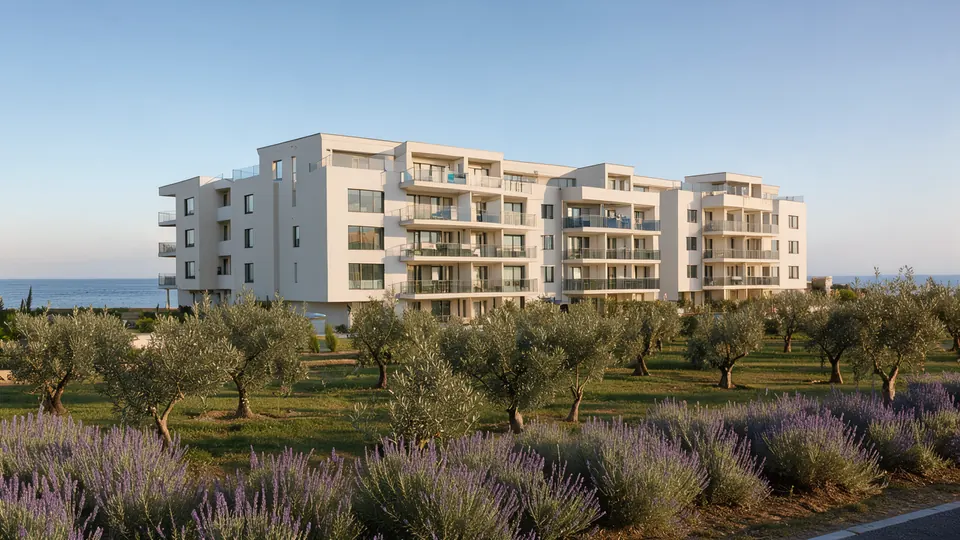
Buying Property in Nesebar as a Foreigner
Almost every guide to buying on the Bulgarian coast reduces the question to one sentence: foreigners can buy a building but not land, and a Bulgarian company solves it. Both halves of that are wrong often enough to cost people money.
This guide is written against the statutes. It is not legal advice, and the single most useful thing in it is this: instruct your own Bulgarian lawyer — not one introduced by the agent or the developer — to read the deed chain and the cadastre before any deposit leaves your hands.
Gate one: which passport, and it is not "EU or not"
The line is EU plus EEA, and there are two further routes open to anyone.
| Buyer | Apartments and buildings | Regulated urban land | Agricultural land |
|---|---|---|---|
| Bulgarian | yes | yes | yes |
| EU citizen | yes | yes | yes, but see gate two |
| Norwegian, Icelandic, Liechtenstein | yes | yes | yes, but see gate two |
| UK, US, Russian, Turkish, Ukrainian, Israeli | yes | not personally | no |
Note where Norway sits. A Norwegian buys Bulgarian land in their own name; a British citizen, since 1 January 2021, does not. "Non-EU" is the wrong test.
Two further routes exist for any nationality. Intestate inheritance is open to everyone — although a foreigner who inherits agricultural land must divest within three years. And a treaty ratified under the constitutional supermajority would qualify, though for US, Russian and Turkish nationals no such treaty exists.
There has been no blanket ban since March 2007, when the prohibition was deleted from the Property Act. What replaced it is a permission subject to conditions, which is a different thing and needs reading carefully.
Gate two: the agricultural-land trap, which is where this coast bites
The Agricultural Land Ownership Act, article 3в, restricts acquisition to persons who have resided in Bulgaria for more than five years. It looks through a Bulgarian company registered less than five years to its shareholders. And it bars outright any company whose shareholders sit in offshore jurisdictions, or who are non-EU/EEA foreigners.
That last point demolishes the standard advice. A Bulgarian EOOD does not launder a non-EU shareholder onto agricultural land. It works for urban land; it does not work here.
In January 2024 the Court of Justice ruled that a five-year residence requirement breaches the free movement of capital — in a case referred by the Burgas district court, over fields in this very region. But the article has not been repealed. It is still printed in the ministry's own consolidation. An EU or EEA buyer relies on the primacy of EU law over a text the notary can still read on the page; a third-country buyer cannot rely on it at all, because the Court was not asked about them.
Why this matters around Nesebar specifically: a great deal of what is marketed near Ravda, Kosharitsa, Sveti Vlas and Emona as a "house plot", "garden" or "villa-zone parcel" is still cadastrally agricultural land, not regulated urban land. On a flat in Sunny Beach this gate does not bite at all. On a plot behind the coast it does.
Gate three: does your apartment carry a share of the land?
This is the most expensive misconception in circulation, and it runs the opposite way to the usual advice.
Bulgarian law lists the land under a building among the common parts of the building, which cannot be divided. So the default is that a flat does carry an ideal share of the land. The land-free case — where the block was built on a right to build, and buyers take shares of that right instead — is real and common in coastal complexes, but it is an exception you verify per building, not a rule about apartments in general.
Read the deed:
- "идеални части от правото на строеж" — safe for a third-country buyer
- "идеални части от УПИ / дворното място / земята" — not safe as it stands
This is settled before the deed is drafted, by who owns the ground under the block. It is answered by the seller's own deed and the cadastral sketch, not by asking the agent.
If it goes wrong, Bulgarian case law has applied partial rather than total nullity — the buyer keeps the building and the superficies share while the land component fails. That is better than a void deed, but you own something other than what you paid for, and the point is not squarely settled for a lone third-country buyer.
Gate four: is the right to build time-limited?
If the block stands on a right to build, read the deed that created it for a term. Where the right is time-limited, the building passes to the landowner free of charge when it expires. A term-limited right to build is a wasting asset, not a safe harbour.
What it actually costs
The notary fee follows a published scale, identical for every nationality, computed on the higher of the price and the tax assessment. It is capped at €3,067.75, plus 20% VAT, so the real ceiling is about €3,681.
The registry entry fee is 0.1%, minimum €5.11, with no VAT.
The transfer tax is set by each municipality within a band of 0.1% to 3%. Nesebar charges 3.0% from 1 January 2026, raised from 2.8% in a December 2025 decision. Confirm it with the municipality's local taxes office before budgeting, because Nesebar's own published PDF is a stale pre-2026 version still showing 2.3%.
On a €150,000 apartment, those three come to roughly €5,335, about 3.6% of the price — our arithmetic from the published tariffs, not a quotation. It excludes VAT on a new build, agency commission, the lawyer, translations and certificates. Practitioners put total buyer costs at 4–6% once those are in.
Two cost traps
Agency commission is charged to each side separately, not split. Budget around 3.6% for your own side, not "half of 3%". On a six-figure flat that misunderstanding is a five-figure error. And a typical minimum fee of €1,200 plus VAT destroys percentage thinking at the cheap end: on a €20,000 studio it is 7.2%, from the buyer alone.
Who pays the transfer tax. The default is the buyer. There is a rule splitting costs equally between the parties, but it reaches only the notary and entry fees, not the tax. Assume you pay the acquisition tax unless the contract says otherwise in writing.
The company route, honestly
Setting up a Bulgarian EOOD is cheap: the Commercial Register fee is €28.13 electronically or €56.24 on paper, and minimum capital is €1. Complete registration is advertised around €119.
The figure people quote as "€500 to €1,000 to set up a company" is not the setup cost. It is roughly the annual running cost — accounting, filings, statements — which is the expensive half, and the version that drops it is selling you something.
And to repeat the point that matters: the company reaches urban land. It does not reach agricultural land for a non-EU shareholder.
Things nobody mentions
The beach strip itself cannot be owned by anyone, Bulgarian or foreign — it is exclusive state property under the constitution. Restrictive zones also apply along the coast, limiting construction and rights over dune formations. Ask your lawyer to confirm which zone a plot falls in.
Ownership does not always pass by notarial deed. A public sale of a distressed coastal flat transfers by court order — routine in this market — and there are several other routes. Conversely, a flawless deed conveying land to someone not permitted to own it is void anyway. The deed is necessary, not sufficient.
No Bulgarian bank account is legally required to buy. Payment must go into a payment account; it can be at any bank in any country.
What the euro changed
Nothing, in either direction. The ownership rules do not turn on currency or on the border regime. A third-country buyer gained no land rights on 1 January 2026, and an EU buyer needed none. What changed is the denomination of prices, valuations, fees and taxes.
If anybody tells you the euro or Schengen changed the property rules for foreigners, they are selling something.
The short version
Check your citizenship category — EEA, not just EU. Check the cadastral category of any land. Read your own deed for whether it conveys land or a right to build, and whether that right has a term. Budget 4–6% in costs and remember the agency charges your side in full.
And get an independent Bulgarian lawyer before the deposit, not after. Every trap in this article is one a lawyer finds in an afternoon and a buyer discovers years later.
Get local stories & deals
One email a month with the best Black Sea stories and seasonal deals. No spam.