Bulgarian Culture and Customs: A Traveller's Guide to Etiquette and Phrases
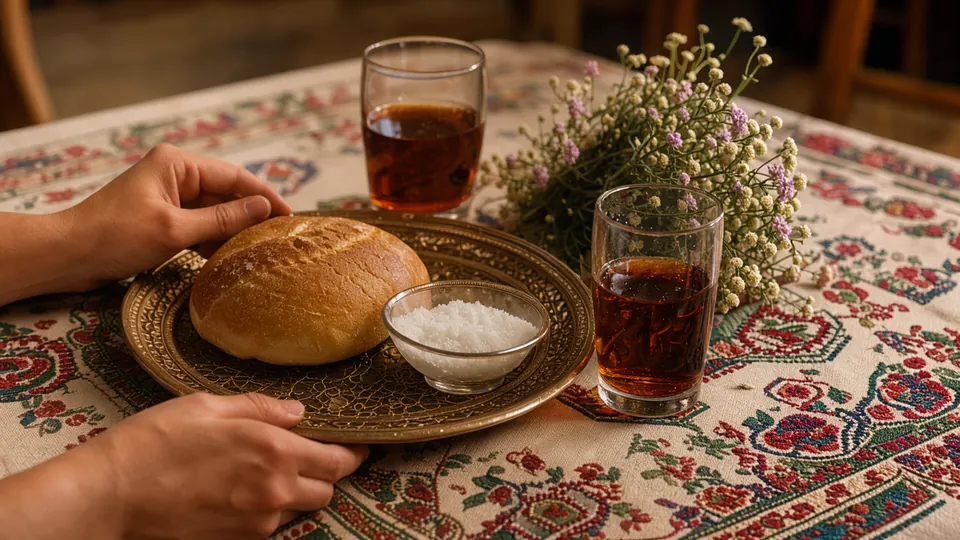
Bulgaria rewards the traveller who pays a little attention to how things are done. It is a warm, hospitable country where guests are genuinely cherished, but it also has its own customs — including the famously confusing nod for "no" — and a beautiful Cyrillic alphabet that intimidates newcomers and then turns out to be easy. Learn a handful of phrases, understand a few unwritten rules, and doors open everywhere from the Nesebar mehana to the village market.
This is the cultural field guide: the head-shake that means yes, the etiquette of hospitality and the table, name days and toasts, tipping, the alphabet, and the phrases that will make Bulgarians light up.
The Famous Reversed Nod: Yes and No
Start here, because it trips up everyone. In Bulgaria, the gestures for "yes" and "no" are often the reverse of what most Westerners expect:
- Shaking the head side to side can mean YES (da).
- Nodding the head up and down (a single upward tilt of the head, often with a soft "tsk" sound) can mean NO (ne).
This catches every visitor out. You ask "is this seat free?" and the waiter shakes his head — and the seat is free. You ask "do you have mussels tonight?" and you get a single sharp upward nod — and they are out of mussels.
In practice, many Bulgarians who deal with tourists have adapted to Western gestures, which only makes it more confusing. The safe move: rely on the words. Learn da (yes) and ne (no), say them aloud, and when in doubt, confirm verbally rather than trusting the gesture. Watch for the gestures but trust your ears.
Hospitality: The Heart of Bulgarian Culture
Bulgarians take hospitality (gostopriemstvo) seriously. A guest is honoured, fed generously, and pressed to eat and drink more than is reasonable. If you are invited into a Bulgarian home — which can happen surprisingly easily — a few customs apply:
- Bring a small gift. Flowers, chocolates, a bottle of good wine or spirits, or something from your own country. For flowers, give an odd number (an even number of flowers is for funerals).
- Accept what is offered. Refusing food or the homemade rakia outright can cause offence. Accept at least a little; it is a sign of respect.
- Expect to be overfed. "Are you full?" is not really a question. There will be more food. Pace yourself.
- Compliment the cooking and the home. Genuine appreciation is warmly received.
- Remove your shoes when entering a home, unless told otherwise — slippers are often offered.
The warmth is genuine and unforced. Bulgarians can seem reserved or even gruff with strangers in passing — a neutral public face is normal — but the moment you are a guest, the warmth is total.
At the Table
- Toast before drinking. Raise your glass, make eye contact, and say "Nazdrave!" (наздраве, "to health"). Drinking without toasting is poor form, especially with rakia.
- Rakia comes first. As covered in our wine and rakia guide, rakia is an aperitif drunk with the cold salad at the start, not after the meal.
- Bread is shared and respected. It traditionally carries a near-sacred status; do not waste it.
- Meals are unhurried. Lingering at the table is the point, not a delay. Dinner can run for hours.
- Let the host lead. Wait for the host to begin, to toast, and to invite second helpings.
Name Days: A Lovely Bulgarian Institution
Bulgarians celebrate not only birthdays but name days (imen den) — the feast day of the saint after whom you are named. Because so many Bulgarians share a handful of traditional names, name days are major social events:
- Ivan/Ivana celebrate around 7 January (St John).
- Georgi on 6 May (St George's Day, Gergyovden, also a national holiday).
- Dimitar on 26 October (Dimitrovden).
- Nikola on 6 December (Nikulden, the fishermen's and sailors' day — very relevant on the coast, marked with fish, traditionally carp).
On a name day, the person celebrating hosts and treats others, rather than receiving — the opposite of a birthday. If you meet a Bulgarian on their name day, the warm thing to say is "Chestit imen den!" (честит имен ден — "happy name day!"). On the coast, Nikulden (6 December) is especially observed, as St Nicholas is the patron of fishermen and sailors.
Tipping
Tipping in Bulgaria is appreciated but modest:
- Restaurants: around 10% is standard for good service. Some places add a service charge — check the bill. Rounding up is fine at casual spots.
- Cafés and bars: round up or leave small change.
- Taxis: round up to the nearest lev or two.
- Hotels and guesthouses: a few lev for housekeeping or a helpful host is welcomed but not expected.
Bulgaria adopted the euro process but for now uses the lev (лев, BGN), pegged to the euro at roughly 1 € to 1 EUR. Cards are widely accepted in tourist areas; carry some cash for markets, small bakeries, and village stalls.
Market Haggling and Shopping
At supermarkets and shops, prices are fixed — no haggling. But at open-air markets (pazar) for fruit, vegetables, honey, and souvenirs, gentle bargaining is acceptable and sometimes expected, especially if you buy in quantity. Keep it good-natured:
- Ask the price ("Kolko struva?" — how much?).
- Smile, perhaps suggest a slightly lower figure or ask for a little extra thrown in.
- Buying several things together is the natural moment for a small discount.
- A friendly manner achieves more than hard bargaining; Bulgarians respond to warmth.
For local honey, lyutenitsa, dried herbs, rose products, and ceramics, the markets are where the real things and the fair prices are.
The Cyrillic Alphabet (It's Easier Than It Looks)
The Cyrillic alphabet was created in the 9th century in the First Bulgarian Empire, and Bulgaria honours it with its own national holiday (24 May). It looks daunting but is largely phonetic and shares many letters with Latin and Greek. A few that catch people out:
- В = V (not B)
- Н = N (not H)
- Р = R (not P)
- С = S (not C)
- У = OO/U
- Х = H (a throaty kh)
- Ч = CH, Ш = SH, Ж = ZH (like the s in "measure")
Learn to sound out a few road and shop signs and you will navigate far more easily. РЕСТОРАНТ is restorant. АПТЕКА is apteka (pharmacy). ХЛЯБ is hlyab (bread).
Essential Phrases (with pronunciation)
| English | Bulgarian | Pronunciation |
|---|---|---|
| Hello (formal) | Здравейте | ZDRA-vey-te |
| Hi (informal) | Здрасти / Здравей | ZDRAS-ti / zdra-VEY |
| Goodbye | Довиждане | do-VIZH-da-ne |
| Please / you're welcome | Моля | MO-lya |
| Thank you | Благодаря / Мерси | bla-go-da-RYA / mer-SI |
| Yes | Да | da |
| No | Не | ne |
| Excuse me / sorry | Извинете | iz-vi-NE-te |
| How much is it? | Колко струва? | KOL-ko STRU-va |
| Cheers! | Наздраве! | naz-DRA-ve |
| Delicious! | Вкусно! | VKUS-no |
| The bill, please | Сметката, моля | SMET-ka-ta MO-lya |
| Local fish? | Местна риба ли е? | MEST-na RI-ba li e |
| Good day | Добър ден | DO-bar den |
| I don't understand | Не разбирам | ne raz-BI-ram |
| Do you speak English? | Говорите ли английски? | go-VO-ri-te li an-GLIY-ski |
| Happy name day! | Честит имен ден! | ches-TIT i-men den |
A simple "Blagodarya" (thank you) or "Nazdrave" said with a smile will earn you genuine warmth. Younger Bulgarians and anyone in tourism usually speak good English, and German and Russian are also widely understood on the coast — but the effort to use even a few Bulgarian words is always appreciated.
A Few More Customs Worth Knowing
- Martenitsi in March: if you visit in early spring, you will be given a red-and-white tassel for 1 March (Baba Marta). Wear it; it is a blessing for spring. (More in our festivals calendar.)
- Don't whistle indoors — folk superstition says it whistles your money away.
- Sit down before a journey: Bulgarians (like many in the region) sometimes sit quietly for a moment before setting off on a trip, for luck.
- Orthodox church etiquette: dress modestly in the historic churches of Nesebar; women may cover their heads, and silence is expected. Photography may be restricted.
- Punctuality is relaxed socially but expected for tours, transfers, and business.
Settle in, learn a few words, and let Bulgarian hospitality do the rest — browse apartments and houses in Nesebar, and find more local culture and food guides in our articles.
FAQ
Do Bulgarians really shake their head for "yes"?
Often, yes — the traditional gesture for "yes" is a side-to-side head shake and for "no" an upward nod, the reverse of Western habit. Because many Bulgarians have adapted to Western gestures for tourists, it can be confusing. The safe rule: rely on the spoken words da (yes) and ne (no).
Do I need to speak Bulgarian to visit Nesebar?
No. English is widely spoken in tourist areas, and German and Russian are common on the coast. But learning a few phrases — hello, thank you, cheers — is warmly appreciated and enriches the trip.
How much should I tip in Bulgaria?
Around 10% in restaurants for good service; round up in cafés, bars, and taxis. Check whether a service charge is already on the bill. Tipping is appreciated but modest and never obligatory.
Is haggling expected in Bulgaria?
Not in shops or supermarkets, where prices are fixed. At open-air markets for produce, honey, and souvenirs, gentle, good-natured bargaining is acceptable, especially when buying several items.
What is a name day and how do I respond?
A name day is the feast day of the saint you are named after, often celebrated more than a birthday. The person celebrating treats others. If you meet someone on their name day, say "Chestit imen den!" (happy name day). On the coast, Nikulden (6 December) is especially important.
What currency does Bulgaria use?
The lev (BGN), pegged to the euro at about 1.96 to 1. Cards are widely accepted in tourist areas; carry some cash for markets, bakeries, and village stalls.
Get local stories & deals
One email a month with the best Black Sea stories and seasonal deals. No spam.