Birdwatching Near Nesebar — The Via Pontica Migration Route
A World-Class Birdwatching Destination
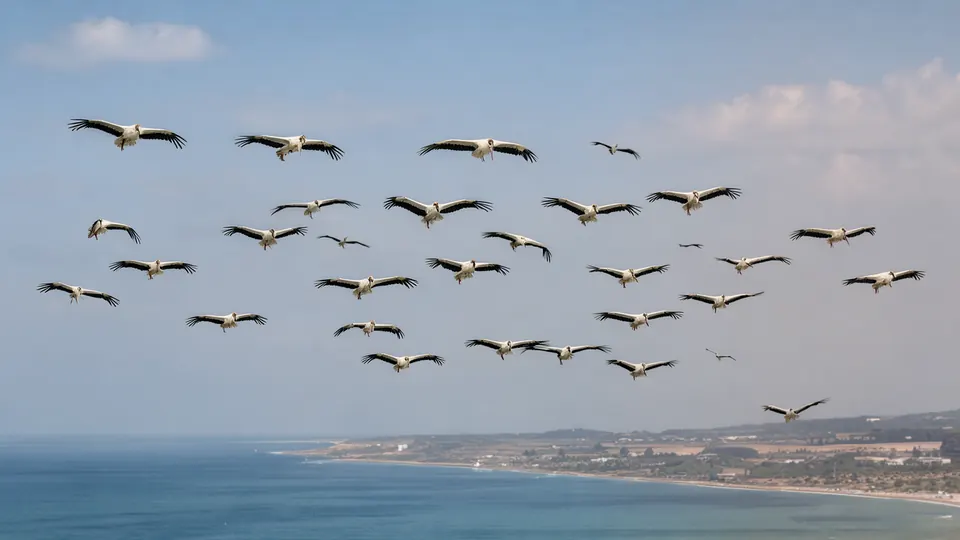
The Bulgarian Black Sea coast lies on the Via Pontica — the second-largest bird migration route in Europe. Every spring and autumn, millions of birds pass through this narrow corridor between the Black Sea and the Balkan Mountains. The wetlands, lakes, and coastal habitats near Nesebar make this area one of the richest birdwatching destinations on the continent.
The Via Pontica
This migration superhighway carries an estimated 500,000+ raptors, 200,000+ storks, and millions of smaller birds between their breeding grounds in Eastern Europe and Russia and their wintering areas in Africa and the Middle East. The Bulgarian coast acts as a funnel, concentrating these birds into a narrow corridor just 15-30 km wide.
Key Birdwatching Sites
Pomorie Lake (15 km north)
A saltwater lagoon adjacent to the sea, Pomorie Lake is one of the most accessible birdwatching sites from Nesebar.
- Key species: Greater flamingos (year-round colony of 50-200), Dalmatian pelicans, avocets, stilts, terns, and various herons
- Best time: April-May for spring migration, August-October for autumn migration. Year-round for residents.
- Facilities: Observation hides, information center, marked trails. Free access to most areas.
- Getting there: 20-minute drive from Nesebar, or bus to Pomorie then 15-minute walk
Burgas Wetlands (35 km north)
A complex of four coastal lakes — Atanasovsko, Mandra, Burgas, and Pomorie — forming one of the most important wetland systems in the Eastern Mediterranean.
- Atanasovsko Lake: A shallow saltwater lake and salt works. Flamingos, pelicans, and wading birds in spectacular numbers. The BSPB (BirdLife Bulgaria) center on the northern shore offers guided walks.
- Mandra Lake: Freshwater, home to the Poda Conservation Center — the best organized birdwatching site in the region. Observation tower, educational displays, guided tours. Entry fee: 1,5-2,5 €.
- Key species: White and Dalmatian pelicans (both species), greater flamingos, white storks (nesting on rooftops!), glossy ibis, spoonbills, 30+ raptor species during migration
Strandzha Coastal Zone (60+ km south)
The wilder southern coast with fewer tourists and more natural habitat. Rocky coves, coastal forests, and river mouths create diverse birding environments.
- Key species: Mediterranean gulls, shags, Cory's shearwaters (rare), Eleonora's falcons during migration
- Best combined with: The Ropotamo Nature Reserve boat tour for a full day of nature
What You Might See by Season
Spring Migration (March-May)
- White storks arriving in massive flocks (thousands in a single thermal)
- Raptors: honey buzzards, lesser spotted eagles, levant sparrowhawks
- Songbirds: warblers, flycatchers, shrikes
- Wading birds returning to breeding colonies
Breeding Season (May-July)
- Bee-eaters nesting in sandy cliffs — dazzling green, blue, and orange plumage
- Rollers — electric-blue birds that perform aerial acrobatics
- White stork nests on chimneys and poles throughout villages
- Terns and gulls on coastal islands
Autumn Migration (August-October)
- The biggest spectacle — huge raptor kettles spiraling over the coast
- Pelican flocks heading south (September-October)
- Stork migration peaks in late August-September
- Shorebird passage along beaches
Winter (November-February)
- Wintering waterfowl: ducks, geese, grebes, cormorants
- Flamingos (resident population)
- Raptors: imperial eagles, rough-legged buzzards, harriers
- Quieter but rewarding for patient observers
Practical Birdwatching Tips
- Equipment: Binoculars are essential (8x42 or 10x42 recommended). A spotting scope is ideal for the lakes. If you don't have binoculars, the Poda Center often has some available for visitors.
- Guides: Local birding guides offer half-day and full-day tours for 30-75 € per person. They know exactly where to find specific species and share deep ecological knowledge.
- Photography: A 300mm+ lens is minimum for bird photography. The hides at Pomorie and Poda provide excellent shooting positions.
- Apps: Download Merlin Bird ID (free, works offline) for species identification. The eBird app helps you find recent sightings in the area.
- Timing: Early morning (6-10 AM) and late afternoon (4-7 PM) are most active for birds. Raptors soar on thermals starting mid-morning.
- Dress: Neutral colors, comfortable walking shoes. Hides can be warm — bring water.
Conservation
The Via Pontica faces threats from wind farm development, wetland drainage, and coastal construction. Organizations like BSPB (BirdLife Bulgaria) work to protect critical habitats. Your visit to birdwatching sites supports conservation through entrance fees and awareness. Consider a donation to BSPB if you enjoy the experience.
Get local stories & deals
One email a month with the best Black Sea stories and seasonal deals. No spam.