Ancient Nessebar: A UNESCO World Heritage Site
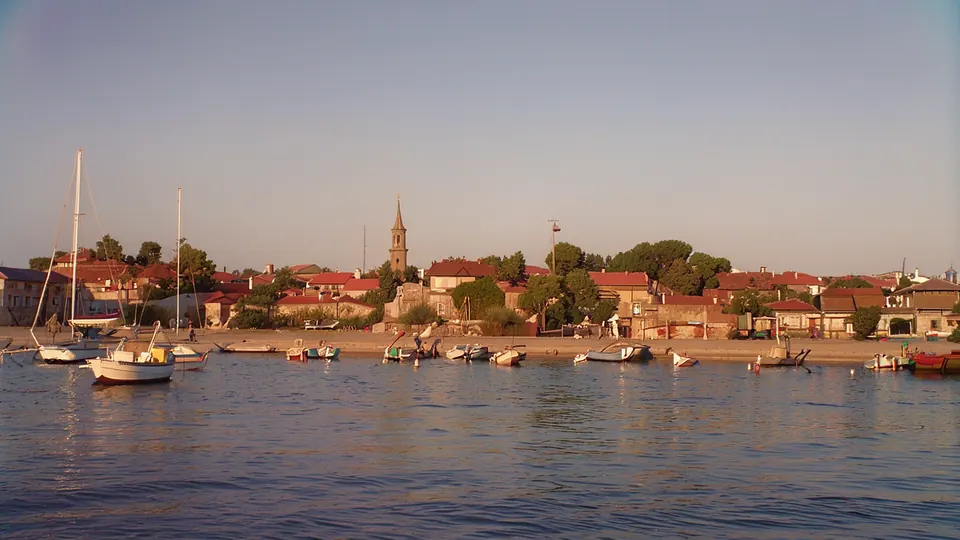
One of Europe's Oldest Cities
Nessebar, originally known as Mesembria, is one of the oldest cities in Europe, with a history spanning over 3,000 years. Located on a rocky peninsula connected to the mainland by a narrow isthmus, this ancient city has been a crossroads of civilizations since the Thracian era.
Few places on the continent can claim such an unbroken thread of urban life. The settlement began as a Thracian stronghold called Menebria or Mesembria more than three thousand years ago, was refounded as a Greek polis by Dorian colonists around 510 BC, passed under Roman control in 72 BC, flourished as a Byzantine bishopric, was contested for centuries between the medieval Bulgarian state and Byzantium, fell under Ottoman rule in 1453, and finally became part of modern Bulgaria after the Liberation of 1878. Each of these civilisations built upon the work of its predecessors, leaving the peninsula layered with the physical evidence of more than three millennia of continuous habitation. The very name reflects this journey: the Thracian Mesembria became the Greek and Roman Mesembria, the Slavic Nesebar, and finally modern Nessebar, each form preserving the memory of those who came before.
Recognition by UNESCO
In 1983, UNESCO recognized the Old Town of Nessebar as a World Heritage Site, acknowledging its exceptional collection of historic buildings and the remarkable continuity of cultural traditions that have shaped this small but significant settlement.
The inscription places Nessebar among the most valued cultural sites on Earth, a status it shares within Bulgaria with monuments such as the Boyana Church, the Rila Monastery, the Thracian tomb of Kazanlak, and the Madara Horseman. UNESCO recognised the Old Town above all for its extraordinary concentration of monuments from successive periods, in particular its wealth of medieval churches and its traditional wooden Revival-era houses, which together preserve the authentic character of an ancient Black Sea town. The site was judged to be of "outstanding universal value," the key threshold for World Heritage status, because it bears exceptional testimony to the many civilisations that have succeeded one another on these shores and illustrates more than a thousand years of European urban and religious history within a single small space.
Why It Matters
A World Heritage listing brings both prestige and responsibility. It commits Bulgaria to protecting the Old Town's monuments and its historic urban fabric for future generations, guiding conservation work, regulating new building, and helping balance the pressures of tourism against the need to safeguard an irreplaceable heritage. The Old Town is managed as a protected architectural and historical reserve, where restoration follows strict rules so that new work respects the traditional materials and proportions of the historic houses. This careful stewardship is what allows visitors today to experience the town much as it appeared in past centuries, rather than as a modern resort.
A Living Museum on a Tiny Peninsula
The peninsula measures just 850 meters in length and 300 meters in width, yet within this compact area, one can find traces of Thracian fortifications, Greek temples, Roman baths, Byzantine churches, and Ottoman-era houses. This extraordinary density of historical monuments makes Nessebar a living museum of European civilization.
The contrast between the small scale of the site and the immense span of history packed into it is precisely what makes Nessebar so remarkable. Visitors can walk from late antique gate to medieval church to nineteenth-century merchant's house in a matter of minutes, moving through whole epochs of European history street by street. It is this concentration, rather than any single grand monument, that gives the town its unique value.
Witnesses of Millennia
Walking through the cobblestone streets of Old Nessebar today, visitors can see the same defensive walls that once protected the city from invaders, now standing as silent witnesses to millennia of human history. The fortifications date back to the 5th century BC and were reinforced during the Byzantine period.
These walls, first raised by Thracians and Greeks and rebuilt in the characteristic Byzantine technique of alternating stone and brick, frame the entrance to the Old Town at the isthmus. Beyond them lie the churches, houses, and ancient remains that earned the town its place on the World Heritage List.
What Visitors Can See Today
Entering at the isthmus, visitors first pass the remains of the late antique fortification gate and its flanking towers. Within the Old Town stand more than a dozen surviving churches, from the ruined Saint Sophia basilica to the richly decorated Pantokrator and Saint John Aliturgetos. Cobbled lanes are lined with the wooden Revival-period houses that give the town its distinctive silhouette, several of which now serve as house-museums. The Archaeological Museum and the Ethnographic Museum gather finds and exhibits spanning the Thracian, Greek, Roman, Byzantine, and Ottoman eras, while the windmill at the isthmus and the sea views complete the picture of this protected ancient town.
To plan your visit to this World Heritage town, see our guide to Nessebar.
Frequently Asked Questions
When did Nessebar become a UNESCO World Heritage Site?
The Old Town of Nessebar was inscribed on the UNESCO World Heritage List in 1983, recognised for its exceptional collection of historic buildings and the continuity of its cultural traditions.
How old is Nessebar?
Nessebar, originally the Thracian and Greek city of Mesembria, has a history spanning more than 3,000 years, making it one of the oldest cities in Europe.
How big is the Old Town peninsula?
The rocky peninsula measures only about 850 metres in length and 300 metres in width, yet it contains monuments from the Thracian, Greek, Roman, Byzantine, and Ottoman periods.
What civilizations shaped Nessebar?
Thracians founded the settlement, Greek colonists made it a polis around 510 BC, Romans annexed it in 72 BC, Byzantines made it a great church centre, and after a contested medieval history it came under Ottoman and then modern Bulgarian rule.
Why is the Old Town of Nessebar so important?
Its value lies in the extraordinary density of well-preserved monuments from many eras packed onto one small peninsula, especially its medieval churches and traditional wooden houses, which make it a living museum of European civilisation.
Get local stories & deals
One email a month with the best Black Sea stories and seasonal deals. No spam.