A Brief History of Nesebar — From Ancient Thrace to UNESCO World Heritage
A Brief History of Nesebar — From Ancient Thrace to UNESCO World Heritage
Nesebar is one of the oldest continuously inhabited cities in Europe, with over 3,000 years of history layered into its cobblestone streets and ancient walls. Walking through the old town is like reading a living history book.
The Thracian Period (3000–6th century BC)
The peninsula was first settled by Thracians, who called it Menebria (or Mesembria). Archaeological evidence shows:
- Bronze Age settlements dating to 3000 BC
- The Thracians were skilled metalworkers and sailors
- The natural peninsula made it an ideal defensive position
- Trade connections with the Aegean world and Asia Minor
Greek Colony (6th century BC – 1st century BC)
In 510 BC, Greek colonists from Megara (near Athens) established a major colony here:
- Renamed the city Mesembria
- Built temples to Apollo, Zeus, and other gods
- The city became a prosperous trading port
- Minted its own coins — Mesembria's silver coins are found across the ancient world
- Population grew to an estimated 10,000–15,000
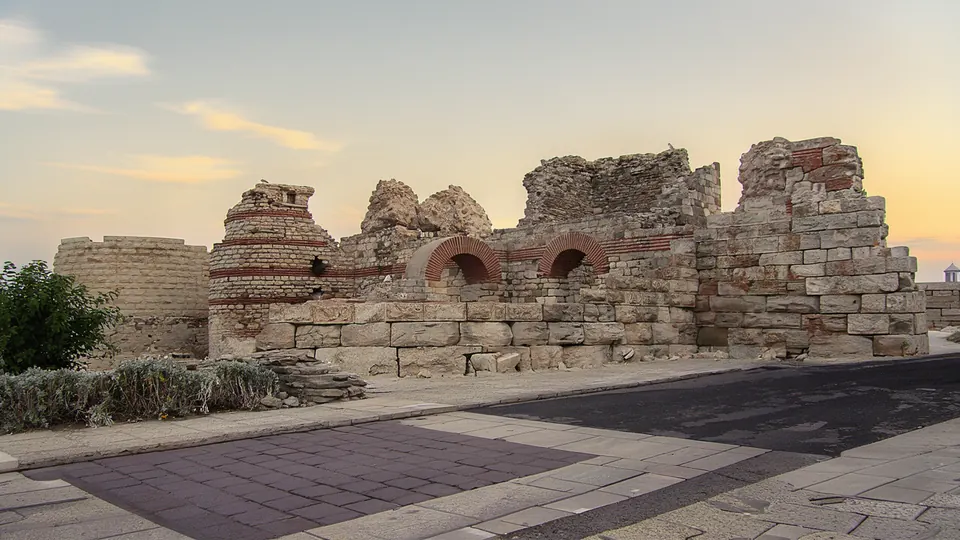
The ancient city walls you see today were begun during this period, though rebuilt many times since.
Roman and Byzantine Period (1st century BC – 14th century)
Under Rome and later Byzantium, Mesembria flourished:
- Became an important Byzantine military and religious center
- The famous churches were built during this era (5th–14th century)
- Over 40 churches existed in the medieval city — a remarkable density for its size
- The Church of St. Sophia (Old Metropolitan Church) dates to the 5th–6th century
- The Church of Christ Pantocrator (14th century) is the best-preserved
Bulgarian Kingdom (9th–14th century)
Nesebar changed hands between Bulgaria and Byzantium multiple times:
- Captured by Khan Krum in 812 AD
- The city was renamed Nesebar (from Mesembria → Nesebar)
- A center of trade between Constantinople and the Bulgarian interior
- Both Bulgarian and Byzantine architectural styles merged in the churches
- The unique "decorative" brickwork patterns you see on churches date from this period
Ottoman Period (1453–1878)
Under Ottoman rule for over 400 years:
- Many churches were damaged or converted
- The population declined significantly
- Traditional wooden houses were built in the 18th–19th century — the characteristic style you see today
- The town became a quiet fishing village
- Greek, Turkish, and Bulgarian communities coexisted
Modern Era (1878–present)
After Bulgaria's liberation from Ottoman rule:
- Nesebar became part of modern Bulgaria in 1885
- Tourism began developing in the 1920s–30s
- Sunny Beach resort was built in the 1950s–60s, bringing mass tourism nearby
- 1956: Nesebar declared a museum-city
- 1983: UNESCO added Nesebar to the World Heritage List
- Today: Over 1 million tourists visit annually
What You Can Still See
| Period | What Remains |
|---|---|
| Thracian (3000 BC) | Foundation stones in archaeological digs |
| Greek (510 BC) | City walls, coin collections in museum |
| Roman/Byzantine | Church of St. Sophia, fortress walls |
| Medieval Bulgarian | Church of Christ Pantocrator, St. Stephen, St. John |
| Ottoman | Wooden houses (18th–19th century) |
| Modern | Archaeological Museum, restored streets |
Why UNESCO?
Nesebar was inscribed as a World Heritage Site because it represents:
- An outstanding example of a settlement that illustrates significant stages in human history
- A unique blend of architecture from multiple civilizations
- One of the richest collections of medieval churches in southeastern Europe
- A living city where 3,000 years of history continue to be inhabited
Visit the Archaeological Museum near the old town entrance for the complete story — it's small but excellent, with artifacts spanning every period of the city's remarkable history.
Get local stories & deals
One email a month with the best Black Sea stories and seasonal deals. No spam.